
Artificial Intelligence — Killer Robots or Superintelligence
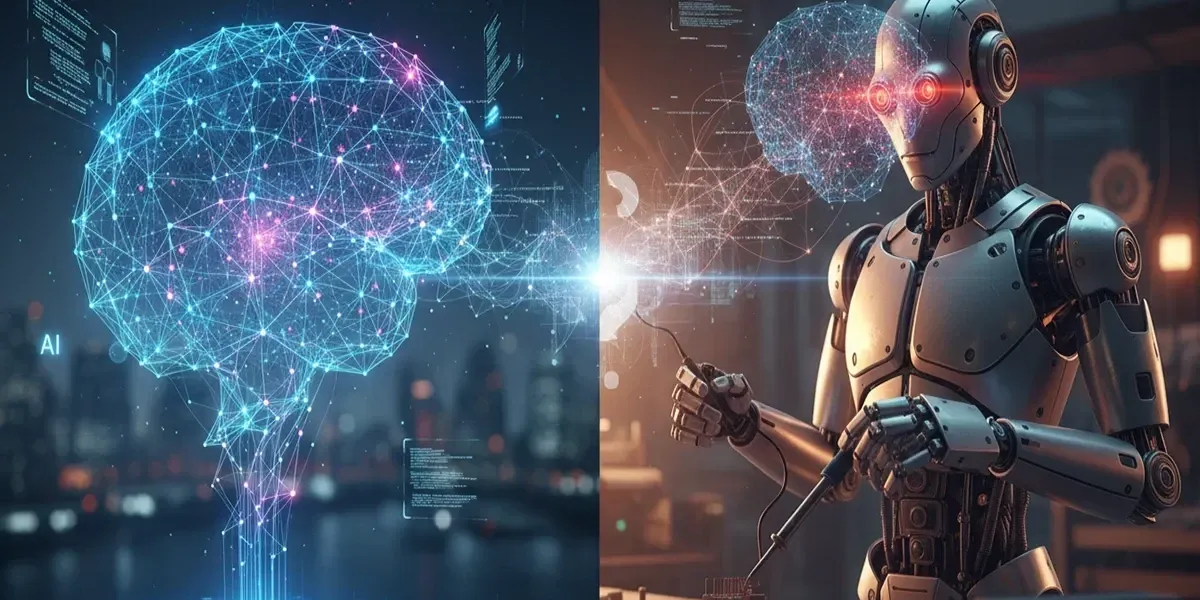
US President Donald Trump and UN Secretary-General António Guterres presented opposing visions of how the world should manage artificial intelligence, during their speeches at the UN General Assembly on Tuesday.
While Trump opposed global efforts to set rules on artificial intelligence, Guterres warned about the risks of delegating life-and-death decisions to machines. At the same time, other world leaders called for international cooperation and the creation of joint mechanisms for managing this technology.
Referring to a new UN scientific report, which warns there is a small but real possibility that artificial intelligence could cause catastrophic and irreversible damage, Guterres opened his address to world leaders at the UN General Assembly with a call to strengthen oversight of this technology and warnings about the consequences it could bring.
“Let us decide that life-and-death decisions are never entrusted to machines. Killer robots must have no place in our future,” the UN chief said during his farewell address to world leaders.
Guterres had warned about the risks of artificial intelligence in his first General Assembly speech, a decade ago, writes euronews.
He said the world must “create the conditions for responsible development of artificial intelligence, as well as the necessary safeguards to address the risks it presents.”
Meanwhile, the UN Security Council is expected to discuss on Wednesday ways to establish control mechanisms over this technology. The meeting is expected to be attended by some of the most prominent names in the AI field.
“It’s super, not artificial,” says Trump
Less than an hour later, Trump pushed back against warnings about the risks linked to artificial intelligence.
“The United States also fully opposes any effort to create a globalist scheme for the control of artificial intelligence, which is being talked about so much. From now on, we will officially call it superintelligence, renaming it,” he said.
However, the world leaders who spoke after Trump continued to use the term “artificial intelligence,” not “superintelligence.”
“Every major new technology brings challenges and superintelligence is no exception,” Trump said.
He also criticized those who, in his view, have issued exaggerated warnings about climate change and artificial intelligence.
“The same people who said we would all die within 12 years because of global warming — a name later changed to climate change, because the planet was cooling rather than warming, while nobody died — are the same people who now say artificial intelligence will kill us all, that robots will attack us and that everything will be a total catastrophe,” the US president said.
“Go slow, but cooperate,” say others
The problem is that both Trump and Guterres are reducing this issue to an unhelpful debate, says Henry Hoffmann, head of the Department of Computer Science at the University of Chicago.
“One turns it into a science-fiction movie, while the other presents it as an issue that is not a problem,” Hoffmann said in an email.
“Both are pushing people to pick a side, instead of focusing on the real risks and possible ways to mitigate them. There should be no ‘sides’ when it comes to the need to have sufficient control over powerful autonomous systems. The important debate is which mechanisms can actually ensure such control,” he added.
Other countries want to make sure they do not fall behind in the artificial intelligence race between the US and China, a race for which Trump said the United States is winning.
French President Emmanuel Macron and UN Secretary-General António Guterres also stressed the need to protect children from the potential risks of artificial intelligence.
“Let us not wait for the consequences of artificial intelligence to fall upon us,” Macron said. “We must act now to protect our children and young people.”
President of Finland Alexander Stubb said artificial intelligence will change the world, potentially for the better, but stressed that this technology needs strong controls.
“Artificial intelligence is the most impactful technology in human history. It will affect science, economy, politics, security and the very essence of our humanity,” Stubb said.
“Humans can and must be in charge. We have a choice: we can compete, cooperate or slow down. For me, cooperation is the best way forward,” he added.
British Prime Minister Andy Burnham told business leaders, during a meeting on the sidelines of the UN General Assembly, that he wants to see “a single set of global principles and standards” that would enable harnessing the potential of artificial intelligence while mitigating the risks it presents.
He said the creation of an “artificial intelligence for good” will be one of the main priorities of the British G20 presidency next year.
At the UN Security Council meeting on artificial intelligence, to be held on Wednesday, both the leaders of the companies developing these systems and experts and industry figures who have recently warned about the need for safeguards will be heard.
The first to speak will be Sam Altman, CEO of OpenAI, followed by Dario Amodei, CEO of Anthropic.
Speaking last will be Clément Delangue, CEO and co-founder of Hugging Face, a platform that was recently the target of an attack linked to an unauthorized OpenAI program.
Source: Telegrafi

Komentet
Bëhu i pari që komenton!
Lini një Koment të Ri
Për t'u përgjigjur një komenti specifik, kliko butonin 💬 Përgjigju poshtë atij komenti.