COMMENTARY – EU divided over new two-trillion-euro budget
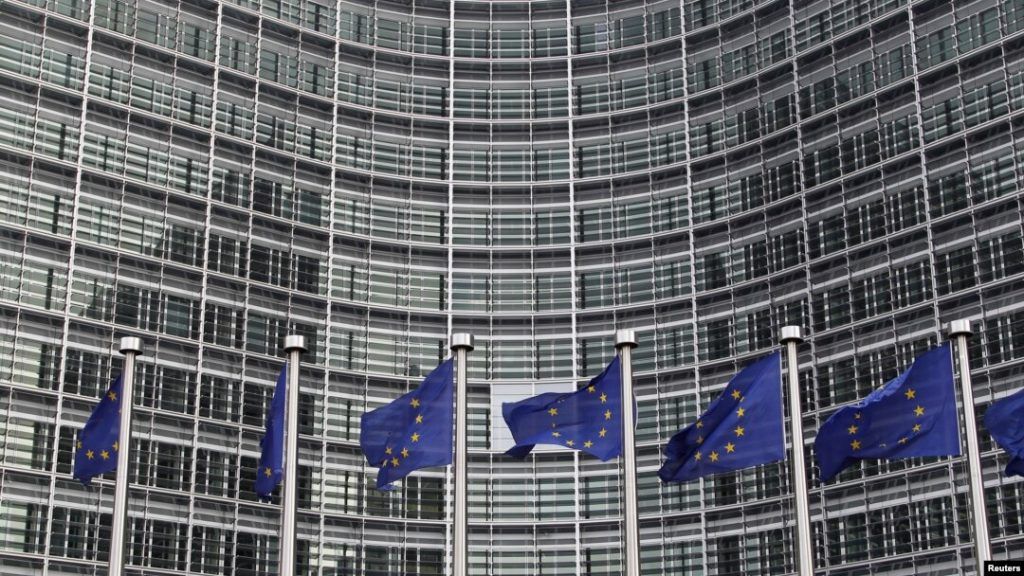
BRUSSELS, 15 October /ATSH-DPA/ – European Union leaders are divided over the bloc’s next long-term budget, with deep splits between wealthy countries demanding savings and those that rely on cohesion funds, which aim to reduce economic inequalities between the EU’s countries and regions.
“We face very, very difficult negotiations on the European Union’s future finances,” German Chancellor Friedrich Merz said today as he arrived at the EU summit in Brussels.
The European Commission has proposed a significant increase in the EU budget, taking it to €1.985 trillion ($2.23 trillion) for the period 2028–2034.
A recently presented compromise proposal, worth €1.826 trillion, does not appear sufficient to overcome the divisions among member states.
The current long-term budget, covering 2021–2027, is worth €1.2 trillion.
The EU’s 27 member states contribute financially to the common budget according to their economic strength. That means large, wealthy economies such as Germany give more than others.
“We must significantly reduce the common budget compared with the European Commission’s proposals. No EU member state can afford this,” Merz said.
The EU’s traditional policies versus new priorities
The EU budget includes considerable funds for economically less developed regions and for farmers, but also for student exchange programmes and disaster relief funds.
Changes in the EU’s economic and geopolitical priorities have prompted the European Commission to propose new funds to support the bloc’s competitiveness and strengthen its defence capacities. This has pushed up the overall value of the proposed budget.
Besides Germany, Austria, the Netherlands, Denmark, Sweden and Finland also argue that the proposed value of the new budget must be cut significantly if additional funds are to be created for the new priorities.
Swedish Prime Minister Ulf Kristersson described the current proposals as “simply unacceptable.”
According to him, countries that already contribute a large share of the financing cannot be asked to pay even more.
Italian Prime Minister Giorgia Meloni is among the most vocal defenders of preserving traditional funds, including cohesion payments.
“In my view, there is no contradiction between traditional policies and new priorities,” Meloni told the Italian parliament on Wednesday.
“On the contrary, there can be no security without food security, and no real competitiveness without equal opportunities for all regions,” she said.
Meloni stressed that she would not support cuts to agricultural subsidies and cohesion funds during the meeting in Brussels.
Leaders of the Baltic states, which benefit from cohesion funds but border Russia or Belarus, also warned against large cuts.
The European Union will not be able to meet its new objectives, such as defence, if there are not sufficient funds, Lithuanian President Gitanas Nausėda said.
Latvia’s regions bordering Russia are experiencing economic decline, while the country must spend large sums on defence, Latvian Prime Minister Andris Kulbergs said. He asked that his country not be left behind during the budget negotiations.
EU leaders brace for difficult negotiations
European Council President Antonio Costa had initially expressed hope that a compromise agreement would be reached by the end of the year, before several EU countries go to elections next year, which could slow negotiations in Brussels.
Merz said he still aims to reach an agreement by the end of the year, despite the difficult negotiations awaiting the bloc.
However, several other leaders expressed doubts whether an agreement would be possible within that timeframe.
“It is more important to reach a good agreement than a bad agreement,” Dutch Prime Minister Rob Jetten said.
Komentet
Bëhu i pari që komenton!
Lini një Koment të Ri
Për t'u përgjigjur një komenti specifik, kliko butonin 💬 Përgjigju poshtë atij komenti.