KLI publishes parliamentary research on the interventions needed in the draft Law on the Bureau
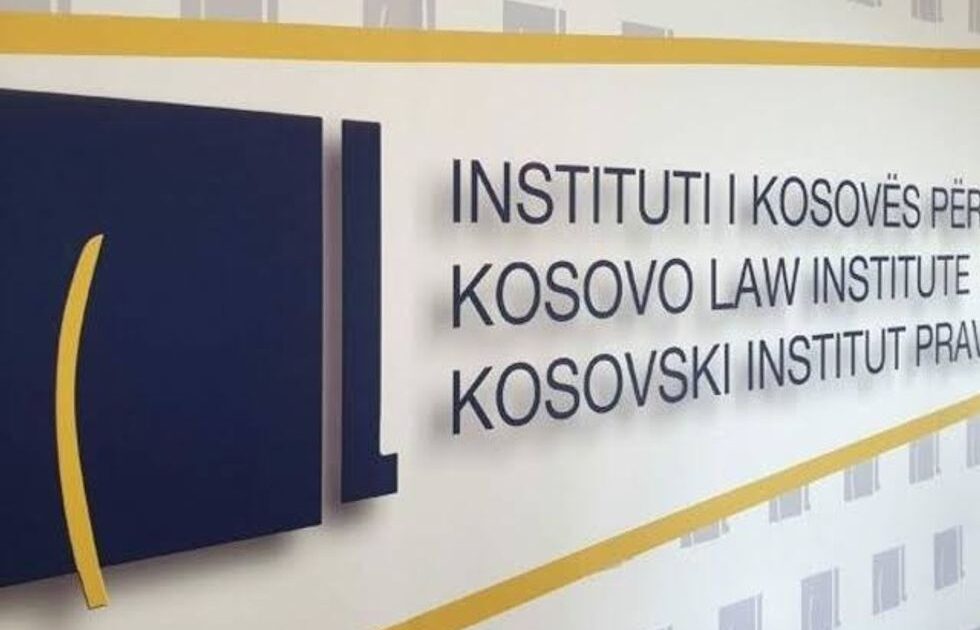
The Kosovo Law Institute (KLI) today published the parliamentary research “Interventions needed before the final adoption of the Law on the Bureau”.
According to a media release, with the presentation of this report KLI has launched the series of presentations of three parliamentary research papers, through which concrete proposals for amendments to various draft laws are presented.
Further in the release it is announced that KLI senior researcher Gzim Shala, who presented the report, said it was prepared for the phase between the two readings in the Assembly.
“This is not just a report that lists problems. It is a practical document, prepared for the phase between the two readings in the Assembly,” Shala said.
As stated in the release, the report presents six proposals for amendments to the draft Law on the State Bureau for the Verification and Confiscation of Unjustified Assets.
According to Shala, the current version of the draft Law is more advanced than the previous drafts, but several important issues still require addressing.
“The first proposal relates to the election of the Director General and the members of the Oversight Commission who are elected by the Assembly. KLI proposes that these positions require at least 61 votes, in order to strengthen the Bureau’s independence,” the release states.
As stated in the release, the second proposal envisages the establishment of a Civil Confiscation Division also at the Court of Appeals. The report argues that the judicial specialisation envisaged at first instance must also be ensured at second instance.
“Another proposal aims to replace the criterion ‘to a large extent higher’ for extending verification after the end of public office with a measurable threshold. According to the proposal, verification may be extended up to five years after the end of office, when the discrepancy between the value of the assets acquired and the lawful income during the same period exceeds 25,000 euros.”
As also stated in the release, the report also proposes that the Court preliminarily assess the groundedness of the confiscation proposal.
“The burden of proof would pass to the party only after the Court confirms the proposal by a final decision. The amendment also envisages a suspensive effect for the appeal against the confirmation decision. Another proposal relates to compensation when the procedure ends without confiscation. The report addresses the damages that may be caused by restricting the use or disposal of the assets, the loss of their value and the direct costs of the procedure. The proposal also sets out the types of damage that may be claimed for compensation, the competent Court and the deadline for submitting the request.”
The sixth proposal, as stated in the release, aims to recognise the third party’s right to challenge in Court the decision to extend the verification. The report argues that the guarantees the third party enjoys in the later phases do not replace judicial review of the decision by which it is included in the procedure.
KLI assesses that creating a mechanism for the verification and confiscation of unjustified assets is an important and legitimate aim, but that the legal framework must be clear, predictable and equipped with sufficient procedural guarantees. /Telegrafi/

Komentet
Bëhu i pari që komenton!
Lini një Koment të Ri
Për t'u përgjigjur një komenti specifik, kliko butonin 💬 Përgjigju poshtë atij komenti.