Voter-roll commission member: ‘We certainly didn’t do the audit’ — minister had a clear goal of stopping us from doing our job
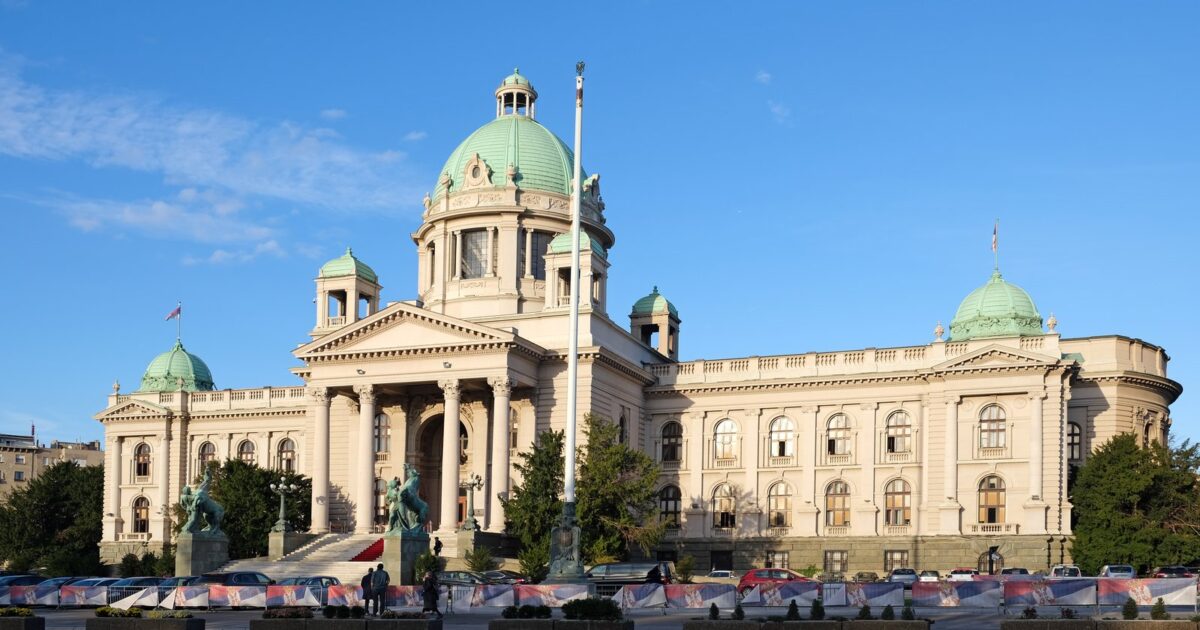
Ognjen Rašuo, the member of the commission for auditing the voter roll on behalf of the Green-Left Front (ZLF), told N1 that “we certainly didn’t do” the audit, but added that citizens can be much more confident thanks to the degree of control they will have over the voter roll for the upcoming elections.
He stressed that the commission is not an executive but a parliamentary body, and that it will deliver to the executive institutions a report with recommendations — but so far no institution has answered their questions. For N1 he said there had been “a clear goal, especially from the minister for public administration (Snežana Paunović), that we not do our job, and this lasted a long time, and for a very long time we had this obstruction which, in my opinion, continues still.”
Asked why the voter roll contains more than 200,000 people who should not be there, Rašuo said it was a misunderstanding caused by the Ministry of Public Administration and Local Self-Government, which did not publish data for six municipalities in Kosovo and Metohija — Gjakova, Kaçanik, Deçan and others — where 250,000 people are found. According to him, these were suspected to be data from 1999 that had never been updated or cleaned.
He added that people from Kosovo will vote in several surrounding cities, since no polling stations will open in Kosovo, and that “if there is good control, there will not be much opportunity for any of these people to be misused.”
On newly registered voters, Rašuo said they do not take names one by one, “because they are quite hidden among people who change residence,” but added that they can register cases of mass registration of many people at the same address: “It happens that we have some addresses that look suspicious to us and we follow what is happening there.”
Asked whether they had compared voter-number data in several places with the population numbers from the 2022 census, he said yes — and that the differences are particularly large in the Podrinje municipalities and where there are many emigrants. He confirmed suspicions of fictitious residences in places like Mali Zvornik, where people from Bosnia and Herzegovina register to obtain Serbian documents: “They are our citizens and have the right to vote, but they do not have the right to vote in local elections because their residences are fictitious.”
Rašuo also said they received the voter roll relatively late, only in July, even though the commission was formed in February, so they did not have time to clarify all the details. According to him, there are about 2,000 cases of double registration, caused by the different practices of the Ministry of Foreign Affairs and the Ministry of Internal Affairs — children born abroad receive one personal number from the consulate and then another when registered in Serbia.
Source: Nova.rs
Komentet
Bëhu i pari që komenton!
Lini një Koment të Ri
Për t'u përgjigjur një komenti specifik, kliko butonin 💬 Përgjigju poshtë atij komenti.