
Focus – AI helps detect diabetes in just a few seconds through voice analysis
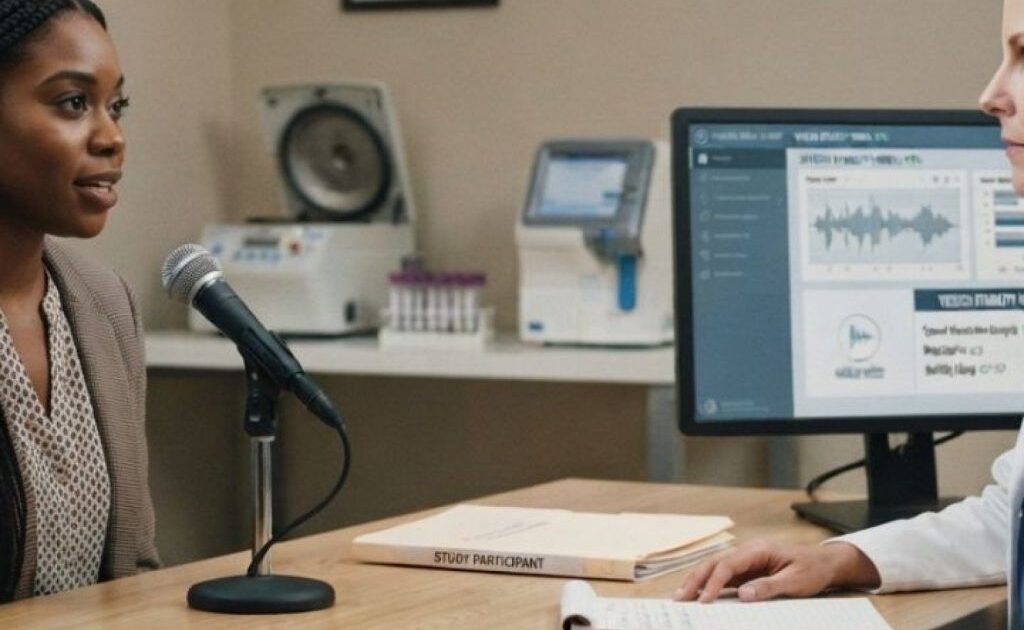
LONDON, October 3 /ATSH-DPA/ – Artificial intelligence could in future be used to identify people who are at a higher risk of type 2 diabetes by analysing the way they speak, a new study conducted by researchers at the technology company “Thymia” and RMIT University in Melbourne, Australia, suggests.
The technology analyses very short voice recordings and looks for subtle changes in speech that may be linked to type 2 diabetes.
The researchers focused in particular on signs such as hoarseness and difficulties in controlling breathing while speaking.
The artificial intelligence model was trained using more than 63,000 voice recordings from over 21,000 people in the United States of America and the United Kingdom.
It was then tested on thousands of people who recorded their voices for about 20 seconds while reading a passage from Aesop’s fables aloud.
In an analysis involving 7,319 people in the United Kingdom, the AI model gave a higher risk score to people who reported having type 2 diabetes in about 80 per cent of cases.
The researchers also carried out a more significant analysis, comparing the artificial intelligence’s predictions with blood test results.
In this part, 801 people took part, who had undergone diabetes tests at home within three months of the voice recording. The model identified a higher risk in about 75 per cent of them.
According to the researchers, these results show that voice analysis could open a new way for the initial screening of diabetes.
A recording can be made via a phone or an app and, if the artificial intelligence identifies an increased risk, the person can then be directed to take the necessary blood tests.
Diabetes is usually diagnosed through blood tests that measure blood sugar levels and, in the case of HbA1c, give an overview of the average blood sugar level over the last two to three months. Type 2 diabetes accounts for the overwhelming majority of diabetes cases in the world.
However, the researchers stress that the technology is not yet a replacement for blood tests.
The model performed less well in some groups of people, including those with heart disease, high blood pressure or obesity.
Performance was also lower among Black patients, although the researchers link this partly to the small number of participants from this group.
Giedre Cepukaityte, a research scientist at “Thymia,” said this is the largest real-world study so far on the use of voice analysis in type 2 diabetes screening, comparing the model not only with self-reported diagnoses but also with blood test results.
According to her, the technology could help identify people who fail to attend routine check-ups and direct them towards a blood test.
“Diabetes UK” has also assessed that artificial intelligence-based technologies could help identify more people who may need diagnostic tests.
However, the organisation stresses that these systems must be designed and tested very carefully, so that cases of diabetes are not missed.
The next step for the researchers is testing the technology in clinical settings and further evaluating its accuracy in different population groups.
If the results are confirmed, a short voice recording could in future serve as a simple way to identify the people who should undergo a more detailed blood test. /Ad.Ab./ a.jor.

Komentet
Bëhu i pari që komenton!
Lini një Koment të Ri
Për t'u përgjigjur një komenti specifik, kliko butonin 💬 Përgjigju poshtë atij komenti.