Former BBC analyst: Rama a “victim of his own success”! Opposition without an alternative and protests without leadership
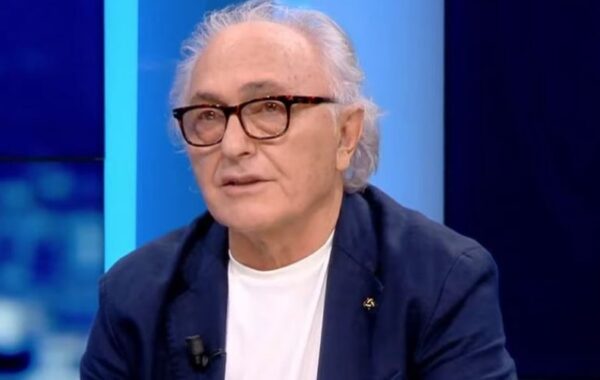
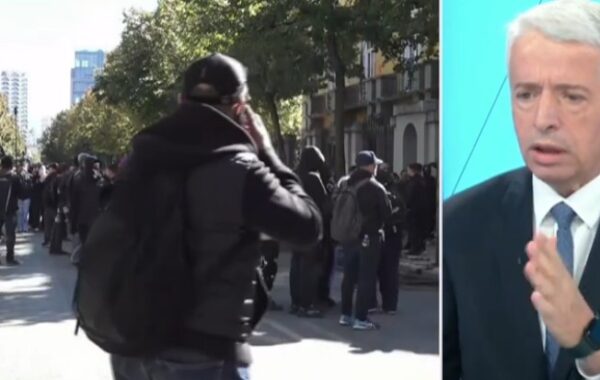
Gabriel Partos, a former BBC analyst for Central and South-Eastern Europe and later an analyst at The Economist Intelligence Unit, in an interview with Top Channel journalist Muhamed Veliu, answers several questions about the current situation in Albania as a result of the protests.
The full interview of Gabriel Partos for Top Channel
Muhamed Veliu – Gabriel Partos, how do you assess the protests that have taken place across Albania, mainly in the capital, Tirana, over the last five days?
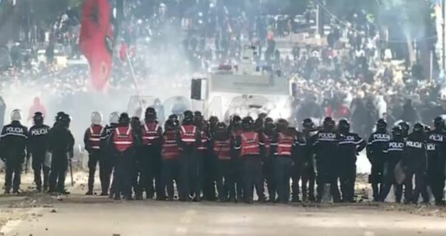
Gabriel Partos – Clearly these protests are the biggest challenge to Edi Rama’s leadership, 13 years after he became prime minister. Both in the scale of these demonstrations and in the violence displayed, which is unprecedented in recent decades in Albania’s history. It is a continuation of the long resistance of a series of protests known as the “Flamingo Revolution”, which has been developing for several months. The current protests are very serious for Mr Rama’s leadership.
Muhamed Veliu – In your view, what are the main factors driving this wave of discontent and unrest?
Gabriel Partos – That is an interesting question, because on the one hand we have many positive developments in recent years or even decades, such as the improvement in living standards, as well as efforts towards full EU membership in the next few years. Having said that, naturally there is much discontent not only with corruption, an issue that continues, but also in this specific case with students, who face a high cost of their education. Especially the impossibility of their future after they graduate.
That is also why thousands are leaving, causing what is known as the brain drain of the best, the brightest, who go to work and continue their studies across Europe or the world. So they are a combination of specific reasons for concern, starting from the cost of education, the cost of living, a lack of prospects, as well as the issue of corruption, a chronic disease of Albanian society, despite the work of the justice system trying to fight it over the years.
Muhamed Veliu – Prime Minister Edi Rama has blamed what he calls “foreign hands” for the current unrest. Do you think foreign actors or external factors are playing a role in the protests which, according to him, aim to destabilise Albania?
Gabriel Partos – There is no simple answer to this. I do not believe that foreign actors from other countries should be blamed for what caused it. But as we here in the United Kingdom have also seen in recent days regarding the 2016 Brexit referendum influenced by Russia, the general view is that Russia tried to intervene but was not generally a decisive factor. Again, when we talk about Albania today, there may also be interference by Russia in particular. There may also be accusations against Serbia. In general, whether or not there is foreign interference, you cannot blame foreign forces for these serious protests.
Muhamed Veliu – Which foreign actors, if any, have an interest in influencing the current political situation in Albania, and what could their objectives be?
Gabriel Partos – I think the most serious potential external actors that intervene or attempt to do so is Russia, which has tried to weaken the European Union and the Euro-Atlantic Alliance, including its European members. Since Albania and Montenegro are in line for membership, there are attempts to weaken them and hinder EU enlargement; that is a Russian objective. That is the most likely when we talk about interference or attempted interference. I think accusations against Serbia of jealousy over Albania’s success in European integration are few, since Serbia has many of its own internal problems. Naturally, Iran, after weak relations and frequent cyberattacks, could in some way be involved.
Muhamed Veliu – Protesters are demanding Prime Minister Edi Rama’s resignation, while he has made clear he has no intention of leaving office. How do you assess his decision to stay in power?
Gabriel Partos – Mr Rama has said he was elected democratically and last year was his fourth re-election. Having said that, Mr Rama has become a victim of his own personal success. Like many politicians around the world, if you are continually re-elected to govern, being successful at staying in office, the chances are you will face more discontent and society’s problems. This becomes even more serious when your senior colleagues have left and now face serious corruption charges. That makes Mr Rama’s position more difficult, because he is the man whom a large part of Albanian society blames for the problems they face. On the other hand, they do not give him what he deserves for his leadership successes. I think his position is now under tension, and he clearly wants to send the message that what matters now is avoiding violence. On the other hand, he must engage in a more essential way, or in a more serious way, in listening to complaints, in listening to discontent, unlike the tendency in recent months not to take the complaints and concerns arising from the Flamingo Revolution protest as seriously as they deserve to be taken.
Muhamed Veliu – Opposition leader Sali Berisha has backed the protests but has not distanced the Democratic Party from the acts of violence during the protests. How much influence does the opposition’s stance have on escalating or reducing tensions in the current situation?
Gabriel Partos – Many of the protesters have expressed equal discontent with the ruling party and the largest opposition party. They have made clear their non-association with the Democratic Party. This is seen as a protest against the entire political class that has governed the country since the end of single-party rule. For the moment, the opposition does not have an important role in supporting the protest or in having a negotiating approach with the government on how to resolve this broad issue in Albanian society. Naturally, the opposition is gripped by internal disagreements, and as a result Mr Rama has been able to stay in power successfully during these 13 years.
For the moment, the opposition is not convincing in bringing a new alternative, or in creating a united front with a broad part of society opposed to the government, or seeking a solution through a government of technocrats. The opposition is not now in a position to bring a kind of leadership, and as a result the protest remains without a leader. That makes it weak and potentially easier for Rama to come out of the storm, as he has done over the last four months, but now he is facing more challenges.
Muhamed Veliu – Albania, as a NATO member country, has enjoyed relatively stable security stability compared with some other Western Balkan countries. Could the current protests turn into a broader period of political instability, and what would the main risks be?
Gabriel Partos – I agree with Prime Minister Rama, who has said we could have complications across the whole Western Balkans. I want to advance this a little more by mentioning the violent protest in France by students and school pupils for a host of reasons. Across the Western world we see a wave of discontent, including in the Western Balkans, where conditions are nowhere near those of the Western world. I think we will have more polarisation, more nationalism, and that is therefore dangerous. For Albania in particular, which has been a stable society despite economic problems, with such violent protests, yes, it can bring problems across the whole region.
Muhamed Veliu – Prime Minister Edi Rama has set the ambitious objective of Albania’s EU membership by 2030. Could the current unrest affect Albania’s European integration process?
Gabriel Partos – Absolutely yes. The EU Delegation made clear that law and order must be enforced proportionately, so as not to use more force than required, but naturally that is difficult when demonstrators engage in acts of violence. Yes, Albania must present a consensual society, where the government must continue with reforms, many of which must be consolidated, especially those of the rule of law, not forgetting the fight against corruption. There is a risk that Albania’s path to the EU could be hindered or delayed, and that is certainly against the interest of the majority of Albanians.
Komentet
Bëhu i pari që komenton!
Lini një Koment të Ri
Për t'u përgjigjur një komenti specifik, kliko butonin 💬 Përgjigju poshtë atij komenti.