Spanish media: A fascinating journey through Albania, from historic cities to the Ionian coast
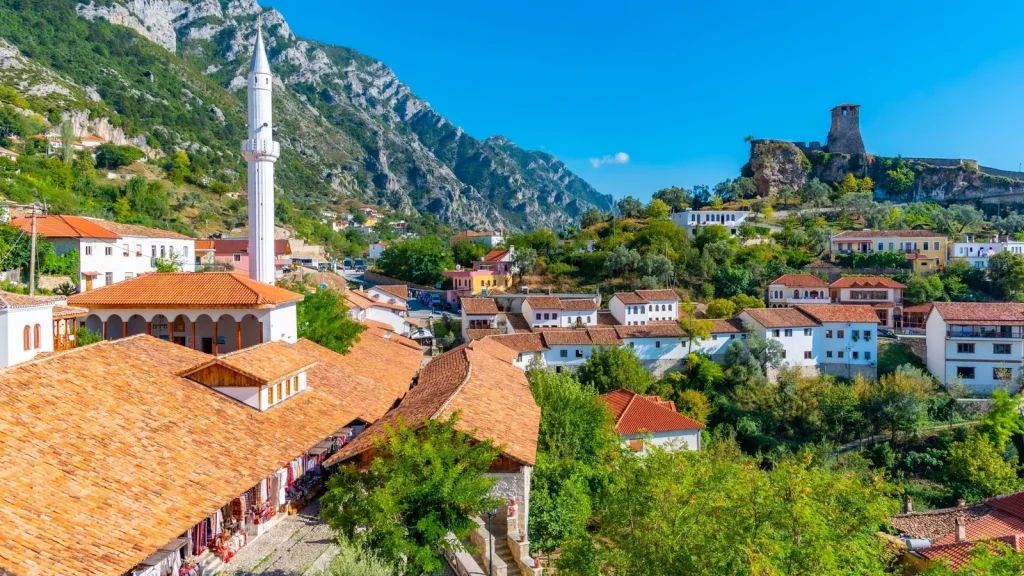
Albania is emerging as one of the most attractive destinations in the Balkans, where history, stone cities, Ottoman heritage, nature and the beaches of the Albanian Riviera come together in a journey full of contrasts, writes Pilar Hernandez Coloma in the Spanish media outlet ¡HOLA!.
From Tirana and Kruja to Berat, Gjirokastra, the Blue Eye (Syri i Kaltër), Saranda, Ksamil and Butrint, the road crosses a country that intertwines traces of the past with Mediterranean landscapes and traditional cuisine.
A fascinating journey through Albania: Stone cities, World Heritage and beaches with crystal-clear waters
From Tirana to the Riviera, this journey full of contrasts crosses a country where history and the joy of living meet on the shores of the Mediterranean.
Did you know there is still a corner of Europe where a stone city can take you into the heart of an Ottoman bazaar, where the waters of the Ionian rival the beauty of the Caribbean’s, and where a capital in full transformation coexists with mosques, old bunkers, medieval fortresses and a cuisine that deserves sitting down at the table to discover?
Set in the southeast of the continent and bordered by the Adriatic and Ionian seas, this small Balkan gem has become one of the great discoveries for those seeking distinctive destinations, different from the usual tourist spots.
For years, Albania stayed off the major tourist circuits and, perhaps precisely for that reason, it still preserves that pleasant sense of discovery that is so lacking when travelling.
Today, travelling through Albania means combining an urban escape with history, architecture, nature and some of the most spectacular beaches of the Mediterranean.
But it also means discovering another way of understanding luxury: that of an unhurried breakfast, of getting lost in a cobbled alley, of eating freshly prepared fish facing the horizon, or of awaiting the sunset on a terrace while the facades of an ancient Ottoman city change colour.
TIRANA: THE METAMORPHOSIS OF A DEVELOPING CAPITAL
The journey begins in Tirana, a city that has known how to turn its past into a gaze towards the future.
The Albanian capital is undergoing a transformation visible at almost every step: colourful facades, artistic offerings, new gastronomic spaces and an urban look that blends tradition with the contemporary.
The place that best explains this new personality is the Blloku.
What during the communist regime was a neighbourhood reserved for the political elite is today one of the main centres of the city’s social life.
Its streets gather specialty cafés, boutiques, contemporary art galleries and venues where the night continues around cocktails.
In the morning, the terraces invite you to sit and watch the city’s movement.
In the evening, the atmosphere changes and the same streets take on another rhythm.
In the centre, the architecture offers another surprise.
Near Skanderbeg Square and the Parliament stands the Namazgja Mosque, a monumental building that intertwines references to Ottoman tradition with contemporary elements.
Its large dome, accompanied by four minarets, dominates the surrounding area.
When the lights come on, the complex takes on another dimension.
Inside, the space stands out for its size and lighting, accompanied by carefully crafted Islamic calligraphy.
Besides being a place of prayer, the complex contains a library and various spaces intended for the community.
To understand the country’s more recent history, the visit continues underground.
Bunk’Art occupies one of the old shelters built during the communist dictatorship, when Albania lived almost isolated from the outside.
These spaces, together with the many bunkers that covered the territory, are today part of a museum dedicated to art and historical memory.
And after this journey, comes one of the simplest pleasures of travel: sitting down to eat.
Fërgesa e Tiranës, with sweet peppers, tomatoes and local feta cheese, prepared in a clay pan, is one of those recipes that help you understand a country also through its flavours.
KRUJA: A CITY OF HISTORICAL IMPORTANCE
Not far from the capital, Kruja appears atop a rocky massif dominating the Albanian plains.
Its historical importance makes it one of the essential stops on this route, but the city attracts especially for the atmosphere that lets you enjoy it calmly and unhurriedly.
The heart of the city is the Old Ottoman Bazaar, a series of cobbled streets and small wooden shops where craftsmanship remains the protagonist.
Handmade carpets, kilims, copper objects, filigree silver jewellery, antiques and products from the mountains fill the shop windows.
It is one of those places where buying is no longer simply a matter of taking home a souvenir, but becomes a way of getting to know the local culture.
The climb leads towards the medieval castle and the museum dedicated to Skanderbeg, a fundamental figure of national history.
From the area near Hotel Panorama, the views open over the bazaar and the castle walls and, when the sky is clear, reach as far as the Adriatic.
The reward comes at the end of the day, when the light falls on the rooftops and turns the landscape into one of the most distinctive panoramas of the route.
DURRËS: A LONG MEAL ENJOYING THE ADRIATIC
The sea appears again in Durrës, an ancient port city where the classical past shares the same view with the Mediterranean way of life.
Its great treasure is the Roman amphitheatre of the 2nd century, built during the reign of Emperor Trajan.
Traces of Antiquity coexist here with the seafront promenade, the beaches and a new strip of spaces by the shore.
In Durrës you can enjoy a quiet evening stroll along the coast and pass the time unhurriedly, savouring the seaside atmosphere.
It is also a good stop to stretch out lunch facing the coastal landscape.
The gastronomic protagonist is grilled fish — wild Adriatic fish prepared on the grill and accompanied by seasonal vegetables.
Sea bass or sea bream, extra virgin olive oil and the clean taste of the product are enough to create an entirely Mediterranean meal.
BERAT: THE CITY OF ONE WINDOW UPON ANOTHER
If Durrës looks towards the sea, Berat seems created to be observed from the other side of the Osum River.
The city is divided by its waters between the historic quarters of Mangalem and Gorica, two names essential to understanding its distinctive appearance.
The Ottoman houses climb the slope and their white facades, filled with large wooden windows, explain the name by which the city is known: “the city of one window upon another”.
Declared a UNESCO World Heritage site, Berat has one of its most beautiful moments at the end of the day.
When the sun begins to set, the walls take on pink, violet and golden hues and the city seems to change appearance before visitors’ eyes.
The climb through cobbled streets leads to the fortified castle.
Inside it, part of local life still unfolds, among Byzantine churches, small dwellings and alleys where the passage of time seems less noticeable.
In the evening, traditional cuisine can be enjoyed.
In the taverns appears tava e kosit, prepared with lamb, yoghurt, rice and eggs and baked in a clay pan until it reaches a soft, airy texture.
GJIROKASTRA: THE CITY WHERE STONE IS THE PROTAGONIST
The road continues towards Gjirokastra, one of Albania’s best-known destinations.
Built on the slopes of the Drino valley and also declared World Heritage, the city seems built from a single material: stone.
Roofs of stone slabs, reflecting the daylight, accompany the steep cobbled streets.
Walking through them lets you discover old houses, Ottoman fortresses, the so-called towers, which belonged to influential families during the 18th and 19th centuries.
In the Old Bazaar, artisan workshops preserve techniques linked to textiles and stonework.
Entering these small shops lets you observe a more everyday aspect of the city.
The gastronomy again surprises with qifqi, small rice balls prepared with mint, black pepper and eggs, which are among the most characteristic specialties of this area.
THE BLUE EYE: NATURE KEEPS A SECRET
Among mountains and forests appears one of the most distinctive places of the route: the Blue Eye (Syri i Kaltër).
The spring emerges from the depths of the earth and forms a kind of giant natural pupil.
The centre appears in an intense blue colour, which gradually turns into turquoise and green hues towards the edges, surrounded by dense vegetation.
The stories surrounding the place add even more to its attraction.
The force with which the water rises from underground has created legends about the depth of the spring and about attempts to explore it.
After this landscape, the gastronomic route continues in the small wooden restaurants by the river.
There, petulla — fried dough served warm with feta cheese and honey — offer a simple and tasty break.
SARANDA AND KSAMIL: THE MEDITERRANEAN THAT LOOKS LIKE THE CARIBBEAN
The great change of landscape comes when you reach the Ionian.
Saranda serves as the gateway to the Albanian Riviera and combines the seafront promenade, palm trees, restaurants by the water and a lively nightlife.
But in Ksamil, the beauty of the landscape reaches its peak.
Small bays with white sand, transparent waters and several islands off the coast explain why this place has earned the name “the Albanian Caribbean”.
Here, the perfect plan needs little instruction: choose a terrace facing the sea, settle onto a lounger on a pier and let the hours pass.
For those who want to explore, the islands can be reached by private boat or kayak, especially as evening begins to fall.
On the coast, some restaurants offer tables set on the rocks, where the sea becomes an inseparable part of the experience.
The cuisine again takes centre stage with fried calamari, grilled octopus and the well-known mussels cultivated in the area around the salt lake of Butrint.
All of this is accompanied by a local white wine.
BUTRINT: THE PERFECT ENDING AMONG RUINS AND NATURE
A few minutes from Ksamil lies Butrint, a place where different civilisations have left their traces and where the ruins coexist with a green Mediterranean landscape.
Butrint National Park, a UNESCO World Heritage site, gathers Roman, Byzantine, Hellenistic and Venetian traces.
The Roman theatre, the basilicas, the ancient walls and the fortifications appear integrated into a forest environment beside a salt lagoon.
Precisely this coexistence between archaeology and nature is one of the great particularities of this place.
It is a perfect end to a journey that has crossed some of Albania’s varied landscapes: the forward-looking capital, the cities that preserve their past, the mountains, the markets, the local cuisine and a coast that looks as if taken from another continent.
“SECRETS” NOT TO BE MISSED
Ice cream prepared on the spot in Gjirokastra
In the evening, the cobbled streets of the stone city take on another atmosphere.
In the Old Bazaar you can stop at the small “Ice Rolls” ice-cream shops, where artisanal ice cream is prepared on the spot on a cold plate.
Fresh ingredients are mixed according to the chosen flavour and then the ice cream is served rolled up.
A traditional tasting menu in Berat
To get to know traditional Albanian cuisine more closely, one of the special stops is the restaurant “Friendly House”, set in a quiet street of the city.
The setting, decorated with carpets and traditional clothing, accompanies a tasting menu with roasted meats, stuffed peppers, artisanal cheeses and warm bread.
The experience offers the chance to get to know traditional flavours and Albanian hospitality up close.
The venues by the springs of the Bistrica River
Before visiting the Blue Eye, a stop can be made at the bars and small spaces set by the riverbanks.
The cold water descending from the mountain creates a fresh environment, suitable for a break during the journey.
Çiftelia and traditional coffee in Kruja
For those who want to know Albanian culture more closely through craftsmanship and traditions, Kruja’s Old Ottoman Bazaar is an important stop.
Among the wooden workshops and cobbled streets is also the çiftelia, a traditional Albanian two-stringed instrument, handcrafted and closely linked to Albanian musical tradition.
Besides its musical value, the çiftelia can also serve as a characteristic object to take as a souvenir from Albania.
To complete the visit to Kruja, another experience is traditional Turkish coffee.
One of the places where it can be enjoyed with views of the city is the terrace of the “Hotel Restaurant Panorama”, near the bazaar and the castle.
From there you can enjoy an aromatic coffee while watching the sunset over the city’s rooftops and the surrounding mountains.
These experiences complete the journey through Albania, intertwining gastronomy, traditions, craftsmanship and landscapes with the history of Albanian cities.


Komentet
Bëhu i pari që komenton!
Lini një Koment të Ri
Për t'u përgjigjur një komenti specifik, kliko butonin 💬 Përgjigju poshtë atij komenti.