
The disappearing lake in Greece exposing the rapid impact of climate change
Before the drought began, Lake Koroneia in northern Greece was a protected wetland, a refuge for thousands of migratory and water birds, including flamingos, and an attraction for tourists, as well as for local fishermen and farmers. After a decade of low rainfall and excessive irrigation, Koroneia, once Greece's fifth-largest lake, has shrunk to less than a tenth of its original size.
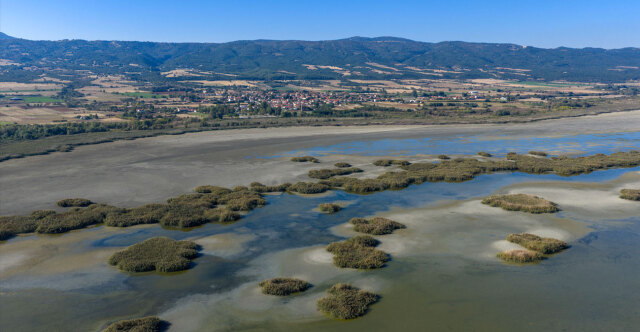
Before the drought began, Lake Koroneia in northern Greece was a protected wetland, a refuge for thousands of migratory and water birds, including flamingos, and an attraction for tourists, as well as for local fishermen and farmers.
After a decade of low rainfall and excessive irrigation, Koroneia, once the fifth-largest lake in Greece, has shrunk to less than a tenth of its original size, according to data from the National Observatory of Athens. The water that remains collects in a series of dark pools, and the exposed lakebed is a vast field of mud, cracked and bleached by years of scorching sun.
The area has become a symbol of how climate change and drought are affecting northern Greece, where rainfall has become more erratic and farmers are increasingly desperate to pump the lake’s water onto their crops.
The problem affected most of Europe this summer, when heatwaves and low rainfall shrank rivers and lakes to levels not seen in decades, affecting the distribution of goods and limiting energy production.
Scientists say the lake’s water resources began to decline after a rainy season in 2015–2016. Years of low rainfall and above-average heat since then have evaporated not only the lake’s water, but also the sources that fed it.
Satellite images published by the National Observatory of Athens show that its surface has shrunk to 2.7 square kilometres from 34.4 square kilometres in 2016.
Moreover, as local average temperatures have risen in recent years, evaporation has increased by 100 to 150 millimetres per year.
The authorities say they have taken action since a European Union court ruled in 2013 that Greece had failed to protect Koroneia from excessive irrigation, illegal water drilling and pollution.


Komentet
Bëhu i pari që komenton!
Lini një Koment të Ri
Për t'u përgjigjur një komenti specifik, kliko butonin 💬 Përgjigju poshtë atij komenti.