
Commentary – Record fuel prices, another blow for German inflation
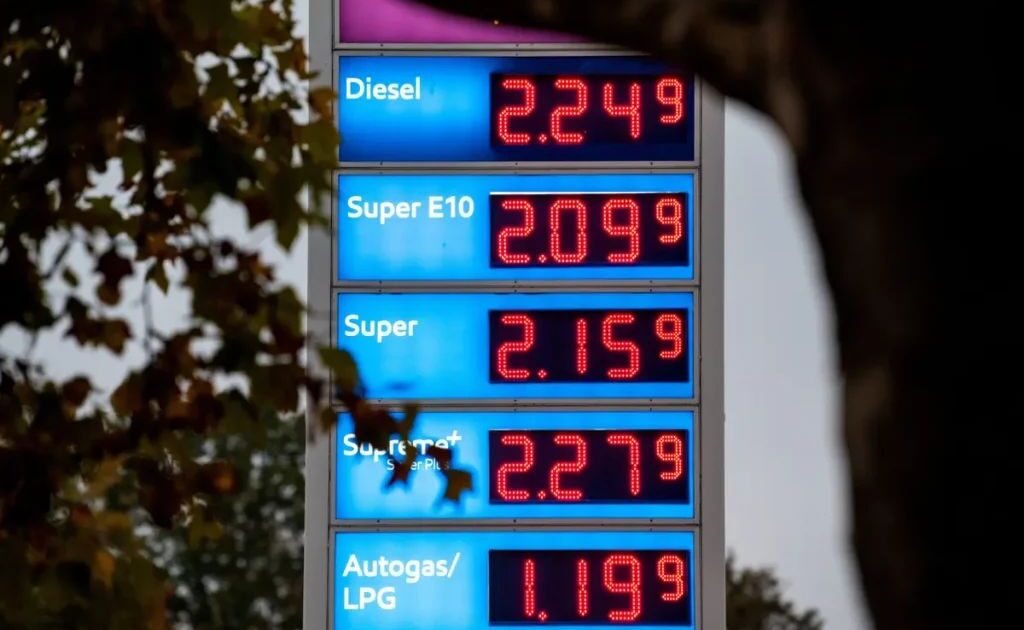
FRANKFURT, September 30 /ATSH-DPA/ – Inflation in Germany rose in September to its highest level since the end of 2023.
According to preliminary data from the Federal Statistical Office, the prices consumers pay rose by 3.3% compared with September last year.
In August, inflation was 2.9%. That means that within a month the inflation rate rose by 0.4 percentage points.
The rise was caused mainly by more expensive petrol and diesel.
According to experts, the rise in fuel prices is linked to developments in the Middle East.
The blockade of the Strait of Hormuz, a very important route for oil transport in the world, has pushed fuel prices up to record levels.
Although ship traffic through this route has increased, attacks on ships have continued, while negotiations between Tehran and Washington have dragged on.
Another factor is the situation in the Bab al-Mandab strait, near Yemen.
The takeover of this strait by the Iran-backed Houthi militia has caused another rise in the price of “Brent” oil on international markets.
“Brent” oil sets one of the main prices used in the world as a benchmark for the price of crude oil.
These developments have led petrol and diesel in Germany to reach record price levels this month.
For this reason, the government of Chancellor Friedrich Merz has temporarily reintroduced a cut in fuel tax, which will remain in force until the end of the year.
According to calculations by the Federal Statistical Office in Wiesbaden, Germans paid 14.9% more in September for fuel and household energy than in the same month last year.
Meanwhile, food became only 0.4% more expensive compared with September last year.
Services too, which include package holidays and restaurant visits, rose by 2.7%.
Economists warn that the longer fuel prices stay high, the greater the risk that the rise in costs will spread to other sectors.
The reason is simple: when fuel and energy become more expensive, transport, production and running a business cost companies more.
Those higher costs may then end up with the consumer through higher prices.
Import prices also rose by about 8% in August, compared with a year earlier.
This was the biggest acceleration since the end of 2022.
Import prices are the prices German companies pay for goods and products they buy from abroad.
When these products cost more, the rise in costs may later be reflected in the prices consumers pay too.
Record temperatures and drought during the summer are also influencing the rise in prices.
They have restricted transport on important waterways, such as the Rhine river, and may also affect agricultural production.
The German economic institute “ifo” expects companies to pass the higher energy costs on to consumers more and more.
“Fuels and heating oil have already become noticeably more expensive, while energy suppliers are expected to raise electricity and gas prices during the winter,” said Timo Wollmershäuser, head of economic forecasts at the “ifo” institute.
From August to September alone, consumer prices rose by 0.6%.
Friedrich Heinemann of the ZEW economic institute said the main concern is that high inflation will turn into a permanent condition.
According to him, the last time annual inflation in Germany was below 2% was in 2020, before the price rises after the pandemic and the further rise after Russia’s invasion of Ukraine.
The European Central Bank (ECB) expects inflation in the euro area to stay this year noticeably above its 2% target. /


Komentet
Bëhu i pari që komenton!
Lini një Koment të Ri
Për t'u përgjigjur një komenti specifik, kliko butonin 💬 Përgjigju poshtë atij komenti.