
DP: Artist Status is needed — an artist cannot be treated as an ordinary worker
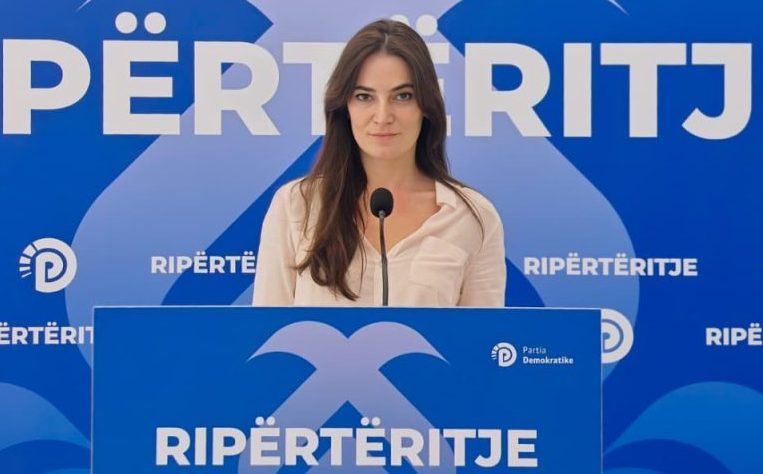
The chairwoman of the National Council of the Democratic Party, Julinda Emiri, reacted today to the draft law “On the financial treatment of performing artists after the end of their stage careers.”
Emiri said Albania lacks a complete legal system for the artist profession and that the Artist Status should not be limited only to the pension issue. According to her, the reform should include professional status, social protection and the legal rights of artists.
One of the main problems she raised is the lack of a National Professional Labor Contract for artists. Emiri stated that at present, elements such as work difficulty, physical and vocal strain, work rhythm, rehearsals, performances, occupational injuries, insurance and career development are not specially regulated.
“This is where the absurdity of this draft law appears: the artist is treated with the logic of an ordinary employee, while the specificity of his profession is taken into account when discussing the end of his career. Recognizing the special status of the artist only when calculating the artist’s retirement, without first guaranteeing the rights stemming from that same specificity throughout all the working years, is a trap of this draft law,” she said.
She also touched on the definition of mandatory age bands, arguing that the professional career differs among different categories of artists.
Emiri also raised concerns about the social aspect of the draft law, demanding clarity on the artist’s status after the end of the employment relationship, the rights that are preserved, the link of this period to the pension, and the way benefits are calculated.
“The difficulty of the profession is also unaddressed. One cannot fairly determine treatment at the end of a career without first determining the weight of this difficulty during the working years, its effect on pay, on insurance and on acquired rights.”
“Mandatory age bands are another deadlock. Ballet has a different professional cycle than lyrical art; a soloist has a different development than a dancer or acrobat. Moreover, a criterion approved today does not only determine the fate of artists who are currently 47 or 57 years old, but creates a long-term rule for future generations as well,” said Emiri.
Another issue she raised was the preservation of artistic memory in cultural institutions. Emiri emphasized that artists with decades of experience carry repertoire, technique and experience that can be transmitted to younger generations.
“This draft law also strikes at an essential aspect: the issue of the artistic memory of institutions. A soloist, chorister or dancer with decades of experience does not represent just a number in the payroll,” she said.
Emiri demanded that the consultation on the draft law not be formal and that it include artistic troupes, unions, labor-law specialists and professionals in the field.
According to her, “the Democratic Party has its Program for Art and Culture ready, where the legal reform is conceived as a whole: changes to the law on art and culture, changes to the Labor Code and institutional regulations, the National Professional Labor Contract and the Artist Status.”
Emiri stated that, according to the DP’s program, the National Professional Labor Contract is envisaged as a priority reform to be implemented within the first three months of government.
“In this same program, the classification of artists’ work difficulty in ‘Category 1’ is envisaged, as well as the participation of the artistic community in institutional policymaking. The Status further envisages the legal protection of artists and independent professionals, the formalization of professional categories, and insurance even for artists engaged outside permanent troupes. Therefore, the debate we have today should not end with changing an age or a percentage in the draft law. It must serve to make the reform that Albanian art has awaited for years: the National Professional Labor Contract and the Artist Status,” she said.
Komentet
Bëhu i pari që komenton!
Lini një Koment të Ri
Për t'u përgjigjur një komenti specifik, kliko butonin 💬 Përgjigju poshtë atij komenti.