
Edison Gjergo, the painter persecuted by the communist regime
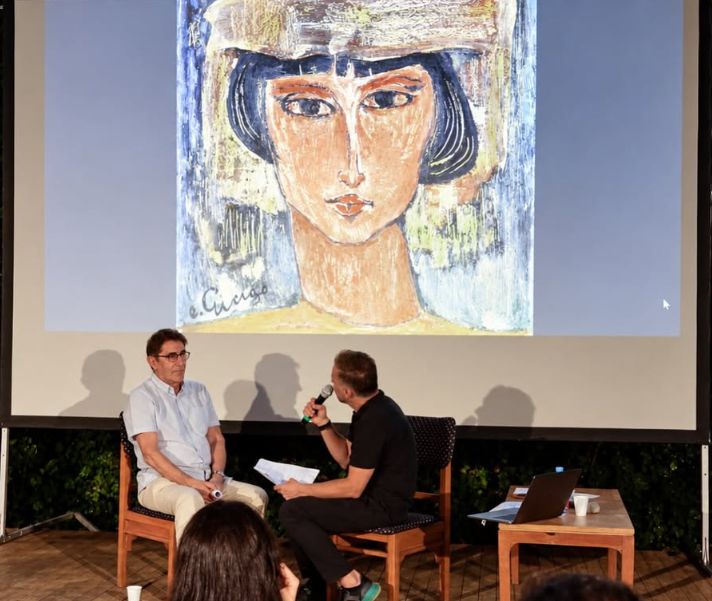
The National Gallery of Arts organized an evening dedicated to the artist Edison Gjergo (1939–1989), as part of the conversation series “The Other Side of Socialist Realism: The Banned Artists.”
Albanian art scholar Ylli Drishti held a conversation with Gent Gjikola, a scholar and curator at the National Gallery of Arts. The audience had the opportunity to learn about the life, work and fate of one of the most distinctive figures of Albanian painting of the 1960s–1970s.
Edison Gjergo was sentenced on April 25, 1975 “for agitation and propaganda against the people’s power,” to eight years in prison. He was released on October 28, 1982, but never returned to the art scene. He died 7 years later.
The National Gallery of Arts still holds a collection of four of his paintings: “Heroine Zonja Çurre” (1966), “Epic of the Morning Stars” (1971), “The Smelter” (1971) and “Portrait of a Highland Woman” (1972). It was precisely his work “Epic of the Morning Stars,” which became the object of aesthetic and then ideological debates, that cost him his persecution.
Through the works, the criticism of the time and the documents of his persecution, at the center of the discussion was Gjergo’s search for a distinctive pictorial language.
This series of meetings aims to bring back into attention the stories of Albanian artists who were censored, persecuted or deprived of creativity during the communist regime, creating a space for reflection on art, history and collective memory.
The activity was held as part of the “Echoes of Memory” program, organized by the National Museum of Surveillance “House of Leaves,” with the support of the Konrad Adenauer Foundation, in cooperation with the National Gallery of Arts.


Komentet
Bëhu i pari që komenton!
Lini një Koment të Ri
Për t'u përgjigjur një komenti specifik, kliko butonin 💬 Përgjigju poshtë atij komenti.