
European Intelligence Warns of New Russian Threat: NATO Could Be Tested by Missiles
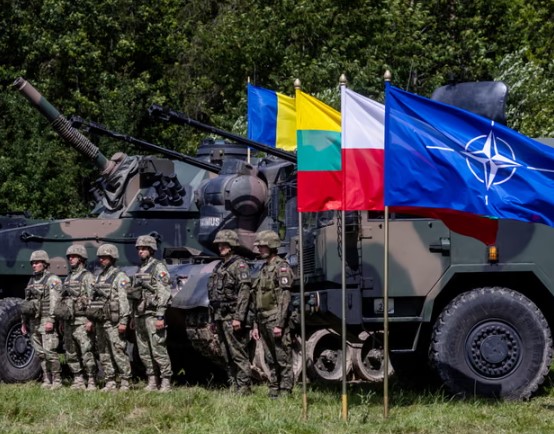
European intelligence officials have raised concerns that Russia may attempt to test NATO in the coming months, through provocations, drone or missile attacks and, in a possible scenario, even a limited incursion into alliance territory.
The warnings come after Polish Prime Minister Donald Tusk told parliament that intelligence assessments suggested Russia could launch a drone or missile attack on NATO territory in the coming months, as part of efforts to prove that “Article 5 is more theoretical than practical.”
French President Emmanuel Macron called Tusk’s warnings “sound and well-documented” and on Friday summoned party leaders and 2027 presidential candidates to an urgent meeting in Paris, where they discussed — among other topics — intelligence on a growing threat from Russia.
Fears of escalation come as the UN General Assembly gathers in New York later this week, and amid the intensification of airstrikes by both sides in Russia’s war in Ukraine. Kyiv struck Moscow and other Russian regions with hundreds of drones and missiles in the early hours of Sunday, in one of its largest air attacks of the war.
In separate interviews with the Guardian last week, in different locations, three European intelligence leaders discussed their views on the potential threat from Moscow.
Michal Koudelka, head of the Czech Republic’s BIS security service, said that besides increased drone activity, a small-scale invasion of NATO territory bordering Russia could be part of the Kremlin’s plans. “It is possible. It could include a limited intervention, false-flag provocations, a massive influence campaign,” he said, in a rare interview at the agency’s headquarters in Prague. He said this scenario could develop within “months, not years,” but added that “many people are doing everything they can to make sure this does not happen.”
Officials in the three Baltic states, which border Russian territory, have been more cautious about the prospect of an invasion or another serious escalation, citing Moscow’s limited resources in Ukraine and warning that exaggerating the prospect of an attack could play into the Kremlin’s hands.
“We see no signs of an imminent attack,” said Normunds Mežviets, director general of Latvia’s VDD state security service, in an interview at the agency’s headquarters in Riga. He acknowledged there were signs that Moscow was preparing for more decisive actions in Europe, but said it was unclear whether the plans were simply part of a destabilization strategy.
“It is still an open question whether they have direct and concrete plans or whether this is only within the context of their general efforts to spread fear and insecurity in Western society,” he said.
Baltic politicians, who for many years criticized Western Europe for softness toward Russia, now find themselves in the odd position of telling some Western leaders to tone down their public messaging, fearing that talk of an imminent invasion could be damaging to their societies and economies.

Komentet
Bëhu i pari që komenton!
Lini një Koment të Ri
Për t'u përgjigjur një komenti specifik, kliko butonin 💬 Përgjigju poshtë atij komenti.