
Monastery of Saints Julitta and Quiricus heads toward restoration, opening new opportunities for cultural tourism in Dropull
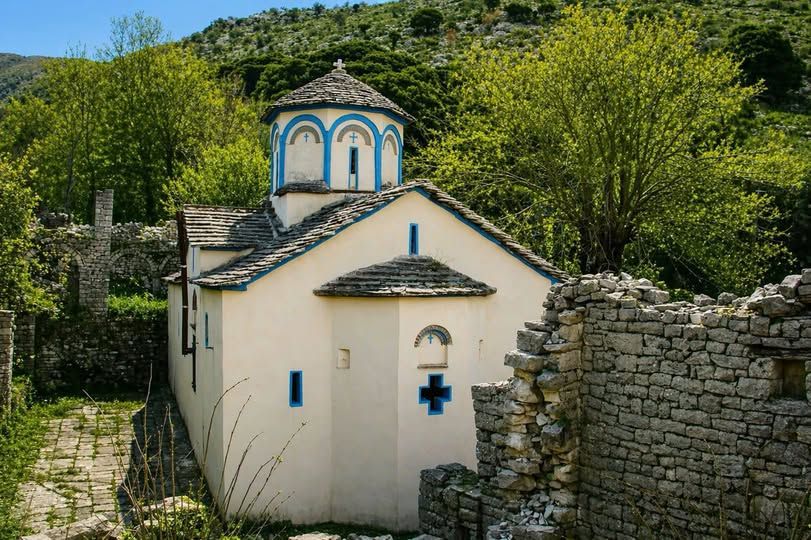
The Monastery of Saints Julitta and Quiricus in Dhuvjan, Dropull, is being restored with support from the World Monuments Fund for the current phase.
The Minister of Tourism, Culture and Sport, Blendi Gonxhja, was in Dhuvjan, where he closely inspected this phase of the restoration. Gonxhja said the project also includes signposting for the trails linking the area’s monuments, preserving heritage and creating new opportunities for cultural tourism in Dropull.
The project is implemented by Cultural Heritage Without Borders, in cooperation with the IKTK, DRTK Gjirokastër, the Autocephalous Orthodox Church of Albania, the Municipality of Dropull and the local community.
“This synergy is producing tangible results in the spiritual and material revival of our religious history, but also in economic and social revitalization,” Minister Gonxhja said.
The Monastery of Saints Quiricus and Julitta (also known as the Monastery of the Nativity of the Theotokos) is one of the most important church heritage monuments in southern Albania, in the Dropull area.
The monastery belongs to the Byzantine period. Some historical sources and old monastic notes suggest the current complex may have been founded or rebuilt around 1089, during the rule of the Byzantine Empire.
The monastery was built with a cross-shaped plan with a central dome, typical of post-Byzantine architecture. Inside, six stone columns support the dome.
The building was dedicated to the martyr saints Saint Quiricus (Qiriku) and Saint Julitta (Julita). In 1777, a Greek school was opened there by the Orthodox missionary Cosmas of Aetolia, turning the monastery into an educational and religious center for the Dropull area. A school for girls and craft workshops were later added.
In 1963, it was declared a First Category Cultural Monument.
This monastery is considered a pearl of Byzantine heritage in the Drino Valley, not only as a place of worship, but as testimony to the history of Christianity and the culture of Albania’s south.

Komentet
Bëhu i pari që komenton!
Lini një Koment të Ri
Për t'u përgjigjur një komenti specifik, kliko butonin 💬 Përgjigju poshtë atij komenti.