
On the claim of weakening the investigation and prosecution of corruption
By Ilir Beqja
This submission examines all the provisions of the version of the draft law “On some additions and amendments to Law No. 7905, dated 21.3.1995, the Criminal Procedure Code of the Republic of Albania, as amended”. Articles 1–106 and the additional Article 16/1 are followed: a total of 107 provisions of the draft law. The numbering refers to the amending provisions, not to the number of articles of the Code that are affected.
For each provision it is identified what competence is preserved, expanded or limited; what condition is set for its use; and what conclusion is supported regarding the link with the investigation of corruption. For the articles that create an entire chapter, the new provisions within it are also treated separately. The analysis of this version is not replaced with other formulations that may have circulated.
The Statement of the Association of Prosecutors, dated 1 October 2026, as reproduced in the media, expresses concern about the fragmentation of competences, secrecy, means of evidence, measures and procedural consequences. It recognises the need for guarantees and judicial control and calls for consultation and an impact analysis. It does not contain a specific position on each of the 107 provisions of this file. Therefore, the article-by-article treatment below is an examination of the possible effects, not an attribution to the Association of 107 claims it has not made.
The legal distinctions on which the examination rests
The competence to gather a piece of evidence is not the same as the right to gather it without authorisation. The existence of a judicial authorisation does not prove that the means has been removed; but neither does the preservation of the means prove that the additional authorisation does not cause delay. Likewise, the preservation of the charge does not prove that a limitation of the security measure does not affect the management of risk.
The invalidity of an act, the inadmissibility of a piece of evidence, the loss of force of a measure and the dismissal of a case are different consequences. They must not be merged into a single conclusion for every change. The draft contains categories of sanctions, exceptions, repetition mechanisms and cases of lapse; for each, the concrete formulation applies.
The Code, in the consolidated text consulted, also links the proceedings with regularity, the rights of the individual, the presumption of innocence and the gathering of evidence both incriminating and exculpatory. This basis shows that the efficiency of prosecution and its legality are analysed together; it does not prove that every choice of this draft is necessary or that every proposed time limit is affordable.
Contents
1. Procedural position, defence and competence — Articles 1–9
2. Publication and documentation — Articles 10–16/1
III. Invalidities and the search for evidence — Articles 17–32
1. Interceptions and the use of communications — Articles 33–35
2. Conditions and types of security measures — Articles 36–50
3. Imposition, review and time limits of measures — Articles 51–59
VII. Registration and direction of investigations — Articles 60–77
VIII. Defence investigations — Article 78
1. Completion of investigations and revocation — Articles 79–87
2. Preliminary hearing, trial and appeal — Articles 88–104
3. Transition to the new regime — Articles 105–106
XII. Conclusions by debate issue
XIII. Conclusion of the submission
Sources and reference note
1. Procedural position, defence and competence — Articles 1–9
Article 1 — Familiarisation with the evidence and control over the limitation of access
Article 24 | Source: [P], article 1.
The article distinguishes the defendant from the person under investigation: for the former it requires that the evidence be made available and that new materials be notified; for the latter it recognises investigative secrecy and a procedure of request, response and judicial control. For the evidence supporting the security measure it provides for mandatory access. The prosecutor is not deprived of the right to gather, analyse and use the evidence.
The link with corruption lies in the possibility to concretely challenge a transaction, document or communication used for the charge. Familiarisation with the evidence does not erase it; it enables control of its meaning and authenticity. This does not prove the absence of any operational risk: the formulation for the defendant is broad, while judicial failure to decide within 48 hours brings access. Therefore the verifiable effect is the preservation of the evidentiary competence and a change in the secrecy regime, not the removal of the investigation nor a guarantee that secrecy is never affected.
Article 2 — Object of the investigation and registration of other facts
New article 25/a | Source: [P], article 2.
The prohibition of actions outside the object is accompanied by an express path for registering another offence, assessing the link between proceedings and carrying out immediate actions in the defined cases. Thus, the initial object does not become an absolute obstacle to pursuing another fact that emerges during the investigation.
In a concession investigation, the discovery of a suspicious payment or of another document must not be ignored: the material can lead to the relevant registration and procedural treatment. This is an illustration of the mechanism, not a proven case. The change requires that the expansion have an identifiable object, making the basis of the intervention controllable. The difficulty that remains is the separation of the new fact from the new evidence for the existing fact; without this separation, formalisation may bring fragmentation.
Article 3 — Liability for unlawful investigative actions
New article 33/a | Source: [P], article 3.
Disciplinary liability is linked to violations committed with fault: unlawful searches and seizures, use of inspection to circumvent authorisation, or breach of the guarantees of questioning. The article does not prohibit any of these means when used according to the law.
For corruption proceedings, the useful result of an action and its legality are two separate questions. The provision preserves this distinction and does not create a right of the suspect to obstruct the authorised action. Its normative consequence is individualised liability for the violation, not automatic liability for every investigation without a conviction. A deterrent effect from excessive disciplinary enforcement is a possible hypothesis, but it requires analysis of the standard of fault and of practice, not only of the existence of liability.
Article 4 — Presence of the defence counsel during questioning
Article 34/a | Source: [P], article 4.
The mandatory presence of the defence counsel during the questioning of the defendant is added. The prosecutor can still put questions, document the answers and verify the statements against other evidence. The lawyer does not acquire the competence to decide on the continuation of the charge.
In corruption cases, where the explanation of procedures, contracts and decision-making can be complex, the presence of the counsel makes the manner of taking the statement controllable. It cannot be inferred that the lack of possibility of questioning without a lawyer is a lack of possibility of investigation. There is, however, a real need for available counsel; delay from their absence is an organisational matter with possible impact, which the text does not measure.
Article 5 — Statements of the person and third parties’ testimony about them
Article 36 | Source: [P], article 5.
The article expressly extends the formulation also to the person under investigation and prohibits turning his procedural statements into an object of testimony. It does not say that every lawfully taken statement is unusable; it regulates the way the statement enters the process.
The importance for corruption is that the statement be presented with its own documentation and guarantees, not reconstructed through another person’s memory in order to circumvent the rules of questioning. Lawful questioning and independent evidence about the suspected actions remain possible. The effect is the limitation of an indirect route of proof, not immunisation of the declarant against investigation.
Article 6 — Guarantees when suspicion is already individualised
Article 37 | Source: [P], article 6.
The judicial police is expressly included in the obligations of the provision. Inadmissibility is linked to the case where, at the time of questioning, a specific and individual suspicion existed and the person should have been treated from the start as a suspect or defendant.
This does not prohibit the questioning of officials who may have information about corruption; it prevents the avoidance of status and guarantees when the conditions for them have arisen. The prosecutor can proceed with the proper status and gather other evidence. The time condition is essential: the fact that the person is accused later does not automatically make the earlier questioning unlawful. The concrete effect depends on proof of the existence of suspicion at the moment of the action.
Article 7 — Warnings and exercise of the defence during questioning
Article 38 | Source: [P], article 7.
The warnings about the use of statements, silence and data about other persons are accompanied by defined consequences. The lawyer is recognised interventions for the protection of rights, without being given control over the object of the investigation. Statements taken with the relevant guarantees remain possible.
A corruption investigation can rest on informed statements, documents, expert examinations and lawfully obtained communications; the text does not require renouncing these means. But the formulation that the lawyer must not interrupt or suspend the questioning may also limit confidential advice, while the reference in point 3/2 to point 3 is inaccurate in relation to the warnings of point 3/1. These are contents and formulations that must be distinguished from the claim that informing about rights makes the taking of evidence impossible.
Article 8 — Recording of the questioning of a minor victim
Article 58/a, point 4 | Source: [P], article 8. Read together with [K], the relevant provision.
The words conditioning the recording on technical possibility are removed; in the reading with the existing text, the criterion of appropriateness remains. The article’s object is the protection and documentation of the questioning of a minor victim, not special competences for corruption.
The possibility to take and use the statement is not removed. Recording preserves the manner of questioning and allows verification of the answers. An effect on a corruption investigation would be indirect, where a minor has an evidentiary role. Lack of equipment is a possible practical obstacle, but it does not change the fact that the provision does not prohibit testimony and does not exclude any category of officials from prosecution.
Article 9 — Judicial forum for some charges against special magistrates
Article 75/a | Source: [P], article 9.
The defined charges against GJKKO judges and SPAK prosecutors pass to the general jurisdiction, but the offences of letters “a” and “b” of article 75/a are excluded. No immunity is created and, with this addition, the competence for the offences included in those two letters is not removed.
A change of forum is not equivalent to impossibility of prosecution: trial is provided in another court. From the text it cannot be said that all corruption charges against these subjects leave the special jurisdiction. But the effect on connected charges, capacity and impartiality is not proven by this sentence alone. The limited and verifiable conclusion is the preservation of prosecution and of the express exclusion, not a general assessment of which forum is more effective.
2. Publication and documentation — Articles 10–16/1
Article 10 — Publication of acts and informing the public
Article 103 | Source: [P], article 10.
The article regulates the dissemination of materials, not the prosecutor’s right to administer them as evidence. It preserves the parties’ procedural access and allows communication necessary for the investigation or the public interest, within the limits it sets. For this reason, the prohibition of publishing an act is not, in itself, a prohibition of using it in a corruption investigation.
But the fight against corruption does not include only actions within the file: public information and disclosure by third parties are another dimension. The limitation of acts no longer secret, of decisions on measures, and prior authorisation for journalists may affect this dimension. The text does not support an unreserved declaration that every limitation of publication is without effect. The precise distinction is between the preservation of the evidentiary competence and the real limitation of the circulation of information; the first does not exclude the second.
Article 11 — Liability for publication contrary to the law
Article 104 | Source: [P], article 11.
Civil, disciplinary and criminal liability are provided according to the relevant conditions. The article does not limit the gathering of documents, questioning or the requesting of authorisations. It defines consequences for the unlawful dissemination of material.
For corruption investigations, the distinction between the use of a piece of evidence by the court and its public exposure is direct: prohibiting the leak does not eliminate the evidence. Nevertheless, the field of liability depends on the breadth of the prohibitions of article 103. The risk for communication in the public interest cannot be denied by relying only on the fact that the formal investigation continues. The provision does not create impunity, but its informative effect is not the same as its evidentiary effect.
Article 12 — Presumption of innocence in procedural acts
New article 104/a | Source: [P], article 12.
The article distinguishes acts aimed at proving guilt from other acts and allows the references necessary for procedural assessments. Thus, the prosecutor can formulate a charge, argue suspicion and request measures. He is not prohibited from explaining why a document or conduct supports criminal liability.
In a corruption investigation, the limitation touches the presentation of the person as definitively guilty in acts that do not have that function. The mechanism of correcting the expression does not extinguish the charge. What matters is the separation of language describing a suspicion from the final declaration of guilt. The text preserves the first and sets limits for the second; it does not give a basis to treat the presumption of innocence as removal of the competence to accuse.
Article 13 — Legitimate interest and free copies
Article 105 | Source: [P], article 13.
Access to copies is linked to a legitimate interest in the proceedings and for defined categories is not paid. The change does not limit the taking or preservation of evidence by the prosecution and does not open the file to any person unconnected with the case.
The importance for corruption is the possibility of the victim and the defence to participate genuinely, to identify inaccuracies and to present evidence or requests. The copying cost passes under the new regime and may increase administrative expenses. This is a budgetary effect distinct from the removal of an investigative means; the text brings no prohibition on prosecuting a person because he benefits from free copies.
Article 14 — Procedure in chambers
New article 112/a | Source: [P], article 14.
Notifications, submissions, hearing, decision-making and appeal are defined, but point 10 excludes defined categories, including special regimes for interception and measures. It does not result that every secret request must be notified in advance under this article.
The possibility of debate on a request does not remove the court’s competence to accept it. In corruption proceedings, the prosecutor retains the requests the law recognises and the paths excluded from this regime. The practical effect may be an increase in hearings and notification deadlines. The interaction with the formulation of article 278 remains important; the exclusions of this article must not be presented as a self-evident solution to every conflict with the other provisions.
Article 15 — Audiovisual documentation and the conditions of exception
Article 115 | Source: [P], article 15.
Audiovisual recording becomes the rule; audio or writing are allowed in documented and reasoned exceptions. Inadmissibility is linked to testimony or statements taken in breach of the obligation, not to all evidence of the proceedings indiscriminately.
For corruption, recording can preserve the question, the answer and the context, enabling verification of claims of distortion or pressure. This is an identifiable evidentiary function. On the other hand, lack of equipment may render unusable a statement not documented according to the rule. This consequence cannot be denied; the supported argument is that taking the statement is allowed, but conditioned on a technical and procedural standard that requires real capacity.
Article 16 — Correction of the transcript
Article 116 | Source: [P], article 16.
The possibility is provided for the parties to identify inaccuracies in the transcription and to challenge the relevant decision. The recording serves as the point of verification; the provision does not allow its deletion or alteration according to one party’s interest.
A word, number or figure transcribed wrongly can change the meaning of a statement about a payment or decision-making. Verifiable correction does not weaken the evidence that really exists; it separates it from the transcription error. There is additional work for the administration of challenges, but there is in this provision no prohibition of testimony, questioning or a corruption charge.
Article 16/1 — Ordering of the means of recording
Article 122 | Source: [P], article 16/1.
The ordering of the phrase “audio or audiovisual” is changed to “audiovisual or audio”. Both forms remain mentioned. This change, taken alone, does not set a new exclusion of evidence and does not remove a competence of the prosecutor.
The conclusion for this article is limited but complete: from the terminological intervention no special obstacle to the investigation of corruption emerges. The binding rules on recording and the consequences of violating them must be sought in the provisions that impose them, not attributed automatically to this change in word order.
III. Invalidities and the search for evidence — Articles 17–32
Article 17 — Ex officio ascertainment of absolute invalidity
Article 128/a | Source: [P], article 17.
It is expressly added that absolute invalidity is ascertained ex officio at every stage and instance. The formulation that every procedural violation becomes absolute is not added. The material field remains linked to the relevant categories of this institution.
The corruption investigation continues to be able to produce valid acts and evidence. Ex officio review makes it possible to identify an obstacle even when the party has not raised it. The effect may be annulment of acts or repetition of the procedure where the legal cause exists; this effect is not equal to excluding the offence from prosecution. For the concrete impact, what matters is what violation was committed and which acts depend on it, not only the stage at which it is ascertained.
Article 18 — Invalidity of the intermediate regime
New article 128/b | Source: [P], article 18.
A category is created with a defined field, time limits and lapse rules, different from absolute invalidity. It is linked to rights of participation and defence and to cases where the law allows ex officio ascertainment.
The text does not support the thesis that all violations receive the same incorrigible consequence. On the contrary, this article establishes legal distinctions. In a corruption case an act can be challenged without the deficiency being automatically equated to permanent impossibility of prosecution. The division of categories may create interpretation debates, but this is a problem of applying the relevant fields, not proof that every file with an intermediate violation must be dismissed.
Article 19 — Adjustment of the reference for relative invalidity
Article 129 | Source: [P], article 19.
The reference changes to include articles 128/a and 128/b. This intervention follows the system of invalidity categories and does not create a new means to block the investigation.
Regarding the effect on corruption, this article cannot be counted as a separate material limitation beyond the system it adjusts. It does not remove interception, seizure, expert examination or the right to request trial. Every consequence must be linked to the provision defining the invalidity and its conditions, not only to the change of the numerical reference.
Article 20 — Exclusion of statements obtained by torture or ill-treatment
Article 151 | Source: [P], article 20.
Statements or information obtained by torture or inhuman or degrading treatment are not used, with the exception against persons accused of that very treatment. The change does not affect evidence obtained without these methods.
For corruption charges there remain possible documents, expert examinations, communications and lawful statements. The legal consequence is the exclusion of a source obtained through a prohibited method, not the extinction of the duty to investigate. A claim of weakness of the charge cannot be proven simply by identifying the loss of the possibility to use a tortured statement. The lawful result of the investigation must be distinguished from a result secured through prohibited treatment.
Article 21 — Electronic content: authorisation, preservation and use
New articles 152/a–152/dh | Source: [P], article 21.
152/a — Access to content is distinguished from seizure of the device. Judicial authorisation is provided, and defined cases of intervention without it, linked to concrete risks, abduction, disappearance of data or consent. In a corruption investigation the phone does not become untouchable; the conditions for reading it change. Consent has the field and control regime defined by the article itself, not a general authorisation for any data.
152/b — The request must describe the reasons, purposes and object, but the text excludes the obligation for the prosecutor to know in advance the individual documents that will be found. This clarification preserves the possibility of investigative search where a concrete basis exists, without conditioning it on prior knowledge of the result. Expansion beyond the initial authorisation has the path of a new request.
152/c — The court may authorise several devices and, where detailed filters cannot be defined in advance, reason the manner of limitation during the search. Measures are allowed for preserving data in remote systems. These are mechanisms that can be used for communications, documents and financial links, not removal of digital investigation. Meanwhile the decision must have a controllable object and time limits.
152/ç — In the defined urgency a full technical copy is allowed for preservation, but not unconditional reading. Thus, the risk of deletion is not left unanswered until authorisation: the material can be fixed under the conditions of the article. Documentation of the chain of custody allows control whether the evidence has been preserved unchanged. Successive time limits and duplications create real organisational requirements.
152/d — The court controls the result and the link of the data with the object. For several devices there may be a joint assessment, while access to the report may be limited for reasoned needs of the investigation. Exclusion of irrelevant material is not exclusion of the document linked to the charge. But the additional control consumes time and capacity, and the limitation of access has no maximum time limit expressed within this article.
152/dh — Inadmissibility affects results obtained without authorisation or in breach of the required limits. For digital evidence obtained in compliance with the regime no general prohibition is imposed. The loss of a central piece of evidence from non-compliance with this regime is a possible consequence, so it cannot be said that implementation is risk-free. The supported conclusion is that the digital means is preserved together with operational exceptions, while its use is subject to the defined control and sanctions.
Article 22 — Recording of testimony and usability
Article 153 | Source: [P], article 22.
Testimony is documented by audiovisual means according to the exceptions of article 115. The provision does not limit the topics on which a witness may be questioned and does not exclude the witnesses of corruption cases.
Recording makes verifiable the content that the prosecution seeks to use and the manner in which it was taken. Inadmissibility affects testimony taken in violation, not every other piece of evidence in the file without further analysis. Lack of infrastructure may bring loss of an important source; the text allows this consequence. The legal distinction remains between prohibiting testimony as a means and conditioning its taking on lawful documentation.
Article 23 — The expert and the guarantees of participation
Article 179 | Source: [P], article 23.
The sanction is linked to the unregistered expert without special knowledge, and to breaches of notification or of defence rights. The conjunction “and” does not allow the first two conditions to be read silently as two independent alternatives.
For financial, accounting or technical expert examinations in corruption cases, the article does not remove expert examination. It requires verification of the person and of the appointment procedure. The expert who has the knowledge and is appointed according to the rules is not excluded by this addition. The consequences of failure to notify may affect a useful expert examination; this is a matter of the sanction and of corrigibility, not an argument that expertise as a means of evidence disappears.
Article 24 — Computer data requested under article 191/a
Article 191/a | Source: [P], article 24. Read together with [K], the relevant provision.
Inadmissibility is added for obtaining data without the required judicial decision or assessment. The change must be read within the field of article 191/a, not as if it itself regulates every type of digital data in every criminal offence.
The existing text provides for judicial intervention and urgent action by the prosecutor with subsequent control. The draft adds the express consequence for the absence of this control; it does not remove the order to produce the data. For corruption, the concrete link depends on the means and legal basis used in the case. No general prohibition of electronic documents or of cooperation with their holders emerges from this addition.
Article 25 — Distinction between inspection and search
Article 198 | Source: [P], article 25.
Inspection cannot be used to covertly carry out a search or to enter electronic content requiring special authorisation. Neither inspection nor search is removed as a means; the relevant basis is required.
In a corruption investigation, the fact that a document or device can be taken through a search procedure does not allow avoiding that procedure by changing the name of the action. The prosecutor can request the authorisation and apply the lawful exceptions. The consequence is limitation of circumvention, not exclusion of material merely because it is linked to corruption. The practical boundary between observation and search must be drawn from the real content of the action.
Article 26 — Reference to the new provision on biological samples
Article 199 | Source: [P], article 26.
Number 201/a is replaced with 207/a, following the relocation of the regulation. This article does not remove any competence by itself and does not add a new evidentiary threshold.
For assessing the impact on corruption, replacing the reference is not a material obstacle. The content must be analysed in the proposed article 207/a. Counting this correction as another independent limitation, alongside the change of the institution it refers to, would confuse the technical intervention with the legal effect of the new content.
Article 27 — Relocation of the regulation of biological samples
Repeal of articles 201/a and 201/b | Source: [P], article 27.
Two articles are repealed, but article 30 of the draft provides the relevant regulation in the new articles 207/a and 207/b. Reading only the word “are repealed” does not describe the effect of the package.
The taking and treatment of biological samples are not eliminated. For any proceedings where they have value, including a corruption case with evidence of this type, what matters is the replacement content. The conclusion for this article is that it is part of the relocation and reformulation of the institution, not the removal of the forensic means.
Article 28 — Object of the search and consequences of exceeding it
Article 202/a | Source: [P], article 28.
The decision must identify the object, the link of the items with the fact and the limits of the search. The text accepts cases for unlawful items or items clearly linked to another offence. It does not require the body to automatically ignore every material outside the initial description.
For the investigation of corruption it remains possible to take relevant documents and items. Inadmissibility is accompanied by an exception for insignificant violations and a broad exception for categories of material evidence. Thus, there is not the same sanction for every deficiency. This does not prove that every result is preserved: the distinction between keeping the item and using it as evidence, and the relationship with the electronic regime, remain interpretation issues with real consequences.
Article 29 — Seizure during the search and items of another offence
Article 207 | Source: [P], article 29.
The requirement of validation is added and seizures are allowed for unlawful items, means or visible traces of other offences, and confiscable products or assets as defined. There thus remains a legal path to react to materials discovered during the search.
In a corruption investigation, the discovery of visible evidence of another episode does not remain outside every possibility of seizure. The limitation is to prove the link and follow judicial control. The rapid deadline may bring burden, but it is not a prohibition of seizure. It matters that this provision be presented neither as unlimited authorisation nor as an obligation to leave every other item in place.
Article 30 — Biological samples: taking, preservation and destruction
New articles 207/a and 207/b | Source: [P], article 30.
207/a preserves compulsory taking by judicial decision and urgent action by the prosecutor, regulating consent, health, notification and defence. 207/b distinguishes preservation according to the needs of the proceedings, destruction and extended time limits for the categories it defines.
The evidentiary means remains available, therefore there is no removal of biological expertise as an investigative capacity. The guarantees require that taking and preservation have a concrete basis. The 20- and 40-year time limits cannot be presented as a general limitation of preservation only to the detriment of the prosecution. The reference in point 12 to the orders of point 10 does not match the placement of the urgent order in point 11: this is an inaccuracy of the text that must not be silently corrected during analysis.
Article 31 — Judicial validation of prosecutorial seizure
Article 208 | Source: [P], article 31.
Seizure ordered by the prosecutor requires validation within 72 hours, doubled for reasoned complex cases. Inadmissibility for violation is accompanied by exceptions for categories of material evidence.
The competence to intervene does not disappear, but decision-making is subject to external control. In corruption, documents and items can be seized under this mechanism; the court reviews legality, it does not take over the direction of the investigation. There is a real increase in judicial requirements and deadlines that must be respected. Therefore the supported effect is controlled seizure, not absence of seizure; it does not follow from this that the additional volume of work cannot have a practical impact.
Article 32 — Documentation of the destruction of items
Article 215 | Source: [P], article 32. Read together with [K], the relevant provision.
In point 6 the condition “when possible” is removed; from the reading with the existing article, this relates to the audiovisual recording of the destruction. Administrative or disciplinary liability is added for violating the rules of destruction.
This does not by itself expand the cases where evidence may be destroyed and does not order the disappearance of material necessary for corruption. Recording serves to control the already authorised action and what was destroyed. The direct consequence is documentation and liability, with the technical need for recording. There is in this addition no new exclusion from criminal prosecution or from the taking of evidence.
1. Interceptions and the use of communications — Articles 33–35
Article 33 — Information from preventive interception
Article 221 | Source: [P], article 33.
The result of preventive interception is not used as evidence, but the text allows it as an investigative lead when authorised by law. Thus the distinction between orienting information and material used to prove the charge is preserved.
Information about a corrupt act can prompt the gathering of evidence by lawful criminal means; it does not necessarily lose all value for discovery. The prohibition on mentioning it in acts or testimony is a real limitation and must be distinguished from the manner of documenting the procedural source. The conclusion is not that every use remains free, but that orienting information is not excluded and trial evidence requires its own lawful basis.
Article 34 — Criminal interception: conditions, urgency and duration
Article 222 | Source: [P], article 34.
Interception is preserved as a means. Important data on concrete and verifiable evidence and reasoning of urgency are required. The 45-day limit has exceptions; for the defined categories a period of up to three months is allowed and the text provides further 30-day extensions according to necessity.
Consequently, the idea of a mandatory interruption of every interception on day 45 does not match the formulation. Corruption investigations falling within the categories of the provision can use the relevant regimes. But the new standard and the requirement to justify continuation may limit cases previously allowed; this is a normative consequence that cannot be denied. The text proves the preservation of the means and of the extensions, not that every previous operation would also be authorised after the change.
Article 35 — Transcription of relevant communications and preservation of the original
Article 223 | Source: [P], article 35.
The relevant material is transcribed, including that in the person’s favour, while the original recordings are preserved even when not included in the file as transcriptions. The prosecutor is not obliged to include in the trial file every irrelevant private conversation.
For corruption, the communication linked to payment or decision-making remains usable according to the rules; the selection is controllable because the original does not disappear. This may facilitate identification of evidentiary material, without by itself proving a concrete reduction of burden. The deadline for the defence request until the first merits hearing is a separate limitation. Preservation of the original and limitation of the deadline must both be presented, not only one of them.
2. Conditions and types of security measures — Articles 36–50
Article 36 — Conditions of personal security measures
Article 228 | Source: [P], article 36.
The measures are linked to important data on concrete evidence and to individualised risk to evidence, flight or repetition. Silence and non-admission of the charge are not treated as risk to evidence. None of the three security needs is removed as a category.
A corruption investigation can be accompanied by a measure where the conditions exist; the article requires that they emerge from facts and not only from the naming of the charge. This does not prohibit prosecuting the person without a measure. But the changed standard may affect the number of acceptable requests and must not be equated without analysis either with the old standard or with the final proof of guilt. Its effect is conditioning the limitation of liberty, not extinguishing the offence.
Article 37 — Proportionality and determination after conviction
Article 229 | Source: [P], article 37.
The measure is linked to the fact, the sanction and the concrete needs. The text also contains mandatory imposition in the cumulative conditions it provides after a convicting decision. Thus, the provision does not have only a restrictive direction against state intervention.
The prosecutor can base the request on proven conduct and risks in the corruption case; this possibility is not removed because the measure must be proportionate. There are, however, inaccuracies in the numbering and self-reference of point 4 that affect the reading of the conditions. They hinder a precise conclusion for the whole regime without clarifying the text, but do not themselves constitute removal of the competence for measures.
Article 38 — Reorganisation of the criteria for remand in prison
Repeal of article 230 | Source: [P], article 38.
Article 230 is repealed, while the criteria for remand in prison are reformulated in other provisions, especially in the proposed article 238. Remand in prison is not removed from the Code.
For the corruption analysis, this article cannot be read as if it eliminates the security means. The material effect lies in the conditions and exceptions of the replacement. The numerical reorganisation, taken separately, does not prove a reduction of investigative capacity; the change of criteria is treated in article 45 of this submission.
Article 39 — Thresholds for coercive measures
New article 231/a | Source: [P], article 39.
A general threshold is set according to the maximum punishment, but exceptions are preserved for violation of measures, defined offences and other measures where security needs require them. There is no general exclusion of all corruption cases from personal security.
To determine the impact, the concrete offence, the punishment limit and the requested measure must be compared. The article does not prohibit investigation or conviction for offences not meeting the threshold; it limits a security instrument. This may have operational consequences and is not a mere formality. On the other hand, the express exceptions do not allow the conclusion that, as soon as the punishment falls below the threshold, the state has no procedural response to the risk.
Article 40 — New types of coercive measures
Article 232 | Source: [P], article 40.
Removal from the family home and prohibition of contact and approach are added. The list of means is not narrowed by this article; it is supplemented.
The main link is with protection against risk to persons. In a corruption case the contact measure may matter only where the relevant conditions are met, not automatically. No removal of investigative competence results for this provision: alternatives are created that are then regulated in detail. Their effectiveness depends on implementation and supervision, which are not proven merely by inclusion in the list.
Article 41 — Removal from the home and prohibition of contact
New articles 235/a and 235/b | Source: [P], article 41.
235/a regulates removal, return, financial support in the defined cases and supervision. 235/b allows prohibitions on meeting, communicating with and approaching persons or places linked to the victim or the investigation. These are interventions the proceeding body may request or apply according to competence.
For corruption, where there is a risk of influence over persons, the contact prohibition is a mechanism that must be distinguished from arrest. It is not proven to always be a sufficient substitute for it; nor can it be ignored as an added means. Distances, electronic supervision and reaction to technical impossibility have practical consequences. Text analysis shows an addition of instruments, without turning this fact into a guarantee of result for every case.
Article 42 — Financial guarantee and its exceptions
Article 236 | Source: [P], article 42.
The guarantee becomes a mandatory alternative to be determined in the allowed cases, but is excluded for the risk to evidence and limited for the risk of repetition according to categories. Unconditional release of every accused who has money is not provided.
In corruption, the possibility to influence witnesses or alter documents is not treated by the text as a risk necessarily neutralised by payment. Precisely the exception for evidence preserves the distinction. Nevertheless, the guarantee changes the use of arrest for the other risks and may not be equally effective in every economic situation. The supported conclusion is the existence of the alternative with limits, not a financial right to avoid every measure.
Article 43 — Determination and deposit of the guarantee amount
New articles 236/1 and 236/2 | Source: [P], article 43.
The amount is linked to the needs, personal circumstances and financial situation. The person remains under the measure until deposit; non-compliance with the conditions allows confiscation and imposition of the measure the guarantee replaces. Thus, the mechanism has obligations and consequences, not only the possibility of release.
For corruption cases, this means payment functions as a security instrument within a decision, not as an agreement ending criminal liability. The investigation and the trial are not extinguished by the deposit. There may be practical inequality if the amount is unaffordable or insignificant for the person; the financial criterion aims at individual assessment, but the result is not proven without implementation. The 15-day deadline for securing the data is also a real effect on liberty.
Article 44 — House arrest and the means of control
Article 237 | Source: [P], article 44.
House arrest is preserved, with limitations according to the offence and the expected punishment, exceptions for violations, supervision and consequences for non-compliance. The possibilities of communication or of leaving for living needs depend on the judicial decision.
A person investigated for corruption does not gain with this article uncontrolled freedom of movement or communication. Concrete authorisations and obligations remain. But the prohibitions on imposing the measure are a material change and may limit certain cases; this must not be hidden. The article does not remove criminal prosecution and does not equate house arrest with innocence. The practical effect is linked to the combination of legal limits and the capacity to monitor the measure.
Article 45 — Remand in prison as a last measure
Article 238 | Source: [P], article 45.
Reasoning is required for the insufficiency of the alternatives, including their combination. Arrest is prohibited in the defined categories, with exceptions. The threshold of letter “b” is a statutory maximum lower than five years; it does not include, for this reason alone, the offence with a maximum of exactly five years.
The investigation, the request for trial and conviction are not extinguished when remand in prison is not allowed. This separation contradicts equating release with the end of liability. Nevertheless, the article reduces the possibility of using imprisonment in some situations and may affect risk control. For this article, the text does not support certainty that no corruption investigation will be affected; it supports only that the measure is preserved in the allowed conditions and that its limitation is not decriminalisation.
Article 46 — Prohibitory measures and public contracting
Article 240 | Source: [P], article 46.
The list includes the temporary prohibition on concluding contracts with the public administration, alongside other measures. This is a possibility of intervention linked to the exercise of activity, not only to physical liberty.
In proceedings linked to public contracting, the measure may limit new relations under the legal conditions, without prematurely concluding the trial of guilt. The text does not remove a means against corruption at this point; it adds or reformulates the manners of temporary prohibition. The effectiveness of notification and compliance with the prohibition remains an implementation matter, distinct from the existence of the competence.
Article 47 — Suspension of parental responsibility or guardianship
New article 241/a | Source: [P], article 47.
The temporary removal of rights or obligations and extension to special cases are defined. The article’s object is protection of the parental or guardianship relationship where intervention is justified.
It contains no limitation of financial documents, interception, seizure or the competence to accuse an official of corruption. Mere inclusion in the same draft does not give it the same effect as the provisions on electronic evidence. The particular conclusion is that it creates a measure regime in another field; a negative impact on the investigation of corruption cannot be drawn from the content of this article alone.
Article 48 — Suspension from public duty
Article 242 | Source: [P], article 48.
For crimes against state activity the use of the measure is allowed also beyond the limits of article 241, with rules on questioning. The prosecutor does not lose the possibility to request the person’s temporary removal from the function.
This has a concrete link with the risk that the public position be used for influence or continuation of actions during the proceedings. The provided expansion does not prove the measure is appropriate in every case, but it is a textual counterexample to the idea that every intervention of the draft reduces the prosecution’s means. The other rules of article 242 are not silently repealed: the addition must be read within the whole provision.
Article 49 — Temporary prohibition of contracts with public authorities
New article 242/a | Source: [P], article 49.
The court may prohibit the defendant from concluding contracts with public authorities, but not from receiving public services of which he is a beneficiary. For crimes against state activity, extension beyond the general limits of article 241 is provided.
This is an instrument that can be directly linked to preventing new contractual relations during a corruption case. The article does not prohibit taking evidence on earlier contracts and does not exclude confiscation on its own legal basis. The normative effect is the addition of a special measure, while the practical impact depends on communication and control of compliance with the decision.
Article 50 — Replacement of the term “afariste” (business)
Article 243 | Source: [P], article 50.
The title uses “tregtare” (commercial) instead of “afariste” (business). In this provision of the draft, the conditions of imposition, duration or competent body for the measure are not changed.
For the corruption analysis, no removal of the means emerges from a terminological replacement in the title. Any claim of material impact would have to be linked to a change in the field of application, which this sentence does not provide. The conclusion is that the sole intervention of article 50 does not identifiably limit investigative competences.
3. Imposition, review and time limits of measures — Articles 51–59
Article 51 — Hearing of the person before the measure in defined cases
Article 244 | Source: [P], article 51.
Decision-making without the presence of the parties is preserved for the defined cases. Prior questioning is required where the need is linked only to the risk of repetition and the conditions of the provision are met, with exceptions according to offences. Prior notification for every arrest is not provided.
In corruption, a concrete risk to evidence or flight cannot be hidden from the analysis and treated as if only the risk of repetition exists. The field of the hearing is defined precisely by this division. The article preserves the prosecutor’s request and the judicial decision; at the same time it limits the use of questioning to exert pressure for self-incrimination. It does not expressly abolish every form of voluntary cooperation regulated in other provisions.
Article 52 — Independent reasoning of the decision on the measure
Article 245 | Source: [P], article 52.
The court must itself assess the security need, the evidence, the time elapsed, the defence’s claims and the alternatives. The prosecutor retains the right of request; the judge cannot replace his own assessment merely by reproducing it.
A corruption request based on facts can be accepted also under this standard of reasoning. The text does not require the court to be against the prosecution, but to explain the decision. Disciplinary liability for lack of independence of reasoning must be distinguished from legal disagreement over a reasoned decision. The verifiable consequence is the requirement of real control, not removal of the measure as a legal possibility.
Article 53 — Evidence of the measure and reporting on its continuation
Article 246 | Source: [P], article 53.
The evidence on which the measure is decided is made available within the defined deadline and the prosecutor reports every month on the state of the investigation, the need, appropriateness and proportionality of the measure. Reporting is not a request for authorisation of every ordinary investigative action.
For corruption, the court can keep the measure in force where the risks continue; failure to report activates control, not necessarily dismissal of the charge. On the other hand, the number of reports, copies and hearings is a real burden. The text shows what must be documented, but gives no data on the capacity to bear it. Preservation of the means and cost of control are two effects that must not be confused.
Article 54 — Access to new evidence used for the measure
Article 248 | Source: [P], article 54.
The access obligation extends to the new evidence the prosecutor uses to support the measure when it is challenged. The reference to the new provision on remand in prison is also changed.
Disclosure without distinction of every material of another investigative operation is not required in this article. The link is with the evidence used for limiting the person and which he must be able to challenge. In a corruption case, this allows debate over the concrete document or communication without removing the prosecutor’s possibility to present it. The time limit requires rapid administration; it is not removal of the competence to bring new evidence.
Article 55 — Appellate review of measures
Article 249 | Source: [P], article 55.
Time limits are changed, review over fact and law is clarified and time to respond to new material is guaranteed. The request at any time for revocation or replacement where new causes exist is preserved; the appeal on duration after six months is another path.
The investigation of corruption does not end with filing the appeal. The court may approve the measure, change it or repeal it according to the conditions. The prosecutor may present new material, but the defence must have the possibility to respond. The effect is more structured control, with the possibility of prolonging the review because of the debate; there is in this article no immunity from the measure or automatic right to release after six months.
Article 56 — Appeal against revocation or replacement
Article 260 | Source: [P], article 56.
The right of appeal within ten days against the decision defined in point 4 is added. This intervention does not provide that the appeal immediately repeal the measure or end the proceedings.
In corruption cases, the existence of a level of review is not equivalent to losing the possibility of the measure: the decision is reviewed according to the relevant rules. Additional judicial actions are created, but the claim of negative impact must be linked to the concrete delay or effect and not simply to the possibility of appeal. This article does not change the elements of the criminal offence or the validity of lawfully obtained evidence.
Article 57 — Release when the measure loses force
Article 262 | Source: [P], article 57.
Immediate release is linked to the loss of force of remand in prison or house arrest. The decision-making has the measure as its object and does not pronounce on innocence or on dismissal of the case.
Thus, a person accused of corruption can continue to be investigated or tried even after the force of a measure has ended. This does not mean that the end of the measure creates no risk; it means the legal consequence must not be presented as closure of criminal liability. To assess the risk, the time limits and other allowed measures must be looked at, not attribute to this article a dismissal it does not provide.
Article 58 — Duration of pre-trial detention and house arrest
Article 263 | Source: [P], article 58.
The categories are reformulated according to the maximum punishment, the deadlines according to phases and the overall limits. A mere change of legal qualification over the same fact does not start a new deadline; for the new unknown fact another regime is provided. Thus, the deadline is linked to the content and not only to the new naming of the charge.
For corruption, the expiry of the deadline of limitation of liberty is not prescription of the offence and does not itself extinguish the request for trial. Nevertheless, shortening or restructuring the deadlines may change the ability to keep a person under a measure during long investigations. This consequence cannot be excluded from the text. Moreover, point 2 expressly leaves out the maximum of exactly ten years: letter “b” ends below ten, while “c” begins above ten. The analysis does not silently fill this gap.
Article 59 — Time limits of other coercive measures
Article 267 | Source: [P], article 59.
Measures other than pre-trial detention and house arrest are linked to double the deadlines of article 263. The court must order the cessation of actions when the measure no longer has force.
This rule does not close the corruption investigation; it prohibits continuing the limitation without a time basis. The effect of the deadlines must be seen together with article 263, not doubled as two independent losses of the same means. In the text there is an editorial note about reflection of a Council of Europe proposal. It is not a norm and does not prove that the European institutions have approved the draft or this solution as a whole.
VII. Registration and direction of investigations — Articles 60–77
Article 60 — Registration before exercising prosecution
Article 277 | Source: [P], article 60.
Investigative actions and taking as defendant are conditioned on registration of the proceedings, with express exceptions for flagrancy or urgency immediately after the commission or ascertainment of the offence.
In corruption, an urgent intervention falling within the exception is not prohibited merely because the formal registration has not been completed. For the other actions an identifiable procedural trace is required before the intervention. The provision does not prohibit registration on lawful information nor the start of the investigation; it sets the order of actions. The boundary between initial verification and investigation must emerge from the system of the Code. Neither investigative freedom without registration, nor a prohibition of every preliminary verification, can be claimed from this sentence alone.
Article 61 — Defence investigative activity
New article 277/a | Source: [P], article 61.
The defence counsel is recognised the search for elements in the client’s favour and the use of consultants according to need. The state powers of interception, search or compulsory seizure are not given to him.
For a corruption case, a document explaining a payment or a counter-expertise can be subjected to debate without taking from the prosecutor the direction of the investigation. Defence material does not become true merely because of its source; the prosecutor verifies and challenges it according to the law. The normative effect is the expansion of evidentiary participation, not the creation of a private prosecution with coercive power. Economic inequality in financing this activity remains a separate practical issue.
Article 62 — Presence of counsel at requests during investigations
Article 278 | Source: [P], article 62.
The presence of the parties’ counsel is added without a list of exceptions within this addition itself. The article does not expressly repeal the secret provisions on interception or measures, but the general formulation creates tension with them.
For a request that can be debated without harming the investigation, the presence of the defence does not prevent the court from accepting it. For an action depending on secrecy, prior notification may affect the evidence directly. Therefore the text does not support a guarantee that this article is risk-free for corruption. The verifiable conclusion is that the means is not expressly removed, but the relationship with the special procedures is not clearly resolved in this formulation. This is a concrete normative issue, not merely abstract concern.
Article 63 — Investigative secrecy and publication of acts
Article 279 | Source: [P], article 63.
The non-publication obligation under article 103 is extended and publication authorised by the prosecutor is linked also to the defendant’s consent. The taking and procedural use of evidence are not made dependent on his consent by this addition.
Thus, a defendant for corruption does not gain a veto over the investigation merely because consent is required for publishing the act. Nevertheless, the limitation may affect the public communication necessary for the investigation or for transparency and must be read together with the exceptions of article 103. Preservation of the evidentiary competence is distinguishable from the real limitation of the competence to publish. A complete assessment does not hide the second by mentioning only the first.
Article 64 — Identification of the reporting person and anonymity
Article 283 | Source: [P], article 64.
A report is considered anonymous also where the particulars do not match an identifiable individual. The change treats the identity of the source; it does not by itself declare untrue every fact mentioned in that information.
In corruption, a source may request protection and this is not necessarily the same situation as false or unidentifiable particulars. What matters is the applicable regime for each. This article does not expressly repeal the other paths of obtaining knowledge, but may change the treatment of a certain material under article 283. It cannot be inferred that every anonymous information will be usable; nor does it emerge from the addition that facts lawfully verified from other sources become untouchable.
Article 65 — Timely registration and notification of attribution
Article 287 | Source: [P], article 65.
Immediate registration of the fact and registration of the person where sufficient elements identify him are required. Notification is made when it no longer risks the investigation and, in any case, at the first action in which the person has the right to participate. There is no unconditional notification for every registration from the start.
For unjustified delay sanctions are provided, but also a proportionality exception and categories of material evidence excluded from inadmissibility. This does not allow the conclusion that every delay automatically brings down the corruption file. Nevertheless, registration and notification change the deadlines and the procedural position; non-compliance may have serious consequences. The text preserves secrecy under conditions, not unlimited secrecy and not immediate access without exception.
Article 66 — Control over attribution and the registration date
New article 287/a | Source: [P], article 66.
The court may order registration where the offence is attributed to a person still unregistered and may verify the date at his request. The prosecutor must identify the notification and the person in the relevant requests.
This mechanism does not hinder the individualisation of a corruption investigation; it may compel its performance at the proper time. Delayed registration must not artificially change the procedural deadline. The consequence on deadlines may limit the time the body considered still available, but this is not a general prohibition of investigation. Backdating requires support in the acts and in the unjustified delay, not only the person’s claim.
Article 67 — Deadline for the decision on non-initiation
Article 291 | Source: [P], article 67.
The 15-day deadline becomes 45 days and the reference to investigation according to the object of the proceedings is reformulated. This change is not a general shortening of the prosecutor’s time: in the relevant procedure it is extended.
For initial information linked to corruption, the article does not impose a faster non-initiation decision than the previous text. It also does not automatically extend every already registered investigation. This distinction shows why the overall number of changes cannot be used as proof that all deadlines are limited to the detriment of prosecution. The particular effect is more time for this decision-making and a possibility of delay for the recipient of the decision.
Article 68 — Defence counsel during the taking of data
Article 297 | Source: [P], article 68.
The presence of the lawyer is provided where requested by the person. This sentence does not give him the right to block every investigative action and does not repeal the competence to take data.
In a corruption case, the taking of information can continue with counsel upon request, documenting the statements. The effect is a change in the conditions of participation and may require additional organisation. There is in this article no exclusion of a category of persons from questioning or removal of a criminal fact from investigation. Possible delay and legal prohibition of the means are not the same consequence.
Article 69 — Urgent search and judicial verification
Article 298 | Source: [P], article 69.
The record and the request pass within the defined deadlines to the prosecutor and the court. The court also controls the existence of the flagrancy or urgency that justified the action without a prior decision.
Thus, in a corruption case requiring immediate intervention, the text does not necessarily order waiting before every action. Control takes place after the intervention in the allowed cases, but the urgency must be real. Documentation and validation deadlines are added; they may affect the work of the bodies. The supported conclusion is preservation of urgent intervention with subsequent control, not unlimited authorisation and not removal of urgency.
Article 70 — Validation of judicial police seizure
Article 301 | Source: [P], article 70.
The prosecutor, where he assesses the seizure as lawful, requests validation from the court; the reference of appeal also changes. A previous competence of prosecutorial validation is shifted to judicial control.
The seizure means remains and the police is not obliged to abandon the item merely because subsequent validation is done by the court. For corruption, the effect is an added control step, with real risk if the deadline is not met. It is not merely a change of words, but not a prohibition of taking the item either. Effectiveness depends on the readiness of the validation mechanism and on respect for the legal conditions.
Article 71 — Full documentation of judicial police actions
Article 303 | Source: [P], article 71.
For the defined actions audiovisual recording is required, with documented exceptions of urgency and technical defect. Transcription is done where necessary or requested, and control of its accuracy is provided.
For corruption, this mechanism can preserve the meaning of statements and avoid selective summaries, without prohibiting their taking. Full transcription is not required in every case merely because a recording exists. But the technical obligation and deadlines may create difficulties and inadmissibility where not complied with. The text preserves the questioning means while adding the manner of documentation, so neither the possible evidentiary benefit nor the possible operational cost should be turned into unproven certainties.
Article 72 — Direction of the investigation and examination of exculpatory evidence
Article 304 | Source: [P], article 72.
The prosecutor guarantees completeness, directs the activity and carries out the necessary actions. He also examines materials in the person’s favour and the defence’s elements. This formulation expressly preserves the directing role.
For a corruption charge, examining an exculpatory document does not oblige the prosecutor to accept it without verification. The obligation is not to exclude it from analysis merely because of its source or direction. The article does not transfer direction to the defence or to the court. This is a textual answer to the question of preserving the prosecutor’s role, but does not by itself resolve every conflict of competences other articles may create.
Article 73 — Summons to appear, privacy and security
New article 308/a | Source: [P], article 73.
The dissemination contrary to law of the summons or of the fact of the investigation is limited. Where there is a specific documented risk, measures are required for the person’s security. Summoning or questioning him is not prohibited.
A corruption investigation can still use appearance and the taking of statements; the unlawful public exposure of the action is limited. A security measure for entry or exit does not exclude the person from procedural obligations. The effect on security resources is a practical matter, while the field of publication is linked to the other articles. No special prohibition on investigating officials emerges from this article.
Article 74 — Filing and examination of defence submissions
New article 309/a | Source: [P], article 74.
Submissions are filed with a date trace and the prosecutor is obliged to take them into consideration. There is no obligation to accept the defence’s conclusion or request merely because it was filed.
In corruption, an objection over competence, the content of a contract or an expert examination must be able to be identified and treated. This does not take from the prosecution the right to continue on other evidence. Registration of the request enables control of the procedural response; it does not create a private veto over the investigation. The added burden is linked to administration and reasoning, not to prohibition of evidence or of the criminal offence.
Article 75 — Filing of records and postponement of access
New article 310/a | Source: [P], article 75.
Deadlines are provided for filing acts in which the defence has the right to participate, notification and copies. For important reasons, the prosecutor may postpone filing or access for up to thirty days, with control under the article.
Thus, the draft does not require immediate access without exception to every record. Corruption evidence taken and administered under the regime remains usable. Nevertheless, linking inadmissibility to non-compliance with the filing or notification obligations may affect important material even without an authenticity problem. This consequence is real. The article preserves the possibility of taking evidence and of postponement, but does not prove that every administrative deficiency will be without impact.
Article 76 — Notification of the right to a lawyer in the summons
Article 312 | Source: [P], article 76.
The summons order must contain the notification that the person may be questioned in the presence of counsel. This is an obligation on the content of the notification, not repeal of questioning as an investigative means.
For a corruption case, the person who has information can be questioned according to the rules even after being notified of the right. The prosecutor can verify his statements and compare them with documents. The article does not give the summoned person competence to determine the outcome of the investigation. Non-compliance with the notification must be examined in the relevant guarantees regime; this does not justify reading the right to a lawyer as excluding the source from evidence.
Article 77 — Questioning of the person in connected proceedings
Article 315 | Source: [P], article 77.
The questioning of the defendant in connected proceedings is expressly included and audiovisual documentation is required for the defined actions, with the referred exceptions regime.
Corruption investigations often analyse connected liabilities; this article does not remove the possibility of taking data from those persons. It places the action within a procedural form with documentation. Inadmissibility for violation may have an impact, but the source is not excluded in principle. The distinction between mandatory documentation and prohibition of cooperation is essential for describing the effect of this change.
VIII. Defence investigations — Article 78
Article 78 — The chapter on defence investigations
New articles 315/a–315/f | Source: [P], article 78.
315/a — Conversations and statements are allowed, with warnings, right of refusal, guarantees for suspects and minors and inadmissibility for violations. Where the person refuses, paths are provided that include the prosecutor or the court. The defence counsel cannot obtain information with his own coercive power. The prosecutor retains procedural control and challenge. The references of points 11 and 12 to letter “d”, instead of the letter of refusal, are inaccuracies of the source.
315/b — The statement is documented and, according to the form, the signature is notarially authenticated or the action is recorded. Notarisation does not turn the content into incontestable truth. In a corruption case, an explanation gathered by the lawyer is subject to verification, not automatic acceptance. The costs of documentation and access to expertise remain important for the real possibility of using this procedure.
315/c — Documents from the administration are requested according to the body that created or holds them; refusal leads to a request for action by the prosecutor. Thus, the prosecution is not removed from the mechanism. The official document serving the defence can be examined together with the other evidence, while a special judicial path for the prosecutor’s inaction is not expressly provided within this article.
315/ç — The prosecutor may temporarily prohibit the communication of facts under investigation for special needs, for up to two months. This is a competence for preserving the investigation, not its removal. The extent of the prohibition must be read together with defence rights; unlimited freedom of the lawyer to obtain every information regardless of a lawful prohibition does not emerge from the article.
315/d — The defence counsel may document places and items with descriptions and technical means. His material does not gain final value because of its author. The prosecutor can control the circumstances of its creation and its accuracy. The article does not itself give a power of forcible entry, so it does not create a parallel private judicial police.
315/dh — Where the private place does not open with consent, judicial authorisation is required and special limitations for the home apply. The defence action is controlled by the court. This distinguishes the possibility to seek exculpatory evidence from a private search permission without guarantees for third parties.
315/e — The material may be presented directly to the court and the prosecutor has access according to the provision’s regime. This may change what material the judge sees, but does not oblige him to accept the defence version as true. In corruption, exculpatory or mitigating evidence is assessed together with the prosecution’s evidence.
315/ë — Activity with special authorisation excludes acts requiring the authorisation or participation of the prosecutor or the court. The field and the moment in time require precise reading of the formulation, but it does not transfer to the defence counsel the state powers of interception or seizure.
315/f — The use of statements and acts is linked to the rules of the Code; for unrepeatable actions, notification and the possibility of participation of the prosecutor are provided. This preserves adversarial control over material that may not be recreatable. Overall, the chapter expands the defence’s procedural sources, while the state direction of the investigation and the coercive powers are not transferred to it. Neither a net positive effect nor impossibility of investigation is proven by this: it changes participation in the formation of evidentiary material.
1. Completion of investigations and revocation — Articles 79–87
Article 79 — Registration during the securing of evidence
Article 321 | Source: [P], article 79.
Inadmissibility is added where questioning is not audiovisually documented as required. The article does not remove the securing of evidence as an institution and does not prohibit questioning on corruption facts.
Where a statement is secured because of the risk that it may later not be obtainable, recording preserves the manner and content of the action. But precisely unrepeatability can make the consequence of non-recording grave. The supported conclusion is preservation of the means with a technical obligation and sanction, not a promise that every technical failure will be without impact. The application of the general exceptions must be assessed according to the Code.
Article 80 — Completion of investigations and delivery of material
Article 327 | Source: [P], article 80.
A description of the fact, notification about the file and free delivery of acts and evidence are required. The defence deadline becomes twenty days. Failure to make available is provided as a cause of absolute invalidity of the request for trial.
This is the moment of completion of investigations, not a special obligation of this article to reveal an operation from the start. For corruption, the prosecutor can request trial after fulfilling access; non-delivery of the file is not a right necessary for formulating the charge. The sanction may also affect cases with important evidence where the obligation is violated. The provision thus preserves the path of the charge but conditions it on effective access, without expressly resolving every distinction between denial and corrigible technical deficiency.
Article 81 — Field of dismissal by the prosecutor
Article 328 | Source: [P], article 81.
The dismissal competence also includes crimes prosecuted on the victim’s complaint under article 284. For the lack of expectation of conviction in the defined case a judicial decision is required.
This article does not move only towards removing prosecutorial competences: in one field it expands them. For corruption it must not be inferred without comparing the offences that all prosecution becomes dependent on the victim’s complaint; the draft does not so change every offence. The legal cause of dismissal and the assessment of insufficiency of evidence are distinguished. The article’s effect is a changed distribution of decision-making for the categories it mentions, not amnesty or mandatory dismissal of corruption investigations.
Article 82 — Judicial control of dismissal
Article 329 | Source: [P], article 82.
The appeal is examined with the parties; the court may request additional investigations or act according to the provided alternatives, with concrete reasoning. The formulation of charges for unregistered persons is limited and the possibility to order investigations against them or for other offences is preserved.
For corruption, an unfounded dismissal decision does not become uncontrollable. The prosecution is not obliged to close every other investigative direction, but it must pass through the relevant stages. There is a contradiction in the reporting deadline: failure to receive the report within the deadline is accompanied by a summons before the end of that same deadline. This formulation cannot be treated as a clear mechanism without interpretation. In essence, the article preserves control and completion of investigations, not only the possibility of dismissal.
Article 83 — Request for dismissal of crimes
Article 329/a | Source: [P], article 83.
For crimes outside article 284, the prosecutor turns to the judge where a cause of dismissal exists or a reasonable expectation of conviction is lacking. The assessment of passing to trial does not remain a mere counting of acts.
A corruption charge supported by evidence can continue; the provision does not exclude it from trial because of the category of the offence. But introducing the standard may change the number of cases that pass further and is not the same as a merely editorial change. The supported conclusion is the existence of a groundedness check for sending to trial, not a prohibition on gathering evidence nor a guarantee that the new standard will give the same results as the old one.
Article 84 — Standard in examining the dismissal request
Article 329/b | Source: [P], article 84.
The standard of expectation of conviction is included in the decision-making on the dismissal request. The intervention is linked to article 83 and does not remove another means of searching for evidence.
For corruption, the court examines the material before deciding under this regime. It does not follow that a proven charge is excluded, but that insufficiency must be assessed at the defined stage. The effect must be analysed together with the formulation of the new standard; it cannot be multiplied as a number of independent limitations merely because the same standard is introduced in several provisions.
Article 85 — Revocation of dismissal and competence for reopening
Article 329/c | Source: [P], article 85.
The draft adds new investigative techniques as an alternative and allows the prosecutor to revoke a dismissal taken by him, where it has not been appealed. For the other cases the preliminary hearing judge is preserved. The article also changes the standard to reasonable foreseeability of conviction and provides for participation of the parties in the judicial path.
This is one of the interventions that expressly expands prosecutorial competence and the possible causes of reopening. For a dismissed corruption case the possibility of a new investigation does not disappear; it has paths and conditions. It is not allowed, however, to equate the new technique with every reassessment of the file, nor a change of prosecutor with new evidence. The formulations “by him” and “new techniques” remain unclear in extent. This text too requires revocation before resumption, not merely a new proceeding number.
Article 86 — Appeal concerning revocation
Article 329/ç | Source: [P], article 86.
Against non-acceptance or rejection of the revocation request, the means of appeal are provided for the defined subjects. An appeal of the affected person against acceptance of the reopening is not expressly built in this article.
Thus, the request to reopen a corruption case does not remain without a path of challenge where refused. The article does not create an unlimited right of the suspect to block the reopening with appeals. The matter of control over the new prosecutorial revocation remains distinct and is not fully resolved by the formulation. The conclusion on the effect is preservation of the appeal for the refused path of reopening, not a general reduction of the prosecution’s competence.
Article 87 — Reasoning of the elements of the charge
Article 331 | Source: [P], article 87.
The prosecutor must identify the evidence for each element and treat separately the special intent where the offence requires it. The consequence of the action cannot automatically substitute proof of this intent.
The article does not add new elements to the corruption offence: it requires explaining those existing in the relevant criminal figure. It does not prohibit drawing conclusions from proven circumstances and does not necessarily require admission of guilt or direct proof for every element. The charge must link the fact with the norm, not merely present a list of documents. This is an argumentation standard for the request for trial; its impact on the prosecutor’s work is analytical, not removal of the means to prove the elements.
2. Preliminary hearing, trial and appeal — Articles 88–104
Article 88 — Public preliminary hearing on request
Article 332/b | Source: [P], article 88.
Publicity is allowed where requested by the defendant and not prohibited by article 339. Not every hearing or every datum the file contains becomes automatically public.
For corruption, the change touches the manner of public access to a judicial review. The prosecutor retains presentation of the request, the evidence and the challenges. The interests allowing closed doors remain to be assessed according to the reference. There is in this article no new obstacle to the investigation that has already led to the request for trial; its effect is procedural and public, not extinction of the charge.
Article 89 — Moment of the request for summary trial
Article 332/c | Source: [P], article 89.
The request for summary trial is presented after the court has disposed of the preliminary requests of point 3. The order of actions changes, not the existence of summary trial.
In corruption, the party can know the decision on the preliminary matters before choosing this procedure. The prosecution remains part of the debate and can object according to the rules. From this change no immunity, prohibition of conviction or removal of lawful evidence emerges. It may change the time of the hearing and the manner of procedural choice, but the conclusion that summary trial is abolished or that every charge becomes inadmissible is not allowed.
Article 90 — Completion of investigations and repetition of acts
Article 332/ç | Source: [P], article 90.
The court retains the competence to request completion of investigations and may order the repetition of acts or evidence where possible. The reasoning must identify the deficiencies and the link with the request for trial.
This mechanism is important for a corruption file with deficiencies: the text does not require every problem to end immediately in dismissal, but recognises completion and repetition under conditions. It does not guarantee correction of every violation, especially where the evidence is unrepeatable. The supported conclusion is that the system also contains repair paths, so sanctions cannot all be described as an automatic end of the case.
Article 91 — Limits of changing the charge
Article 332/d | Source: [P], article 91.
The invitation to correct the qualification or formulation is preserved, but it must be reasoned. For unregistered persons or other offences, direct passage to accusation is limited and the possibility of investigation according to the rules is preserved.
In corruption, another fact does not become non-prosecutable; it is required to follow the path preceding the charge. The court does not take over without limits the prosecutor’s function for other persons. The article conditions intervention on the charge on concrete causes, without removing legal correction. Violation may bring invalidity under the addition, so the procedure must be respected; this is not a prohibition on investigating newly mentioned persons.
Article 92 — Qualitative assessment of evidence for sending to trial
New article 332/d/1 | Source: [P], article 92.
The court examines whether there is a reasonable expectation of conviction, assessing the incriminating and exculpatory evidence. The number of documents is not enough; what matters is what they show. Defence evidence is treated within the same assessment process.
The expression about the same value of evidence does not mean, under a systematic reading, that every statement of the lawyer automatically weighs as much as a verified document. The concrete value remains an object of examination. For corruption, the standard may filter unsupported charges, but may also change the threshold of passing to trial; the practical effect is not proven by the text. The article does not prohibit investigation or proof by circumstances, but creates a more express test of the sufficiency of the material.
Article 93 — Alternatives of decision-making in the preliminary hearing
Article 332/dh | Source: [P], article 93.
The standard of reasonable expectation of conviction is introduced into the decision to send to trial and into the alternative of dismissal. This is the application of article 92’s standard in the decision-making provision.
A corruption charge meeting the conditions can be sent to trial; no exception is created according to public position or type of contract. The effect must be analysed together with article 92 and not as a second independent obstacle over the same material. It is not correct to say either that the standard changes nothing, or that it prohibits the punishment of corruption itself. It changes the procedural test of the charge’s passage.
Article 94 — Live broadcast of the trial
Article 339 | Source: [P], article 94.
Broadcast requires authorisation and assessment of the rights of the parties and third parties. Prohibition, interruption and limitation of reuse are provided. This does not make public every investigative act outside the hearing.
For corruption, publicity of the judicial review enables following the arguments and the manner of administering evidence, without removing the prosecutor’s right of charge. At the same time, this article does not automatically neutralise the media limitation from article 103: they are different mechanisms. The direct effect is an authorised possibility of transparency in trial, not a reduction of competences for gathering evidence.
Article 95 — Control of trial in absentia
New article 352/a | Source: [P], article 95.
The court verifies trial in absentia conducted in breach of the rules and may return the acts. The article also recognises extinction of invalidity where the person is informed, has the defined guarantees and does not object.
This is a mechanism containing both a consequence for violation and a possibility of correction. A corruption case does not necessarily end merely because there was an irregularity in absentia. But returning the acts may cause real delay where the extinction conditions are not met. The verifiable conclusion is that the regularity of participation is controlled and that consequences are not uniform or always incurable.
Article 96 — Non-influence of witnesses before questioning
New article 360/a | Source: [P], article 96.
Communication with and informing of witnesses before they give testimony is limited, so they are not influenced by what happens in the courtroom. The prosecutor retains their questioning and challenge in the hearing.
In a corruption trial, independent testimony must be distinguished from adjusting the statement to what the witness has just heard. This is the identifiable function of the limitation. But the general prohibition of communication with the parties and counsel may also include legal or organisational communications not aiming at influence. The text does not make this division clear. It does not remove testimony as a means, but may limit certain contacts; therefore an absolute claim that implementation has no cost is not justified.
Article 97 — Questioning of the minor witness
Article 361/a | Source: [P], article 97.
The condition “where possible” is removed from point 1, linking the manner of questioning more strongly to audiovisual means. The rest of the minor’s regime is not repealed by this intervention.
The article does not prohibit questioning the minor and does not change the charges provable with his statement. For corruption the effect is indirect, where this source matters. Technology enables questioning under the protective regime, but its availability is a practical condition for implementation. This fact does not make the provision an exclusion from prosecution; nor does it allow assuming the infrastructure exists without verification.
Article 98 — Questioning of protected witnesses and collaborators
Article 361/b | Source: [P], article 98. Read together with [K], the relevant provision.
The condition “where it has technical means” is removed, while in the existing text the assessment that the court may order remote questioning is preserved. Thus, the change does not automatically make this form mandatory in every case.
Special sources, including collaborators and protected persons, are not removed from the process. For corruption, the court may use the protective manner without linking the legal formulation of the competence to prior availability of equipment. But realisation requires equipment and organisation. The conclusion is preservation of the questioning means and of judicial assessment, not limitation of the category of witnesses usable by the prosecution.
Article 99 — Challenge before the witness leaves
Article 362 | Source: [P], article 99.
The challenge of testimony is made without allowing the witness to leave the courtroom. This preserves the possibility for him to answer the challenge at the same procedural moment.
In corruption, a contradiction between the statement and a document can be treated directly with the witness. The rule can also be used by the prosecutor against the defence witness. It does not recognise an advantage to only one party and does not exclude evidence because of its source. Its effect is the order of the evidentiary debate; the impact on management of the hearing is not the same as removal of the means of challenge.
Article 100 — Separation of the judge in summary trial
Article 405 | Source: [P], article 100.
The judge who accepted the sending to trial does not take part in the summary trial panel. The change touches composition and separation of functions, not the existence of the summary procedure.
For corruption, the charge and its materials continue to be examined by a panel appointed according to the rules. No prohibition of conviction is created merely because the judge is different. The requirement of available magistrates is a real organisational cost and may bring delays in a burdened court. The text proves functional separation; it proves neither improvement nor reduction of trial time in practice.
Article 101 — Introductory formulation of non-acceptance of the appeal
Article 420 | Source: [P], article 101.
The introductory sentence is replaced with the formulation “The appeal is not accepted”. The causes of non-acceptance are not changed by this sentence alone.
It cannot be inferred that every appeal in a corruption case becomes admissible or that an unlimited right to delaying procedures is created. The form of examination must be read with the other rules of the draft. The particular effect of the article is removal of part of the introductory formulation; it does not remove the material requirements of admissibility and does not prohibit prosecution or conviction.
Article 102 — Publicity of the examination on appeal
Article 426 | Source: [P], article 102.
For publicity, articles 339 and 340 apply. This links the appeal to the regime of openness and of exceptions from public presence.
The prosecutor retains presentation of the appeal and defence of the charge. In corruption cases, the article touches the transparency of the examination, not the right to gather evidence during the investigation. The publicity exceptions remain part of the reference. Neither a prohibition of the prosecution’s appeal, nor automatic publication of every protected material, emerges from this addition.
Article 103 — Procedure in chambers on appeal
Article 427/a | Source: [P], article 103.
For the cases where the Code provides this form, the examination is linked to the new article 112/a. Thus, the procedure of hearing and notification changes, not every condition of the right of appeal.
In corruption, the prosecutor remains a party and can present his position under the regime. The article does not turn every investigative act into the object of a new appeal, but regulates the treatment of the allowed appeal. It may increase formalities and the number of hearings with participation; this effect requires assessment of capacities. It does not, by its own content, constitute removal of evidence or of the competence to prosecute.
Article 104 — Hearing in the review procedure
Article 453 | Source: [P], article 104.
The formulation expressly excluding the presence of the parties in chambers is removed. The legal causes of review are not rewritten by this intervention.
For a decision linked to corruption, the existence of the possibility of a hearing does not automatically make the review request admissible. The prosecutor can present his objections. This is a change at a control stage over completed decisions, not removal of the right to start new investigations according to the law. The procedural effect must not be confused with an unlimited addition of causes for overturning the decision.
3. Transition to the new regime — Articles 105–106
Article 105 — Existing measures and validity of earlier evidence
Transitional provision | Source: [P], article 105.
Requirements and ex officio control are provided for the measures that must comply with the new criteria. Acts and evidence secured earlier are preserved if gathered according to the law in force at the time of securing, regardless of the new regulations.
This excludes the reading that every old corruption evidence becomes unusable merely because a different procedure is required today. Likewise, it does not automatically legalise evidence that was unlawful when taken. Review of measures is not equated to dismissal of charges. The simultaneous burden within deadlines is real and may affect implementation; preservation of the historical validity of evidence and assessment of the current measure are two separate matters the article treats differently.
Article 106 — Entry into force and readiness for implementation
Final provision | Source: [P], article 106.
The deadline is left blank: the law is proposed to enter into force after a still undefined number of months from publication. No verifiable implementation date is set in this version.
This article does not repeal corruption offences and does not remove investigative means. But without the deadline it is not proven whether the courts, prosecution offices and police will have the equipment and personnel for the new obligations. Consequently, there is no basis for a promise that implementation will not produce delays. The complete conclusion is that the text has an unfinished time element, while the operational effect depends on the content this element will receive and on the available resources.


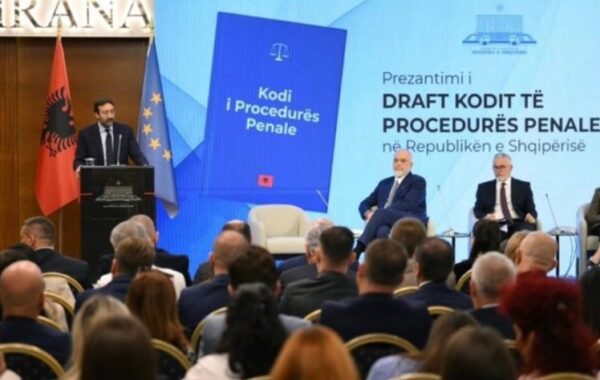
Komentet
Bëhu i pari që komenton!
Lini një Koment të Ri
Për t'u përgjigjur një komenti specifik, kliko butonin 💬 Përgjigju poshtë atij komenti.