
Released political prisoners in Iran return to normal life, but without their confiscated belongings
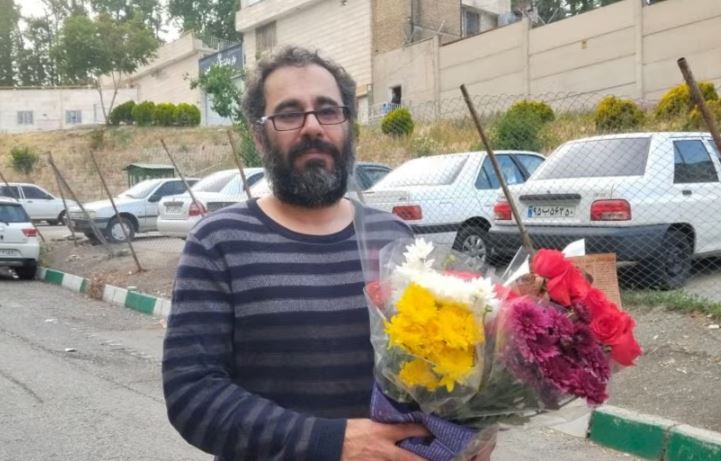
When activist Sanaz Yekta returned home after being released in February from Iran’s notorious Evin prison, many of her belongings were missing.
Police had raided her apartment in the capital Tehran after she was arrested and charged in 2025 with insulting the supreme leader. According to her, police had taken, among other things, her gold and silver jewellery, as well as her smartwatch.
Although the 46-year-old was released, the authorities are keeping her belongings and are defying the court that ordered them to be returned to her.
“I really don’t know how I am supposed to get my belongings back”, Yekta said in an interview with Radio Farda of Radio Free Europe.
“I really need these things”, the Tehran woman said.
Yekta is not alone.
Activists say the authorities usually refuse to return belongings to people considered political prisoners, arguing that the practice is intended to punish former prisoners even after they have been released.
For former political prisoners, the loss of their belongings can be a heavy blow, especially as many of them are not allowed to work in state institutions. The nearly seven-month war with the United States has deepened Iran’s economic crisis, leaving those already facing financial difficulties even more vulnerable.
“Why do the security institutions need a political prisoner’s gold?” asked Yekta, who is a member of Iran’s Jewish community. “When political prisoners are released, they have financial needs and find it hard to find work.”
Yekta has been in and out of prison several times in recent years.
In 2024, she was held in detention for six months, on charges that she had waved an Israeli flag in public and expressed support for Israel, the Islamic Republic’s main enemy. Then, at the end of last year, she was convicted of insulting the supreme leader. Yekta was sentenced to five years in prison, but was released early on health grounds.
“Plunder”
Other former political prisoners have made similar claims.
Mohammad Habibi, a teacher and union activist, said police confiscated his two mobile phones, a laptop and books when they arrested him in 2022. According to him, the items have still not been returned to him.
“They call it confiscation; in reality, it is plunder”, Habibi wrote in a post on X.
Mehdi Mahmoudian, a well-known human rights activist and former political prisoner, said the authorities have refused to return his personal belongings, including mobile phones, more than eight months after he was detained and later released.
This, according to him, has happened despite repeated court orders for the items to be returned to him.
“It seems that in the Islamic Republic, a court order is nothing more than a piece of paper. Therefore, apparently, people’s property is respected only for as long as a security institution has not set its eye on their belongings”, Mahmoudian wrote on X on September 16.
“When a security institution confiscates people’s property and disregards the court order to return it, confiscation is simply a polite name for the appropriation of people’s wealth”, he added.
“Arbitrary” confiscations
Under Iran’s Penal Code, confiscated items must be returned when they are no longer needed for a criminal investigation, except where their ownership is contested or where they are subject to lawful confiscation or destruction.
But Mousa Barzin, an Iranian lawyer and legal expert based in Turkey, told Radio Farda that this does not always happen.
“First, the confiscation itself can be carried out arbitrarily, without a court order. Security agents can enter someone’s home and take their belongings without even making a list of the items or having legal authorisation to confiscate them”, he said.
“Second, during the investigation and the court proceedings, it is often not taken into account that these items must be returned to the person after the investigation has been completed”, he added.


Komentet
Bëhu i pari që komenton!
Lini një Koment të Ri
Për t'u përgjigjur një komenti specifik, kliko butonin 💬 Përgjigju poshtë atij komenti.