
Russia’s jet-powered drones are outpacing Ukraine’s air defences: manufacturers race for new interceptors
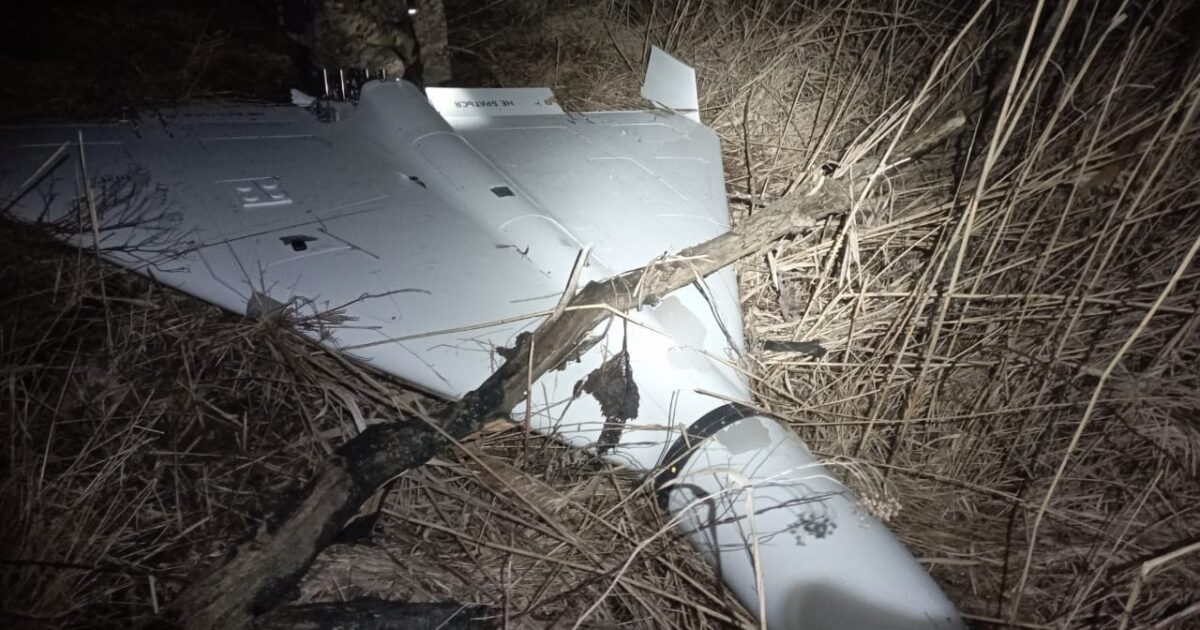
Russia’s new jet-powered drones sweep across the night sky over Kyiv at hundreds of kilometres an hour, leaving Ukrainian air defence units only a few moments to intercept them — and often that time is not enough. Meanwhile, defence companies are racing to build a new generation of interceptors, as the Associated Press reports.
According to the U.S. news agency Associated Press, which closely followed the work of an air defence unit near Kyiv, Russia’s new jet-powered Shahed drones move so fast that crews often cannot properly “lock on” to them. “They move so fast that we cannot get a proper lock on them,” Volodymyr Serdiuk, the commander of an air defence unit, told AP. His team starts the night shift at 8 p.m., watching the radar on a tablet — but the drones often fly too high and too fast to be hit accurately.
The drones are driving a new tactic, escalated in recent weeks: striking the infrastructure that keeps Ukraine’s war economy alive. Targets have included energy systems, key industries, railways, post offices, shopping centres, telecommunications networks, fuel stations and grain exports. Kyiv increasingly resembles a frontline city: explosions are heard day and night, and residents run for shelter from strikes landing ever closer to the city centre.
Ukraine is trying to keep pace with countermeasures. Its air defence uses electronic warfare and artificial intelligence to steer enemy drones into narrow air corridors, giving interceptors a better chance of catching them. But Ukraine’s fastest interceptors reach 300–400 kilometres per hour — not enough for the new threat. Ukrainian officials say new interceptors now being tested have successfully hit several jet-powered drones, while crews have begun training with a new model fitted with a battery cooling system. Another challenge is Russia’s arsenal of ballistic missiles, while Ukraine is running low on interceptor missiles; F-16 jets can stop drones, but they require extensive maintenance and many are out of service.
Meanwhile, Ukrainian manufacturers are racing against time to scale up industrial production. “We are now in a race for speed,” Oleksii Babenko, chief executive of Vyriy Drones, told AP, adding that companies are developing new propulsion systems and autonomous guidance. One of the main bottlenecks is the shortage of mini turbojet engines — supply comes mainly from European manufacturers with far lower capacity than Ukraine needs. According to Babenko, closing the gap could take three to four months; military analyst Taras Chmut puts the timeline at six months or more. President Volodymyr Zelensky has called for production to be accelerated.
Komentet
Bëhu i pari që komenton!
Lini një Koment të Ri
Për t'u përgjigjur një komenti specifik, kliko butonin 💬 Përgjigju poshtë atij komenti.