
Swedish researchers create an “AI scientist” that creates and develops experiments itself
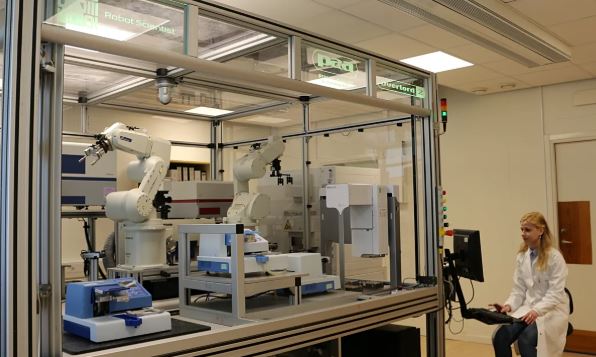
Researchers in Sweden have developed an artificial intelligence system capable of generating scientific hypotheses, designing experiments and interpreting the results.
The team has combined several large language models and large databases in a closed-loop system, which can carry out the entire cycle of scientific discovery.
“There is too much information for a human to analyse, but our AI scientist can identify promising biological questions, recommend experiments to test them, evaluate experimental results and repeatedly improve its understanding based on new evidence,” said Ievgeniia Tiukova, a researcher at Chalmers University of Technology and one of the authors of the new study that examined this AI system.
The AI scientist analysed a database with around 60,000 phenotypic, physiological and metabolic relationships for S. cerevisiae, a type of yeast also known as brewer’s or baker’s yeast. The system then formulated about 2,000 testable predictions about how nutrients affect cell growth and stress resistance.
These hypotheses were evaluated and comparative controls were selected, while the ideas were turned into step-by-step instructions, readable by machines and executable by laboratory equipment.
After the tests were completed, the AI analysed the data, determined whether the predictions were accurate and automatically updated or refined the refuted hypotheses for future cycles.
“Unlike tools that serve only as decision support, the AI scientist actively generates new scientific knowledge,” Tiukova said.
The authors noted that the future of scientific research lies in automation. Advances in robotics, artificial intelligence and high-throughput technologies are transforming the scientific process.
“AI scientists will collaborate with human scientists to accelerate discoveries in biology, medicine and biotechnology,” said Ross King, the study’s senior author at the University of Gothenburg.
“Such AI systems have the potential to reduce the time needed to explore complex scientific questions and to optimise the use of laboratory resources,” King said.
The researchers said such AI solutions can minimise human bias, speed up research cycles and reduce variations caused by human error, incomplete recording of experimental protocols, environmental conditions and other factors that can affect results and their reproducibility.
However, the authors stressed that humans will remain key in scientific research.
“Humans will remain essential for setting priorities, interpreting broader contexts, developing research programmes and ensuring compliance with ethical rules,” King said.
“Future generations of autonomous laboratories will become increasingly able to cooperate with humans and will be valuable partners in efforts to solve the most challenging questions in biology and medicine.”
As the use of AI in scientific research advances, international organisations are taking steps to define how it should be regulated. The World Health Organization (WHO) recently published a report with recommendations for researchers, ethics committees, regulators, funders and policymakers, “to help ensure that AI-enabled health research is conducted responsibly and for the benefit of all.”
“Artificial intelligence is creating unprecedented opportunities to accelerate health research and improve people’s lives,” said Meg Doherty, a director in the WHO Department of Science for Health.
“At the same time, innovation must be guided by strong ethical safeguards that protect human dignity, rights and equality.”


Komentet
Bëhu i pari që komenton!
Lini një Koment të Ri
Për t'u përgjigjur një komenti specifik, kliko butonin 💬 Përgjigju poshtë atij komenti.