
The Historic Centre of Vuno, the protection plan bans new construction
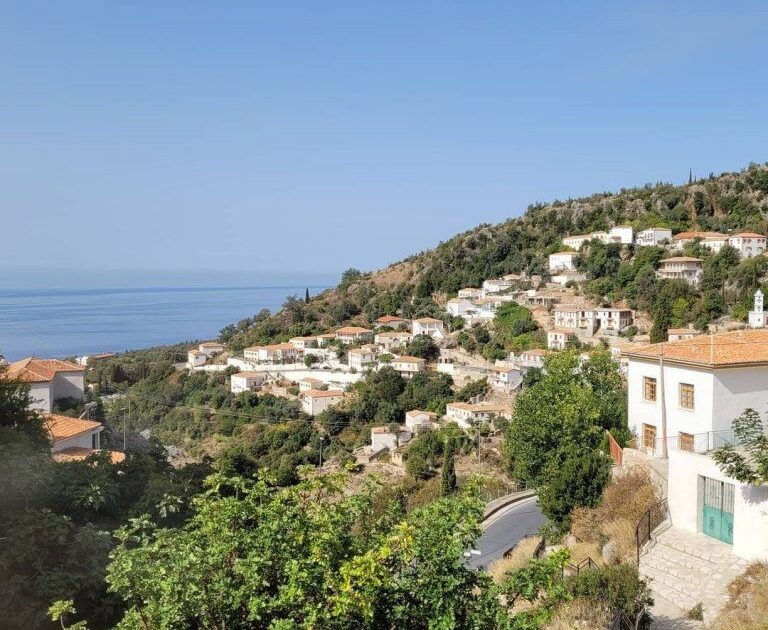
The historic centre of Vuno, the picturesque village of the Albanian Riviera, will be protected by its declaration as immovable cultural property, while the government decision defines the protected zone and approves the plan for the preservation, protection and administration of the historic centre and the surrounding area.
According to this decision, the Historic Centre of Vuno is divided into two zones. Zone I includes the buildings on both sides of the national road, while Zone II covers the part south of the village, which includes the Church of St. Spyridon, the school and the Church of St. Michael.
The protection includes not only historic buildings, but also traditional dwellings, places of worship, green spaces, squares, the landscape and the characteristic cobbled streets.
The decision bans new construction in the Historic Centre, except for interventions provided for the restoration, reconstruction and rehabilitation of existing structures. Restoration and reconstruction must preserve the traditional character of Vuno, including materials, colours, typology, volumetry, original elements and traditional construction techniques.
The decision also defines how traditional roofs are to be built: four-pitched roofs must be preserved, with a slope of 25–30 degrees and local red tiles, in harmony with the cultural landscape of the area.
New construction is also allowed in the protective zone, but it must be in harmony with the traditional architecture and landscape. For new buildings in the protective zone, a maximum of 2 floors and 6.5 metres in height up to the roof cornice is set, also respecting the average of the surrounding buildings.
The construction of industrial structures and quarries is banned both in the historic centre and in the protective zone. Structures that may pose a risk and sports grounds over 220 m² are also banned in the historic centre.
Interventions in Cultural Monuments of categories I and II are limited to maintenance, conservation, restoration and revitalisation that does not harm their values.
Restoration and intervention projects must be drawn up by licensed institutions or professionals and reviewed and approved by the National Council of Material Cultural Heritage.
The Municipality of Himarë, the Ministry of Tourism, Culture and Sports and the Ministry of Infrastructure and Energy are charged with implementing this decision.


Komentet
Bëhu i pari që komenton!
Lini një Koment të Ri
Për t'u përgjigjur një komenti specifik, kliko butonin 💬 Përgjigju poshtë atij komenti.