
“The husband signed” — Bunjaku on the challenges of bringing women into the business she runs
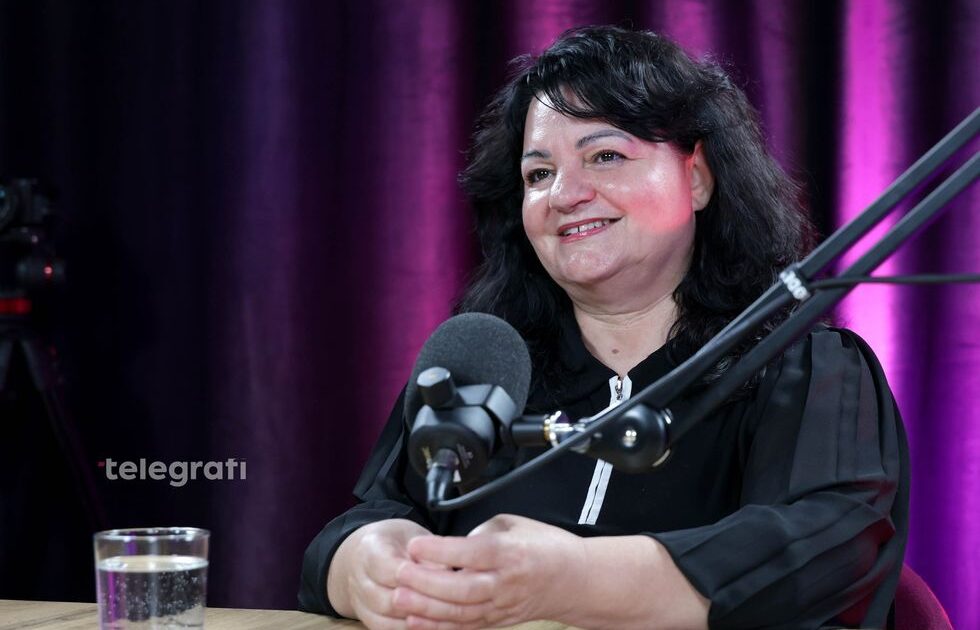
Getting women involved in the cultivation of medicinal and aromatic plants was no easy process for the founder of “99 Lule”, Havushe Bunjaku.
A guest on the seventh episode of the “Rrugëtimi” podcast, Bunjaku said that at first she even had doubts about whether women would see this work as an opportunity to earn an income.
According to her, one of the difficulties was also linked to the fact that many of the women had already worked in agriculture for a long time, but their work had never come to light.
“I had many doubts with the women, because there were those who told me directly: ‘No, I came to help find a job somewhere in Prishtina, because as for farming — my soul has come out of farming, I don’t want to hear about farming anymore,’ because in reality, women have worked a lot in agriculture. And they still work, but their work doesn’t come to light. The goal was to bring women’s work to light,” Bunjaku recounted.
To convince them, she also held direct meetings in villages.
“There were times when I went and asked for a meeting with a village of four or five women. I explained to them, and if one of them agreed to take the plants, to take and collect them, I took those as examples for the others to see, and they all joined in,” she said.
According to Bunjaku, an important part of the model was creating the conditions for women to be able to develop this activity.
“I managed to secure working conditions for each woman. First we secured seedlings, thanks to the international donors we had partnership projects with, the irrigation system — so the woman wouldn’t have to worry about an irrigation system — then equipment, some small cultivator, a water reservoir, to have water collection, equipment where they take and store the plants until they deliver them to our center,” she said.
But one of the moments that best illustrates the challenges some of the women faced was linked to the signing of cooperation contracts.
Bunjaku said that “99 Lule” works with contracts, both because of donor requirements and to create security for the parties.
“When we came to sign the contracts, there were many times when the women did not agree to sign the contract, because they were too lazy to read it. And they would say: ‘Do you allow me to discuss it with my family?’ And when she offered it to me, the husband signed there. That is, the husband’s signature… so the husband in this case decided,” she recounted.
Bunjaku says that in such cases they did not break off the cooperation, but tried to make sure future contracts included the woman herself.
“We never refused, because then the cooperation would be ruined. But I would say: now let’s make other contracts that both of you sign. In many cases, the husband had signed before me… then I would say: ‘OK, now let the lady sign too, so that you are both there,'” she said.
The result of the work, according to her, became more visible when the women began receiving their first payments.
“But when they got the money, naturally it was a pleasure because they knew they were their own money. They earned them with their own effort, with their own hands, with honest work, and they were empowered. Besides the money, they were also empowered in the family, because then it counts differently and the voice of that woman is heard differently, but never by causing trouble,” Bunjaku said.
Over time, according to her, more families got involved in this activity.
Today, according to Bunjaku, “99 Lule” has more than 75 women with regular cooperation contracts.
Komentet
Bëhu i pari që komenton!
Lini një Koment të Ri
Për t'u përgjigjur një komenti specifik, kliko butonin 💬 Përgjigju poshtë atij komenti.