
Warsaw – Poland cuts taxes and caps fuel prices
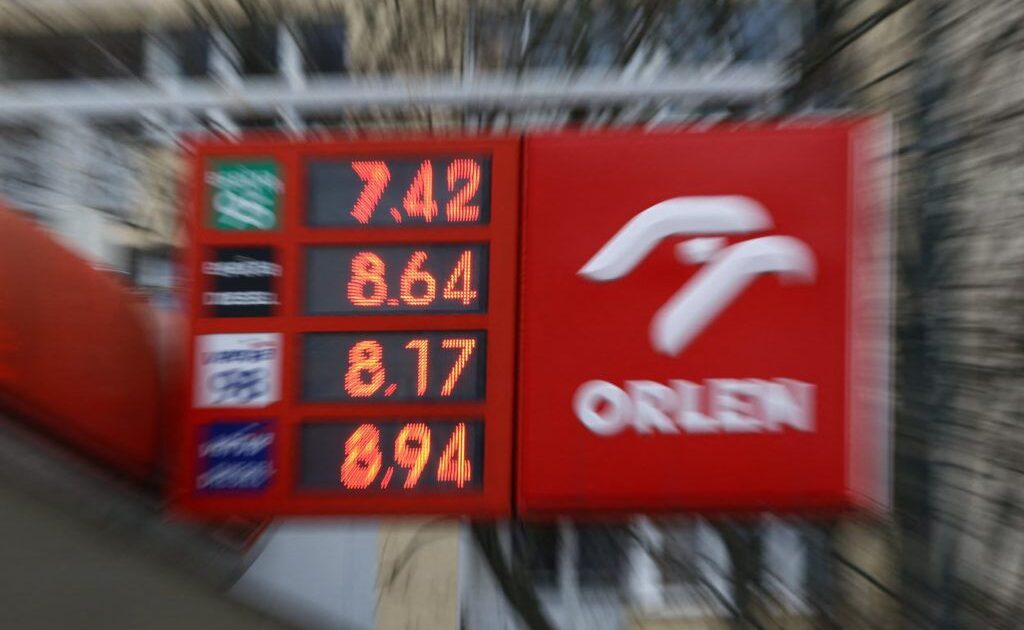
WARSAW, October 2 /ATSH-DPA/ – The Polish government has decided on a new package of measures to lower fuel prices, after President Karol Nawrocki approved a law that imposes a special tax on the profits of oil and fuel companies.
The new measures take effect tomorrow and will apply until the end of the year.
They provide for the reduction of VAT on fuels from 23% to 8%.
A lower energy tax will also be applied, and the Ministry of Energy will set a maximum price for fuels every day.
The ministry announced that the maximum price for the weekend and Monday will be around 1.54 euros per liter for regular gasoline, 1.73 euros for premium gasoline and 1.80 euros for diesel.
Compared with the average prices at fuel stations this morning, the measures could save drivers up to 32 cents per liter, depending on the type of fuel.
The package of measures was approved after Poland’s conservative president, Karol Nawrocki, signed the law on the windfall profits tax last night.
In the summer, he refused an earlier version of this law, proposed by the center-left government.
After signing the law, Nawrocki said that every zloty collected from this tax must be used to lower fuel prices.
The tax will apply for the period from March 2026 to March 2027 and will affect companies that produce or process fuels through foreign licenses.
The revenues from this tax will go directly into the state budget.
Although he signed the law after public pressure, Nawrocki has sent it for review to the Constitutional Court, which will assess whether the law is in compliance with the Constitution.
Prime Minister Donald Tusk, who has several times faced the president’s vetoes of government policies, reacted through an ironic video on the social network X.
In the video, he is seen walking past the presidential palace with a cup of coffee in hand, saying ironically: “So, what was all that noise about?”
Meanwhile, in Germany too, the possibility of imposing a windfall profits tax has been discussed for several months.
German Chancellor Friedrich Merz and Economy Minister Katherina Reiche, both from the conservative CDU, are against this idea, while Vice-Chancellor Lars Klingbeil, from the center-left SPD, supports it.


Komentet
Bëhu i pari që komenton!
Lini një Koment të Ri
Për t'u përgjigjur një komenti specifik, kliko butonin 💬 Përgjigju poshtë atij komenti.