
Will “Bibi” make it this time?
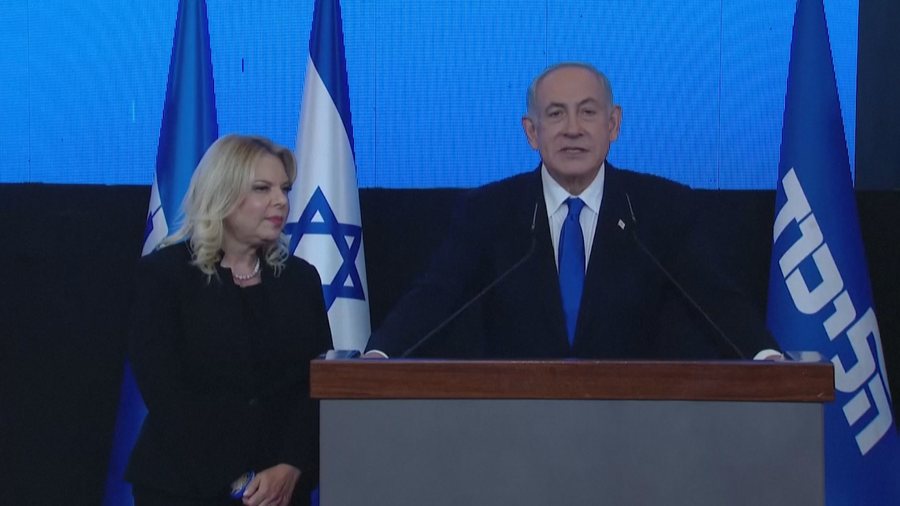
Israeli Prime Minister Benjamin Netanyahu is using the same campaign strategy that has served him for decades as he tries to hold on to power in next month’s election, presenting himself as the only person who can keep Israelis safe in a hostile region.
But, four weeks before the election, he is trying to salvage his reputation as a guarantor of security, which was badly shaken by Hamas’s surprise attack on southern Israel on October 7, 2023 – one of the biggest security failures in the country’s history. The October 27 elections are the first in Israel since the deadliest day and the heaviest attack on Jews since the Holocaust, orchestrated by a Palestinian militant group that caught the Middle East’s most powerful military unprepared.
“As far as foreign policy and security are concerned, the situation is completely different from the past, as Mr. Netanyahu has presented himself as ‘Mr. Security’ and as the leading authority on matters of diplomacy and national security; however, he also presided over the country’s worst security catastrophe – so now a big question mark remains over whether he can continue to present himself to his support base and coalition as the most competent leader to lead the country forward on national security issues.”
“Netanyahu does not give up” is the official slogan of Netanyahu’s right-wing Likud party, which most polls predict will lose about a third of its seats in parliament. In speeches and short campaign videos, Netanyahu portrays his political rivals as weak leftists who lack the determination to fight Israel’s enemies and the courage to stand up to his critics abroad.
But a big question remains whether Netanyahu – who turns 77 shortly before the election – can continue to present himself as the person best suited to lead Israel on national security and diplomacy, said Yohanan Plesner, president of the nonpartisan Israel Democracy Institute (IDI).
“Essentially, it is the same campaign as since the mid-1990s. It involves several elements. First, whoever opposes me is a weak candidate of the left, and I will defend the country from the threat of the creation of a Palestinian state in the heart of Israel, which would cause another October 7.”
In recent weeks, Netanyahu has been forced to deny media reports that his partners in the Middle East had warned him about a possible Hamas attack; those claims have been exploited by his political rivals.
The Hamas attack triggered a war on multiple fronts, in which the Israeli military had some successes against the Palestinian group and its allies, Hezbollah and Iran, but achieved few strategic gains. Netanyahu says the conflict has transformed, and will continue to transform, the region.
However, Israel’s conduct in the war in Gaza – with tens of thousands of Palestinians killed and most of the enclave destroyed – has led to deeper diplomatic isolation. Dozens of delegates at the United Nations walked out of the hall when he began his speech at the General Assembly meeting with world leaders last week. Support for Israel has also fallen in its most important ally, the United States.
Another aspect concerns stoking fear or alarm about the excessive influence of Arab parties if the other side – the one in opposition to Mr. Netanyahu – wins the elections. The message is that they are likely to rely on Arab parties and, consequently, our security will be put at risk, since those parties will not have the highest interests of national security as their top priority, and so on. So this has again been a campaign theme – with varying levels of intensity since the mid-1990s – and it has proved successful.
In Netanyahu’s last campaign in 2019, Donald Trump appeared shaking Netanyahu’s hand on election posters. This time, the American president’s image has been absent from the Likud party’s campaign videos.
However, Israel’s longest-serving leader – first elected prime minister in 1996 – has not given up the campaign tactics that have kept him in power almost without interruption since 2009.
A source close to Netanyahu said the prime minister approaches every election as if he were going to lose it – and that this was one of the reasons why he has often won, even when the odds were against him.
Another source briefed on his campaign said Netanyahu’s team appears focused and shows no sign of panic or disorganization, despite the poll results.
Netanyahu’s speech at the UN, in which he forcefully defended Israel’s actions in the region and sharply criticized his opponents, was widely carried on his Telegram channel, a platform used mainly for political messages.
He published six advance materials before the speech: a video in which he said he was “proud to represent you before the world, ready to step up (to the podium) to fight for Israel against the UN”, as well as five other excerpts from his speech.
The link to the full speech was accompanied by the caption in Hebrew: “Netanyahu faces the world.”
Another familiar theme in Netanyahu’s campaign has stoked fear of the parties that represent Israel’s Arab minority, warning that if his political rivals win the election, they will form a government with Arab factions that will be too soft on the Palestinians and will endanger security.
Netanyahu’s main rival is Gadi Eisenkot, a former military chief with hawkish views, whose son lost his life while serving in Gaza and who leads a new centrist party, “Yashar” – a word that in Hebrew means “straight” or “honest”.
However, Netanyahu’s use of familiar tactics against Eisenkot may not produce the desired result, according to Amotz Asa-El, a political analyst at the Shalom Hartman Institute, given Eisenkot’s experience in security and the candidates of his centre-right party.
Although election polls have often proved inaccurate, Netanyahu knows he is unlikely to secure a parliamentary majority that would allow him to form Israel’s next government.


Komentet
Bëhu i pari që komenton!
Lini një Koment të Ri
Për t'u përgjigjur një komenti specifik, kliko butonin 💬 Përgjigju poshtë atij komenti.