
Switzerland alarmed by melting glaciers
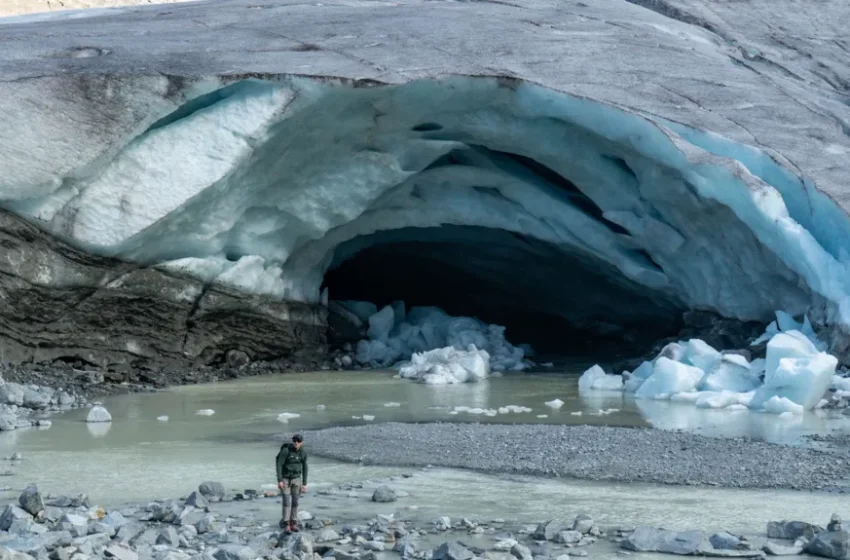
Switzerland’s glaciers have experienced one of the worst years on record for ice loss. New data show that over the last 12 months about 5.5% of the remaining glacier mass has disappeared, a rate that scientists consider extremely high.
According to researchers, high summer temperatures, especially intense heatwaves in May and June, significantly accelerated the melting. The mild winter had also left less snow than usual in the Alps. When the snow melted quickly, the exposed ice, which absorbs more solar energy, began to melt even faster.
Matthias Huss, head of Glacier Monitoring Switzerland, described the situation as “truly catastrophic”. According to him, until recently a loss of 2% of the ice within a year was considered extreme, while this year the loss has reached about 5.5%.
The consequences are not only about the Alpine landscape. Glaciers are a natural water reservoir and during hot periods they contribute to the water supply for agriculture, hydropower plants and transport. From July to September alone, Swiss glaciers released about 2.2 trillion litres of meltwater.
That amount helped ease water shortages during the summer, but scientists warn that this is a source that cannot be replaced quickly. The ice that is melting is water stored for decades or centuries. The more the glaciers shrink, the less water will be available during future heatwaves and droughts.
The situation is particularly worrying at high altitudes. Researchers have found that even at about 3,500 metres above sea level there was no snow left in some areas at the end of the summer. On some glaciers, up to four metres of ice loss have been measured at the highest points, where there should normally be several metres of winter snow.
Scientists also warn that the melting and thinning of glaciers can destabilise mountain slopes, increasing the risk of landslides and sudden floods.
Some small glaciers in Switzerland have already disappeared completely. However, researchers stress that a rapid reduction in carbon emissions could slow ice loss in many parts of the world. For glaciers, the message is clear: what is happening today is not simply a loss of Alpine landscape, but a shrinking of a natural water reserve that will be increasingly difficult to restore.

Komentet
Bëhu i pari që komenton!
Lini një Koment të Ri
Për t'u përgjigjur një komenti specifik, kliko butonin 💬 Përgjigju poshtë atij komenti.