A Villa in Exchange for the Tender: SPAK on How Balluku Hid Her Second Property in Palasë

By: Vladimir Karaj
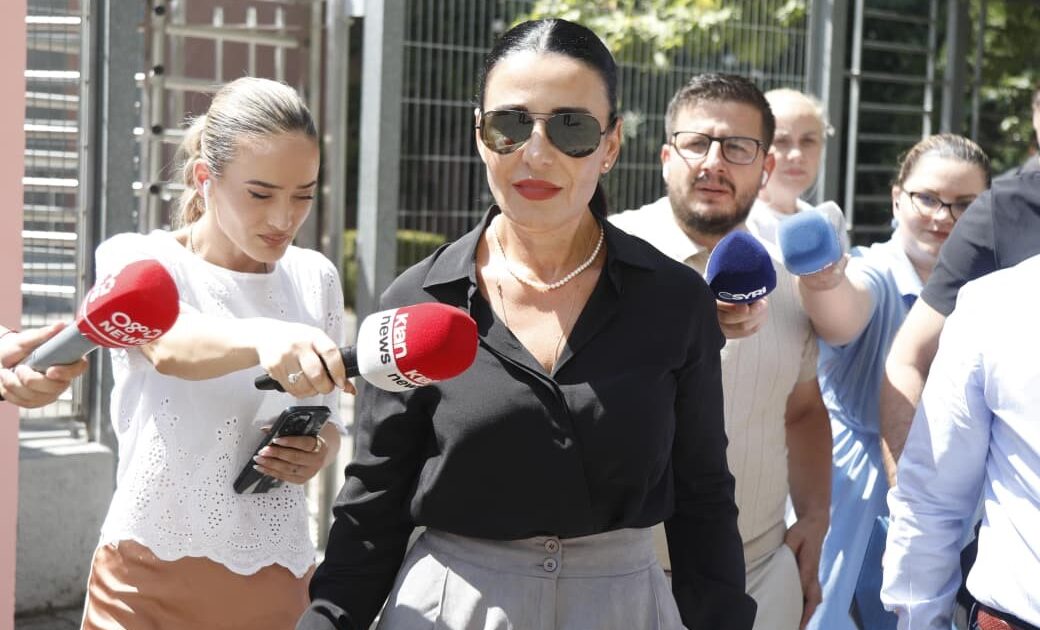
On September 14, 2020, at 18:49, an email from architect Alban Efthimi arrived at the electronic address of the then-Minister of Infrastructure, Belinda Balluku.
In this communication, the architect proposed aesthetic solutions for a villa in the ‘Green Coast’ complex in Palasë, emphasizing that the project had been revised with the idea that the villa’s users should feel ‘pampered’.
The project idea included an ‘infinity’ pool, climbing greenery, a dining table on the same level as the water and a running track near the pool for long sessions with a sea view. To emphasize uncompromising luxury, the architect suggested placing two hydromassage tubs inspired by the famous ‘Roccabella’ hotel in Santorini, as well as cladding the terrace and pool with ‘teak’ wood for a warm feel similar to that of a yacht.
‘We have the idea that even if one day you decide to rent it out, users could feel ‘pampered’ just like in a hotel,’ he wrote to Balluku. ‘See it as an alternative when we finish the renders too and if it doesn’t catch your eye, we’ll go back to the blue marbles,’ he added.
According to SPAK’s investigations, these exclusive luxury details were not the whims of just any buyer, but the direct requests of the then-Minister of Infrastructure, Belinda Balluku, for a villa on the Albanian riviera suspected of having been obtained through corruption.
According to a Special Court decision on the seizure measure, the costs for these architecture requests range from about 290 to 410 thousand euros and were paid by the company ‘Alko Impex General Construction’, which at the same time was being rewarded with a tender of 2.2 billion lekë [about 23.9 million euros] for the Great Ring Road of Tirana.
The Special Prosecution claims that the villa in Palasë is a product of corruption and money laundering.
The affair with the villa in Palasë, the second seized after another one also in the Dhërmi area, has aggravated the criminal situation against former deputy prime minister Belinda Balluku, who is accused of ‘Violation of equality in tenders’ committed in collaboration, ‘Concealment of property’, ‘Passive corruption of high state officials’ and ‘Money laundering’, more than once. Together with her in this affair are accused businessman Arbër Abazi and his company ‘Alko Impex General Construction’, as well as former footballer Igli Tare, the villa’s owner on paper, who is accused of money laundering.
In total, the number of individual and company defendants in the ‘Balluku’ file is 24, including a dozen of her subordinates and businessmen accused of paying bribes after unlawful benefits from infrastructure tenders. In the ‘Balluku’ case, SPAK has combined five different criminal proceedings.
The former deputy prime minister has denied the accusations, while Prime Minister Edi Rama and the Socialist majority offered her protection in the spring of this year against a SPAK request for a measure.
How the villa in Palasë was hidden
Balluku was indicted a year ago, initially for abuses with the tender for the Llogara tunnel, while then she had additional accusations for a series of tenders in infrastructure, including those for the Great Ring Road of Tirana. The Prosecution suspects that for the manipulation of Lot 7 of the Ring Road, Balluku benefited the luxury works on the Palasë villa, which had been bought by the former National Team footballer, Igli Tare.
The detailed mechanism to keep this suspected corruption benefit hidden was built through the use of third-party names and fictitious invoicing. Officially, the ‘Family Villa 2F no.188/1’ was initially ordered by Igli Tare with an enterprise contract dated November 26, 2020, at a price of 250,000 euros, and was formally finalized in his name with a sale contract on September 12, 2025.
However, SPAK says it has proven that Tare’s payments covered only the value of works up to the rough-construction phase. The Prosecution implies that the 250-thousand-euro payment is another hidden benefit of Balluku, since Tare’s company had received from the National Territorial Council, where Balluku was a member, a construction permit for a tower near the Black Bird (Zogu i Zi).
‘The above-mentioned decision of the National Territorial Council, among others, was also signed by the citizen Belinda Balluku, in her capacity as Minister of Infrastructure and Energy (line Minister),’ it is said, among other things, in the court’s decision. It is added there that ‘Balluku has indirect ownership of the property registered in the name of the person under investigation, Igli Tare, the object ‘Family Villa 2F no.188/1, Nucleus 27’, in the ‘Green Coast’ complex, Palasë’.
According to the Prosecution, it has also been proven that it was Balluku who requested and received as a benefit the value of the investment for the other construction works of her villa and pool. These latter were undertaken by Arbër Abazi, administrator of ‘Alko Impex’, on her behalf, while the management of the works on the ground was carried out by Abazi’s partner, Lorela Reçi, also a family connection of Balluku.
Reçi took delivery of the villa and authorized the entry of new contractors, but the different names in contracts and correspondence, which according to the prosecution were being used to hide ownership, confused the employees and managers of the Balfin and Mane TCI companies.
Initially in 2022, one of the staff members wrote to colleagues that handing villa 188 over to Reçi seemed like a mistake. ‘Hi… Lorela Reçi has 187/2, not 188/1… Could it be a typo?’, the prosecution quotes. A year later, in a new email addressed to staff, a company official wrote in astonishment that ‘one of the 188s (villas) has been handed over to a different client than the orderer… On what basis and confirmation?’.
The mystery seems to be solved according to the prosecution in the emails and conversations that followed and that had to do with the interior works of the villa. Dozens of emails between architects and engineers show that the latter was given special attention, and in one case it is even implied that walls were demolished a second time to fit the client’s requests.
Balluku is not mentioned in most of the emails showing the care of the persons involved, but digital carelessness and the accounting of external suppliers revealed the ‘secret’. A table seized from the IT system of the company that built the pool for the villa had registered the order without gloves in capital letters: ‘PISHINA ARBER ABAZI (DHËRMI) + BELINDA’ at a cost of 25,000 euros.
The second discovery came in the ongoing communications between architect Alban Efthimi, the ‘Mane TCI’ staff and Belinda Balluku, including two emails that Efthimi addressed directly to Balluku and that appear essential in documenting the hidden property. The file does not say whether Balluku responded. But despite it being clear where the orders came from, the interior works were not invoiced either to Balluku or to Tare, but to the company ‘Alko Impex Construction’. The latter on paper had no connection to the villa, but according to the preventives discovered in the ‘Atelier 4’ studio computers, it turns out to have paid between 288,616 euros and 410,526 euros for the luxury works.
Tender manipulation
SPAK’s investigations against Belinda Balluku show that the payments for the construction of the villa by ‘Alko Impex Construction’ were not free.
According to the court’s decision, they were obtained as a reward for one of the procurement procedures directed by the Albanian Road Authority, the tender ‘Construction of the Outer Ring Road of Tirana, Lot 7’, with a limit fund of 2.2 billion lekë. According to the prosecution, this tender and others were manipulated under Balluku’s instructions to the former director of ARRSH, Evis Berberi, and his subordinates.
The decision notes that the procedure began in full violation on August 9, 2021 by deputy director Gentian Gjyli without yet receiving the Ministry’s approval, which came a day later. The deadlines for companies were restricted contrary to the law, while the process was controlled from Evis Berberi’s phone through the ‘Signal’ app, where he received orders from Balluku and set subordinates in motion.
SPAK cites several conversations captured on Berberi’s phone in which he asks Balluku for instructions on tenders. Thus, on October 1 at 10:50, Evis Berberi writes to the minister to ask if there were plan changes. ‘Ok, I’m waiting, I need 3 hours if there are changes,’ he says. Two minutes later Balluku responds laconically: ‘No change’.
A week later, on October 7, 2021, the Bid Evaluation Commission announced as winner the cooperation between the companies ‘Alko-Impex General Construction’ and ‘2T’ sh.p.k, with an economic offer of 2.2 billion lekë. Despite the value of the tender and the importance of the object, the winner was in fact the only bidder, since all other companies had previously been excluded from the race.
The Prosecution says that despite being announced the winner, the operators’ consortium had a series of problems and among other things is suspected of having lied about the means and staff, declaring them as exclusive to the project, while having them engaged in other works. The Prosecution ascertains that this was a massive falsification of capacities, since the two winning companies had declared staff and means that were fully occupied in ten other parallel contracts with ARRSH. The company ‘2T’ was engaged in 4 other contracts with dozens of trucks and engineers, while ‘Alko Impex’ had declared fictitious technical staff that in fact operated in 6 other road-maintenance contracts.


Komentet
Bëhu i pari që komenton!
Lini një Koment të Ri
Për t'u përgjigjur një komenti specifik, kliko butonin 💬 Përgjigju poshtë atij komenti.