
After 60, should you avoid bread and pasta? Here’s what experts say
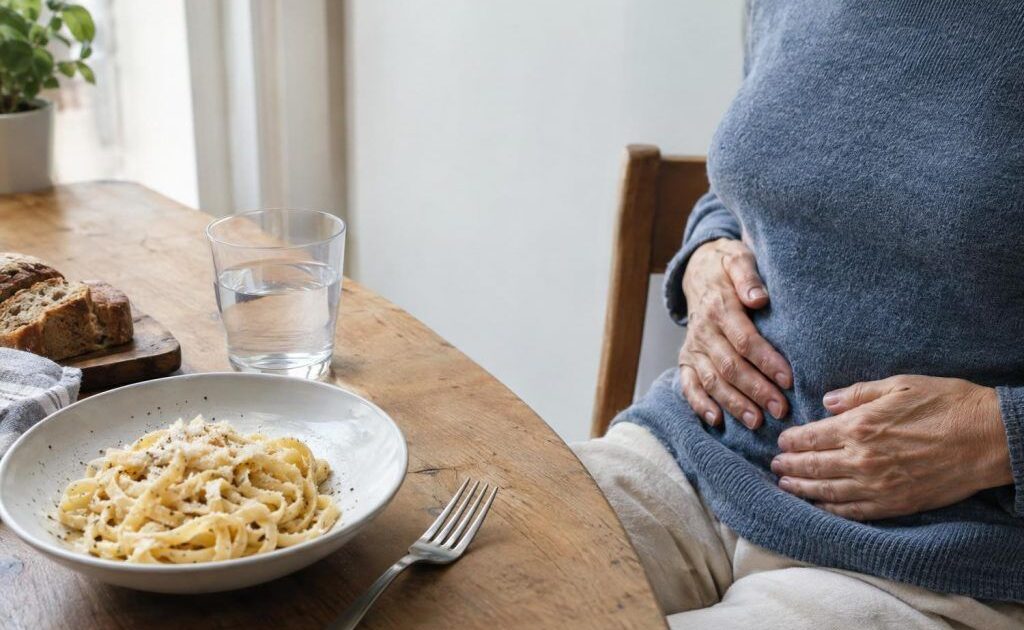
– After a certain age, bread and pasta are often viewed with suspicion, writes salute.it.
Bread can cause a feeling of bloating, while pasta may seem heavier to digest.
This can create the impression that with age the body no longer tolerates them as before.
However, there is no biological threshold at age 60 that turns bread into an “enemy” of the gut. Likewise, there is no single way of consuming it that eliminates bloating for everyone.
The reaction is individual and depends on the amount of food, the way it is consumed and the state of each person’s digestive system.
Bloating and a bloated belly are not the same thing
When a person says their “belly is bloated,” they may be describing two different conditions.
The first is the internal sensation of fullness, tension or pressure, which is not always accompanied by a visible change in the belly.
The second is abdominal distension, that is, the visible increase in belly volume.
The fact that someone feels bloated after a plate of pasta does not automatically mean they have produced excessive amounts of gas, nor that they have gained body fat.
Bloating can be related to the amount of food, the speed of eating, digestion and other individual factors.
Why does wheat cause discomfort in some people?
Part of the explanation relates to how the gut processes certain carbohydrates found in cereals.
Some of them are not fully absorbed in the small intestine and reach the large intestine, where they are fermented by bacteria and can produce gases.
For some people this causes visible bloating, while for others the process passes without discomfort.
So the problem is not necessarily wheat itself, but how the individual’s body reacts to certain carbohydrates.
In particular, in people with irritable bowel syndrome, discomfort after consuming bread and pasta may be linked to fructans, a category of fermentable carbohydrates, and not necessarily to gluten.
This is an important distinction, since eliminating gluten when the problem is caused by another component may bring no improvement and may make the diet more restricted for no reason.
A low-FODMAP diet can help
For people with irritable bowel syndrome, a dietary approach low in FODMAPs can help reduce bloating and other symptoms.
But this diet is not meant to be followed strictly for an unlimited time.
After an initial period of restriction, gradual reintroduction of foods and personalization of the diet usually follow, so that the foods that really cause discomfort can be identified.
For this reason, such a diet is better planned with the help of a dietitian, especially when symptoms are persistent.
Source: salute.it



Komentet
Bëhu i pari që komenton!
Lini një Koment të Ri
Për t'u përgjigjur një komenti specifik, kliko butonin 💬 Përgjigju poshtë atij komenti.