
Commentary – Bosnia votes as foreign powers clash for influence
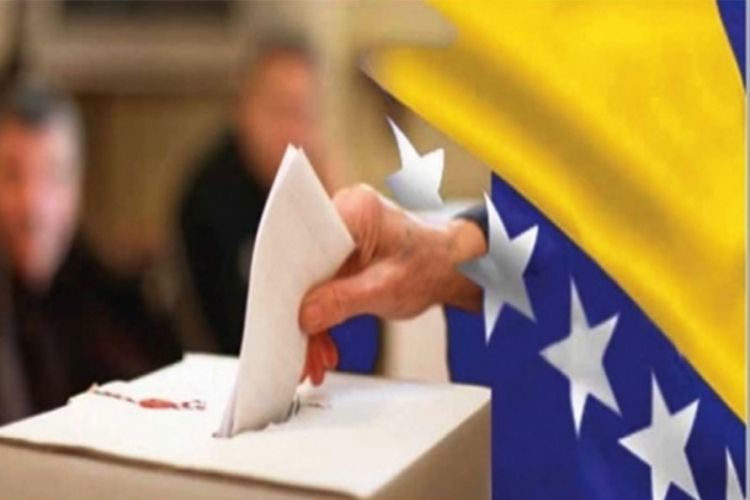
Bosnia and Herzegovina holds general elections tomorrow that could affect the country’s efforts to join the European Union, as well as the influence the United States and Russia have over this small Balkan state, according to Reuters.
The 4 October elections will determine the presidency, parliament and regional bodies.
Voter frustration has grown because of the economic slowdown, the slow pace of EU accession talks and a political crisis that threatens to deepen divisions in the country of around 3 million people.
Bosnia, the former Yugoslav republic with the greatest ethnic diversity, has struggled to recover since the 1992–1995 war, which divided the country along ethnic lines.
According to World Bank data, its population has been declining for 25 years, while foreign investment has stalled, corruption has continued and young people have left in search of better opportunities abroad.
Voters say they want to move away from the divisive rhetoric of the war years, but politics seems to have remained stuck.
Candidates rarely campaign beyond their main geographical base.
Damir, 47, from Sarajevo, said he hopes the elections will bring foreign investment, justice reforms and an end to ethnic segregation.
“I expect a little more engagement from Europe… I hope they understand that we are already part of Europe and will remain so,” he said, declining to give his full name.
A complex voting structure
Bosnia is divided into two entities, the Serb-dominated Republika Srpska and the Bosniak- and Croat-dominated Federation of Bosnia and Herzegovina, linked through a weak central government.
The US-brokered peace agreements that ended the war and created the state structure have helped preserve peace, but have also been criticised for prolonging ethnic divisions.
“Voters worry more about issues that go beyond the ethnic divide, such as corruption and the slow pace of EU membership,” said Mario Bikarski, a senior Europe analyst at the risk-intelligence company Verisk Maplecroft.
Voters will vote tomorrow for the country’s three-member collective presidency and the national parliament, as well as in legislative elections in the two federal entities.
Preliminary results are expected to start being published from Monday.
Rival ethnic nationalist parties — the Bosniak SDA, the Serb SNSD and the Croat HDZ BiH — face multi-ethnic opposition coalitions led by the Social Democratic Party (SDP).
According to the “Poliwave” monitoring platform, the pro-European SDA leads narrowly at national level with 21.4%, followed by the SDP with 16.7%.
In Republika Srpska, the SNSD, the party led by separatist leader Milorad Dodik, who seeks to maintain close ties with Serbia and Russia, leads with 34.2%.
Political crisis and power clashes
The major powers have long sought to increase their influence in Bosnia, which lies between the EU’s eastern border and Serbia, a Russian ally.
The EU is trying to expand its membership across the Balkans, although progress has been slow.
The rivalry became particularly visible last year, when a Bosnian court sentenced Serb leader Dodik to one year in prison for defying an order from an international peace envoy.
The sentence was later replaced with a fine.
Russia defended Dodik, partly because state police refused to intervene in his Serb stronghold to arrest him, while he has been banned from running for public office.
Meanwhile, the US has tried to increase its influence and last year lifted sanctions on Dodik in an attempt to soften relations.
The Bosniak-Croat Federation is advancing a $1.5 billion pipeline project to import natural gas from the US, to be run by a company with ties to the Trump administration.
The initiative has raised concerns among European Union officials, who warned that the company’s selection lacked the competitive transparency required under Bosnia’s EU accession process.
Washington has also clashed with Brussels over the role of the High Representative, the international overseer who enforces the laws of the Dayton Agreements. Christian Schmidt, a former German government minister, resigned in May under US pressure.
The vacancy created by his departure has caused a diplomatic clash between the United States and Brussels.
Komentet
Bëhu i pari që komenton!
Lini një Koment të Ri
Për t'u përgjigjur një komenti specifik, kliko butonin 💬 Përgjigju poshtë atij komenti.