
EU changes rules ahead of enlargement, Albania among the countries affected by the reform: what the draft provides
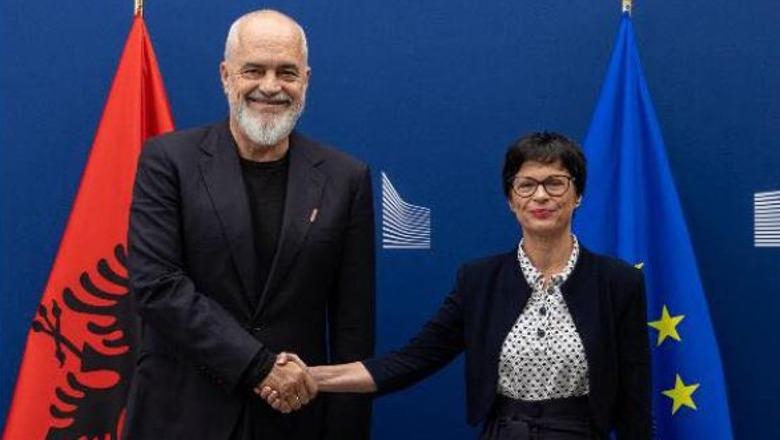
The European Commission is expected to propose a broad reform of the way decisions are taken in the European Union, aiming to adapt the Union to a future enlargement to more than 30 member countries.
According to exclusive reporting by “Rapporteur”, two internal European Commission documents provide for the use of so-called “passerelle clauses”, mechanisms provided for in the EU treaties that make it possible to move, in certain areas, from unanimous voting to qualified majority voting, without changing the Lisbon Treaty.
This would affect some of the intermediate stages of the accession process for candidate countries.
However, according to the documents cited by Rapporteur, abolishing unanimity at the start and at the end of the accession process is not envisaged.
The Commission argues that, as the Union enlarges, the risk grows that decisions will be delayed or blocked by a small number of states.
For this reason, the documents propose a work programme for the use of the clauses that make it possible to change the voting rules.
The proposed change would also extend to other areas of EU policy, including sanctions, human rights, defence and security, and the fight against tax evasion.
In those cases, qualified majority voting would be used, which requires the support of 15 countries representing at least two thirds of the Union’s population, according to the reporting.
The proposal is expected to face objections from some member countries, which may worry about losing their right of veto.
The documents also include the possibility of an “emergency brake” mechanism, through which a government could request intervention if it considers that its “vital national interests” are threatened.
Another proposed change concerns the composition of the European Commission. According to the draft documents, in an enlarged Union, only about two thirds of member countries would have a national commissioner. Currently, each of the 27 member countries has a representative in the Commission.
The drafts also provide for new safeguard mechanisms for new member countries.
According to the proposal, those countries could remain under an increased monitoring regime for a period of ten years or more after accession.
During that period, punitive measures could be used, including suspension of voting rights in the EU Council and financial penalties, in case of violations of democratic and judicial standards.
Another proposed measure is for new countries to sign a legally binding “temporary commitment”, through which they would pledge not to block decisions approved by the rest of the Union.
Temporary safeguard measures linked to integration into important EU policies, including justice, home affairs and agriculture, would also continue for new countries.
The drafts also provide for a temporary financial mechanism, through which the Commission could take measures against a new member country in case of a deterioration of democratic or judicial standards.
Among the proposed conditions is also membership of the European Public Prosecutor’s Office (EPPO), which investigates fraud and misuse of European Union funds, before the accession process is completed.
The changes would have a direct impact on the way the EU would function after a future enlargement, with countries such as Albania, Montenegro, Ukraine and North Macedonia among the states mentioned in the context of the enlargement process.
The proposal is expected to be presented by European Commission President Ursula von der Leyen, as part of the plan to prepare a European Union with more than 30 member countries.

Komentet
Bëhu i pari që komenton!
Lini një Koment të Ri
Për t'u përgjigjur një komenti specifik, kliko butonin 💬 Përgjigju poshtë atij komenti.