
Feminism as an Alibi
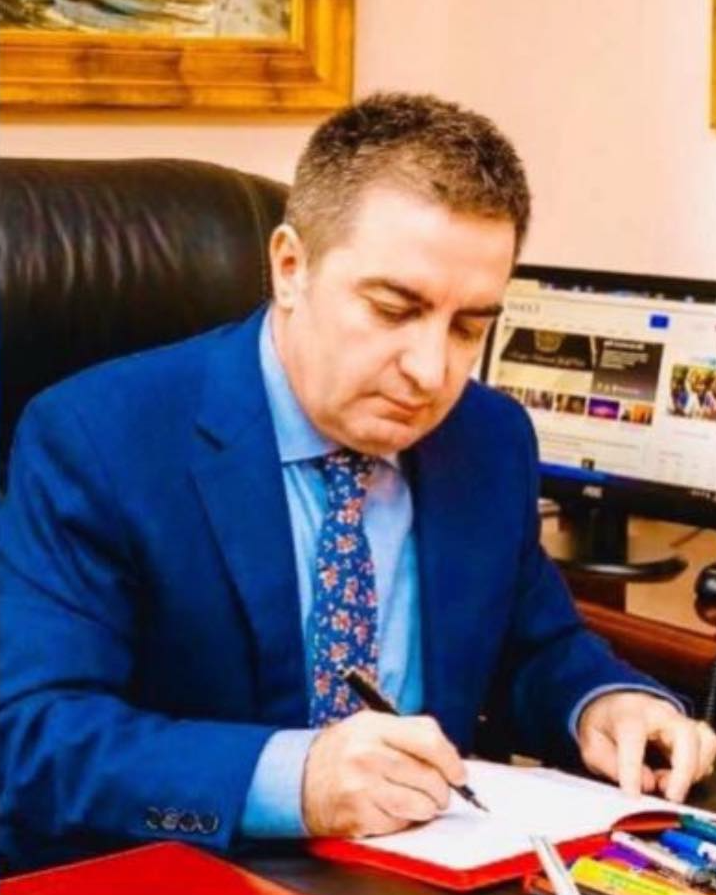
By Luan Rama
The women comrades — MPs of the Socialist Party’s parliamentary group, that is (not to disfemize!) the party’s parliamentarians — appeared publicly a few days ago, entirely within their right, with a statement in which they ‘condemn with the greatest force the verbal attacks, threats, insults and acts of physical aggression exercised by a violent part of the protesters against MPs during and because of the exercise of their duty.’
Without wanting to ignore the facts or the concrete cases from which the women comrades — socialist MPs drew inspiration to unfold, through a long memorial-like document, their solidarity, it is clear that the mind that conceived and the hand that wrote that statement has no idea what representation is as a public and political attribute and as civic responsibility as well.
To be as clear as possible with the reader, but also understanding with the women comrades — MPs of the Socialist Party Parliamentary Group, as they self-present, I had to look in the Parliament of Albania, more precisely in its constituent structures, for what this grouping represents in the institutional sense. But I found no explanation.
Because there is no parliamentary structure with this representative specificity. I only found the name Alliance of Women MPs, but which, in fact, has not been constituted since this legislature began its work and, consequently, does not exist.
Hence, the first question that came to mind while I was reading the text of the statement of the women comrades — MPs of the Socialist Party was: why was this document not presented by the Socialist Party Parliamentary Group, but only by the women of that group?
Could it be that the comrade men — socialist MPs considered it women’s work and did not see fit to also deal with women’s affairs? Or, for them, is this matter of ‘verbal attacks, threats, insults and acts of physical aggression exercised by a violent part of the protesters’ not as great a concern as it is for women?
This is the first paradox.
Because I cannot find any credible explanation for why a statement whose object is such an important problem was not proclaimed as a stance of the Socialist Party Parliamentary Group.
And, to continue the reasoning a bit further, why not also based on feminist philosophy — fine that the men left in the women’s hands their trouble with ‘verbal attacks, threats, insults and acts of physical aggression etc.’, but don’t the women comrades — MPs themselves feel insulted and discriminated against by the manly sidelining of the men MPs who did not join them, first in the human dimension, second in a display of the known socialist solidarity, which they hymn with so many panegyrics, and third in the formal institutional aspect, since the Socialist Party Parliamentary Group is an important actor of the Parliament of Albania as the majority group governing the country?
The other paradox of the statement of the women comrades — MPs without the men comrades — MPs is the language used.
Here are some examples:
‘We demand from the State Police…’
‘We demand from the justice bodies…’
‘We demand from the responsible structures…’
And then come the deadlines:
‘We demand that within 72 hours the State Police …’
‘Within 10 days, we demand a report …’
While at the end, there is the oath:
‘We will not accept that…’
‘We will not allow that…’
Let’s not be cynical and say very good with all this, but we can ask one question:
Excuse me, but in what capacity all this? As women? As MPs? Or as women — socialist MPs?
The MP’s mandate has no tag of authority over other institutions.
An MP or even a group of MPs, even a group of women comrade MPs, can ask, can request information, can demand accountability, can exercise parliamentary control.
But it cannot be the superior of the State Police with a press statement and cannot assign deadlines to law-enforcement bodies like those contained in their statement, ‘within 72 hours’ or ‘within 10 days’.
And since the 72 hours of the deadline they set for the State Police and the responsible structures have passed, have the women comrades — MPs received the information they officially requested?
The honorable women comrades — MPs of the socialist parliamentary group have confused representation with power.
This is not just a gaffe. It is evidence of a delusion in the object, because otherwise the lack of culture in not distinguishing the boundary between what an MP can politically demand and what a state body can institutionally order is not justified.
Another paradox of the statement is the double standard.
In fact, to be more direct, I should have used the word two-facedness. However, so as not to touch even a little the sensitivities of the feminist cause of the group of women comrades — socialist MPs, I am reasoning on the double standard displayed by our honorable women comrades, representatives of the unrepresented people.
They did very well to react to defend their comrades and to be a barrier to the language of violence, hatred, belittlement, lynching and contempt toward every woman.
But why have they not reacted in the same way before, when in the very Parliament where they are MPs there have been countless cases of verbal attacks, threats, insults and all kinds of slander?
I’m not asking why they have not reacted for all that happens with women in protest, who are dragged by the police and attacked with violent language even from inside Parliament.
But when the Prime Minister himself mocked so cynically in public, at a meeting with party people, with ‘That mother!’ [Atë nënën!], or when he imitated in burlesque scenes some of the influential women on social networks, why didn’t our honorable comrades, women — MPs of the Socialist Party parliamentary group, make any statement?!
Or is a woman a woman only when she is within the walls of power?
Here lies the problem: in the use of feminism as an alibi, through which violence becomes visible only when the victim is a woman of power.
But a woman does not become less of a woman when she stands before power, nor does her dignity depend on the place she occupies on the political scene. If violence is unacceptable, it remains so regardless of whom it is exercised upon, by whom it is exercised, and on which side of power the victim stands.
This is precisely where the moral claim of the statement falls. Because feminism, if understood as a principle of emancipation and equality, cannot be turned into a privilege for the woman who exercises power.
There cannot be one standard for the woman MP and another standard for the woman who protests against the woman MP.
The woman who governs and the woman who protests are equally women; what changes is their political position, not the measure of dignity, rights and protection that belongs to them.
The statement of the women comrades — MPs of the Socialist Party parliamentary group speaks against double standards, while it itself builds a double standard. It demands equality, but reserves special attention for women of power.
It demands protection from violence, but judges violence through the political affiliation of the victim.
In this way feminism ceases to be a principle and turns into an instrument.
Because feminism that protects the woman only when she is within the walls of power does not free her from the privilege of men; on the contrary, it gives privilege to power itself.
And when equality depends on which side of power you are on, we are no longer dealing with equality, but with another form of privilege.


Komentet
Bëhu i pari që komenton!
Lini një Koment të Ri
Për t'u përgjigjur një komenti specifik, kliko butonin 💬 Përgjigju poshtë atij komenti.