
RIA Novosti: “It is no coincidence that Vučić resigned after talking to Putin” — a Russian analysis of Serbia’s election campaign
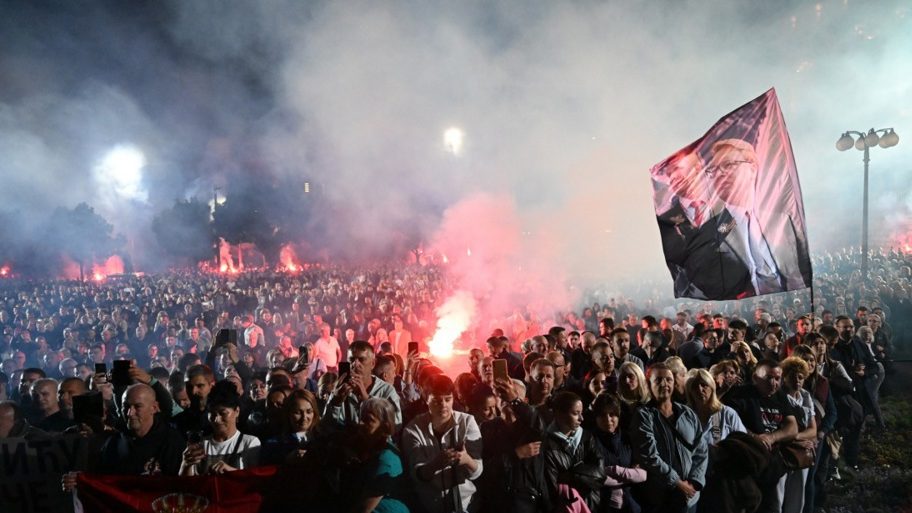
Between Aleksandar Vučić’s resignation from the Serbian presidency and his phone call with Russian President Vladimir Putin “there is a direct link” — writes commentator Dmitry Bavirin in a column for the Russian state agency RIA Novosti, quoted by the newspaper Danas on September 29. According to Bavirin, had Vučić failed to secure the Kremlin, “the whole operation would have been on the verge of failure.”
“Vučić is leaving to stay,” the author writes further: instead of finishing his final presidential term, he plans to be elected prime minister — and “it doesn’t matter at all what his office is called: as long as he is part of the system, he will be its master.” But there is a condition, according to the analysis: the Serbian Progressive Party (SNS) must win the October 25 parliamentary elections — otherwise “he will lose everything.”
According to RIA Novosti, this is the first parliamentary campaign in many years “whose outcome is not clear”: on the surface Vučić and his team have the better chances and higher ratings, but — writes Bavirin — “the vertical of Serbian power hung by a thread” more than once, and against him stands fatigue with an entire political era. The author also stresses the decisive role of gas: the contract with Russia for supplies at preferential prices expires on September 30, and Vučić announced the price will remain 318 euros per thousand cubic meters instead of the market price of 868 euros — “had Putin refused to extend the contract, Vučić’s long political career could have ended within a month.”
The column notes that the Serbian protests “are neither anti-Russian nor pro-European” — the opposition includes many Russophiles, while the leader of the Student List, Ilija Srdanović, stresses that EU membership is not his priority but “the existential survival of the country.” According to the Russian analysis, Brussels does not openly back anyone, but EU-oriented forces support the Student List — while the West’s ultimate goal in the Balkans since 2014, Bavirin writes, is “the isolation of the region from Russian influence and full integration into NATO.” And a key line of the column, as quoted by Danas: “In Serbia, Russia did not support Vučić. Russia supported Serbia and the Serbs.”

Komentet
Bëhu i pari që komenton!
Lini një Koment të Ri
Për t'u përgjigjur një komenti specifik, kliko butonin 💬 Përgjigju poshtë atij komenti.