
Serbia cannot rewrite Kosovo’s history from the UN podium
By: Albanians For America
The annual session of the UN General Assembly in New York, as always, was used again this year by Serbia as a platform for propaganda against Kosovo. The effort by this state and its leader, Aleksandar Vučić, to rewrite history manifested itself openly from the UN podium, before world leaders and in total contradiction with facts and international law.
Vučić did what he does best: he spread lies, played the victim, and did not abandon his threatening discourse. He built the bulk of his speech on accusations against the UN itself, using the UN Charter as a tool, challenging the authority of that organization while at the same time venting his bitterness over NATO’s intervention in Kosovo 27 years ago, and then over the declaration of Kosovo’s independence and its recognition by nearly 120 states.
Serbia’s crimes in Kosovo, NATO, and the reality of the state of Kosovo
The Serbian president knows very well that NATO intervened after a long period of violence, repression, and documented crimes against Kosovo Albanians. Investigations by the International Criminal Tribunal for the former Yugoslavia documented the violent expulsion of 740,000 Albanians from Kosovo by the regime of the Balkan butcher, Slobodan Milošević. The indictment against Slobodan Milošević documented the killing of civilians, violent expulsions, the destruction of homes and religious sites, and the rape of women. According to data from the Humanitarian Law Center, 13,625 people were killed during 1998–2000.
Moreover, it was NATO itself which, in its official documents of 1999, described Belgrade’s policy as a campaign of repression, violence, and ethnic cleansing against Kosovo Albanians, linking the intervention to the effort to stop the humanitarian catastrophe. Among the victims of Serbian crimes in Kosovo are 1,133 children. Documented data speaks of around 20,000 women and men sexually assaulted during the war. These facts were also mentioned in 2023, in the UN Security Council, by then-president Vjosa Osmani.
Therefore, the declaration of Kosovo’s independence was the consequence of Kosovo Albanians’ struggle for freedom, while Vučić’s claim of “illegality” contradicts the advisory opinion of the International Court of Justice. On July 22, 2010, the International Court of Justice ruled that Kosovo’s declaration of independence of February 17, 2008 had not violated general international law, UN Security Council Resolution 1244, or the Constitutional Framework.
Kosovo, meanwhile, is a political and legal reality that Serbia may dispute but cannot undo, as it is currently a state internationally recognized by 120 states.
The Kosovo–Serbia dialogue cannot be hidden behind Vučić’s propagandistic statements, which link it only to the 2023 Ohrid Agreement and the creation of the Association of Municipalities. Serbian obstruction has stalled the process, something the EU itself has acknowledged through an official reaction. Serbia is therefore not at all interested in implementing any agreement reached in the dialogue process, as it has also demonstrated through other actions documented in the European Commission’s 2025 Report.
According to that Report, the technical dialogue agreements of 2011–2012 are still only partially implemented, and the implementation of the agreements on cadastre and the recognition of university diplomas remains suspended due to non-implementation by Serbia. The obstacles caused by Belgrade are political, not technical, in nature. The European Commission has found that Serbia has lobbied against Kosovo’s membership in international organizations, even though Article 4 of the Ohrid Agreement stipulates that Serbia will not oppose Kosovo’s membership in international organizations. According to the Report, Serbia has done this continuously.
The Dialogue, like the agreements derived from it, has therefore not been implemented because of Serbia’s obstructions and its lack of political will.
Evading responsibility for the Banjska aggression and the terrorist attack on Ibër-Lepenc
In his speech at the UN General Assembly, Vučić reduced the problem of the dialogue to a single issue, that of the Association of Serb-majority municipalities. On the Banjska aggression he did not say a single word about Serbia’s responsibility, not a word about the authors of the aggression, the chief terrorist Milan Radoičić and his armed group, no explanation for Belgrade’s refusal to let this group of terrorists face justice in Kosovo. There was not a single word either about the attack on the Ibër-Lepenc canal, which the European Union described as a terrorist attack. Instead, Vučić presented only part of the dialogue’s obligations, in service of his propaganda policy.
Serbia’s aggression in Banjska is the clearest example of how far the normalization process is from real implementation of the agreements. September 24 marked three years since the armed attack in Banjska, Zvečan, in which Kosovo Police sergeant Afrim Bunjaku was killed. The European Union has described the attack as the most serious escalation in recent years and has found that the normalization process continues to be damaged by Serbia’s insufficient steps to ensure accountability for the attack.
The difference is clear. In Kosovo, the judicial process has advanced: in April 2026, the Basic Court in Pristina sentenced two defendants to life imprisonment and a third to 30 years in prison for the attack. In Serbia, meanwhile, Milan Radoičić — who through his lawyer took responsibility for organizing, leading, and participating in the attack — has still not faced an indictment for Banjska. The European Parliament has also criticized Serbia for failing to criminally prosecute Radoičić’s terrorist group.
As long as Serbia refuses to take responsibility for Banjska and does not extradite Radoičić and the members of his group to Kosovo, a return to dialogue and normalization of relations will be extremely difficult.
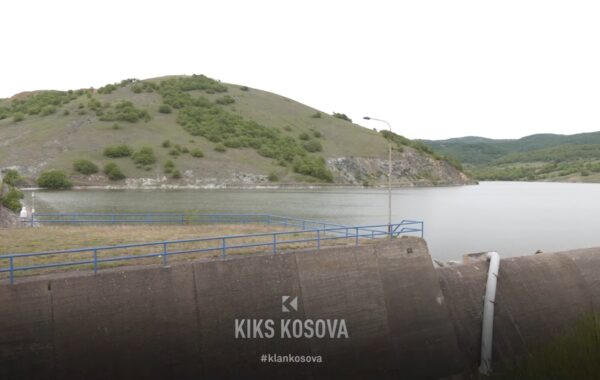
As if this aggression were not enough, on November 29, 2024, at around 19:00, in the village of Varagë in Zubin Potok, the attack on the Ibër-Lepenc canal was also carried out. The explosion severely damaged the canal’s critical infrastructure, which supplies water to a large part of Kosovo and is important for the energy system. On the same day, the European Union condemned the attack on the Ibër-Lepenc canal in Zubin Potok and described it as a terrorist attack.
Kosovo aligned with the EU
The European Parliament has praised Kosovo’s continued alignment with the EU’s foreign and security policy, including its stance on Russian aggression in Ukraine and the implementation of EU restrictive measures against Russia and Belarus. At the same time, the document describes Kosovo as clearly oriented on the European and transatlantic path.
Unlike Kosovo, Serbia continues to maintain a stance different from EU policy toward Russia. An analysis by the European Parliamentary Research Service, published in September 2026, notes that Belgrade has not joined the EU’s sanctions against Moscow, while in May 2026 its alignment with the EU’s common foreign and security policy stood at 63 percent.
Kosovo and international law
The Serbian president continued his effort to distort the facts in his UN speech with other aggressive positions, not only regarding Kosovo. Mentioning Ukraine, territorial integrity, the UN Charter, and the principles of international law, he tried to place Kosovo in the same framework as Russia’s invasion of Ukraine.
Vučić speaks of the UN Charter as if it had produced a final legal result on Kosovo’s status that excludes independence. But it is precisely this claim that has been questioned by the UN’s principal judicial organ. In its advisory opinion of July 22, 2010, the International Court of Justice found that Kosovo’s declaration of independence of February 17, 2008 had not violated international law. The Court also found that the declaration had not violated Resolution 1244.
This is an element Vučić omits when building his argument on Ukraine. He demands that the world respect Ukraine’s territorial integrity, while Serbia itself continues to reject an important part of the political and legal reality created in Kosovo after 1999. That reality has a name: the independent and sovereign Republic of Kosovo.
Komentet
Bëhu i pari që komenton!
Lini një Koment të Ri
Për t'u përgjigjur një komenti specifik, kliko butonin 💬 Përgjigju poshtë atij komenti.