
Summer 2026 Brought More Tourists — and More Questions
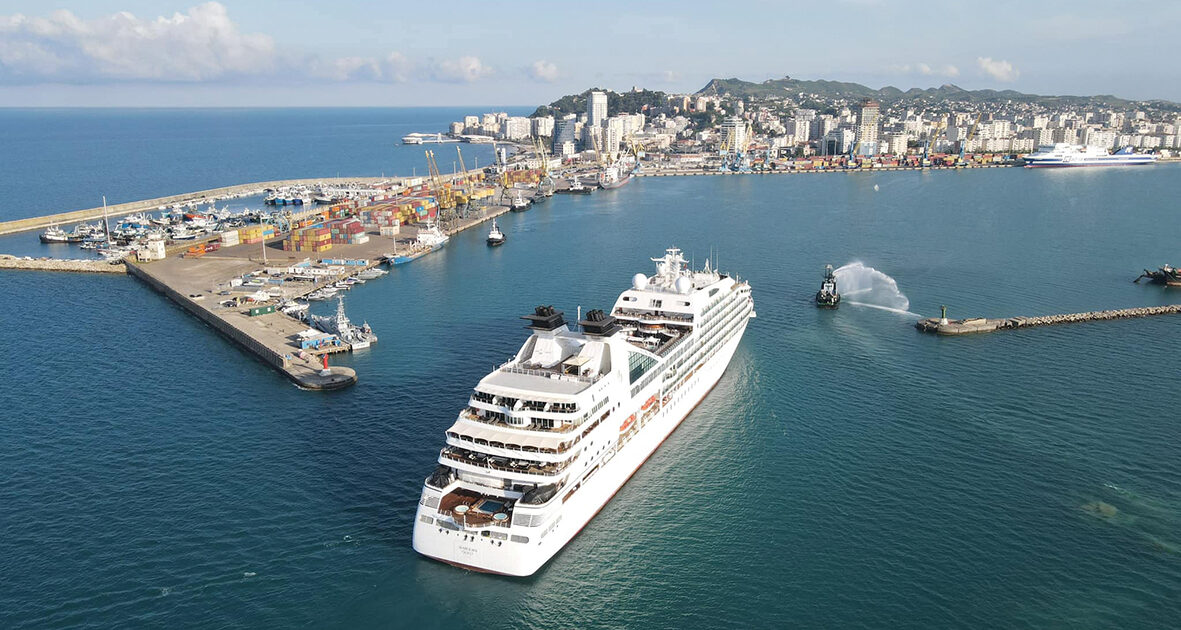
Summer 2026 is bringing more tourists, but operators are asking how much of that growth will turn into higher revenues. Visitors are making last-minute bookings, staying fewer days and spending more carefully. At the same time, weaker service, the shortage of qualified staff, traffic and infrastructure remain the season’s most visible problems. Prices and the value-for-money ratio are also shaping tourist behavior, especially in the south. In the background, the delay of the Vlora airport has left plans and contracts for organized tourism in limbo.
Nertila Maho
Unlike its weak start, this year’s summer season is closing with a positive picture for tourism. After a pale June, the flows of foreigners entering the country in July and August — and very likely in September too — have shown steady growth.
The extension of the season into the first ten days of October, as confirmed by tour operators, is another sign that Albania is keeping its pace, remaining on visitors’ radar.
Guaranteed contracts for organized tourism for 2027 have closed with growth in volume and price. But behind the rising numbers, the industry is raising questions about the problems that were more visible this year than the year before.
“The performance so far is good. If we talk about numbers, there is growth,” says the head of the Albanian Tourism Union, Rrahman Kasa. According to him, only the end of the season can show what value that growth has brought.
“It remains to be seen what this will bring in revenues, whether we will have more revenues than last year and by how much.”
Elvis Kotherja, founder of “Elite Travel Group & Elite Hospitality”, also considers the season good if we stop only at the surface of the figures.
But what strikes him most is the change in client behavior, showing in several trends. A part of the markets is booking later and later. “They book at the last minute and this is very clearly seen in all Western markets. Czechia, Germany and other markets have this tendency, while France is somewhat more organized and books earlier.”
The second change is directly linked to spending. “They hesitate to consume. They used to be much better in terms of spending,” says Mr. Kotherja.
Mr. Kasa sees a similar profile. According to him, most tourists visiting Albania continue to belong to the medium or low spending category.
“We don’t yet have the luxury of having a profile of tourists with high spending power,” he says. By his estimate, “60 percent or more are ‘low cost’ tourists, low-budget tourists who want to spend little.”
A part of them are travelers looking for new destinations who choose Albania also because of cost. “This is the category of tourists that will not spend much, because priority is exploration at as low a cost as possible,” says Mr. Kasa.
The tendency to control spending is also seen in the way they stay. Mr. Kotherja notes a rise in accommodation in apartments and private houses and greater use of the “self-catering” formula.
“This year foreigners come and stay less. The growth of private accommodation has continued — apartments and houses on platforms like Booking or Airbnb, as well as ‘self-catering’, food bought in the supermarket and cooked at home.” According to him, part of this behavior is linked to the price-quality ratio.
“This has come as an effect of prices, which in some cases make no sense in relation to quality.”
Service, the weak point of the season
If the growth in the number of tourists is the positive part of the balance, service quality is one of the concerns that most clearly unites the prevailing assessments this season, both on social networks and independent travel platforms and among representatives or operators of the sector.
The head of the Tourism Union ranks service among the main problems reported by tourists and foreign agencies. “Services leave much to be desired and this has done its work in the evaluations we receive from foreigners, especially on social networks or on platforms,” he says.
According to him, the issue is particularly linked to the shortage of qualified staff. “The shortage of qualified staff in this sector is a very big problem that penalizes us.”
Mr. Kotherja is equally direct in his assessment of the season. “From my experience, this year I think service limped.” He links this to the pressure of costs on businesses.
When expenses rise, according to him, businesses face the choice of saving either on the product or on staff. “To survive, you have to limp either in product quality or in staff. But that is not a solution.”
The staff problem, according to Mr. Kotherja, is not limited only to shortage in numbers. He also sees it as a matter of productivity and the ratio between skill and pay. The lack of workforce in recent years, according to him, has put strong pressure on wages, including those of employees without the needed qualifications.
“This shortage we have had has caused wage increases even for unqualified employees, so the latter are overvalued, putting the sector into a vicious circle without a solution,” he says.
For an industry where direct contact with the client is part of the product, staff problems reflect immediately on the tourist’s experience. Mr. Kotherja links this also to discipline, responsibility and how work is organized. According to him, some tourist structures are already turning toward foreign workers.
“The moment will come when foreigners in hotels will dominate as workforce. This cannot be avoided,” he says. “There are currently structures that don’t want to work with Albanians, because of discipline, rules and responsibility.”
One opportunity to ease the shortage of employees, according to him, could come from agreements for employing citizens from Asian countries. “There is hope and a light at the end of the tunnel linked to workforce after several agreements with Asian countries that can bring a qualified workforce.”
Mr. Kotherja also raises another problem that, according to him, is linked to the professionalization of the industry: the use of technology. “This industry must automatically digitize,” he says, stressing that part of managers continue to see technology more as a burden than as a tool for productivity growth.
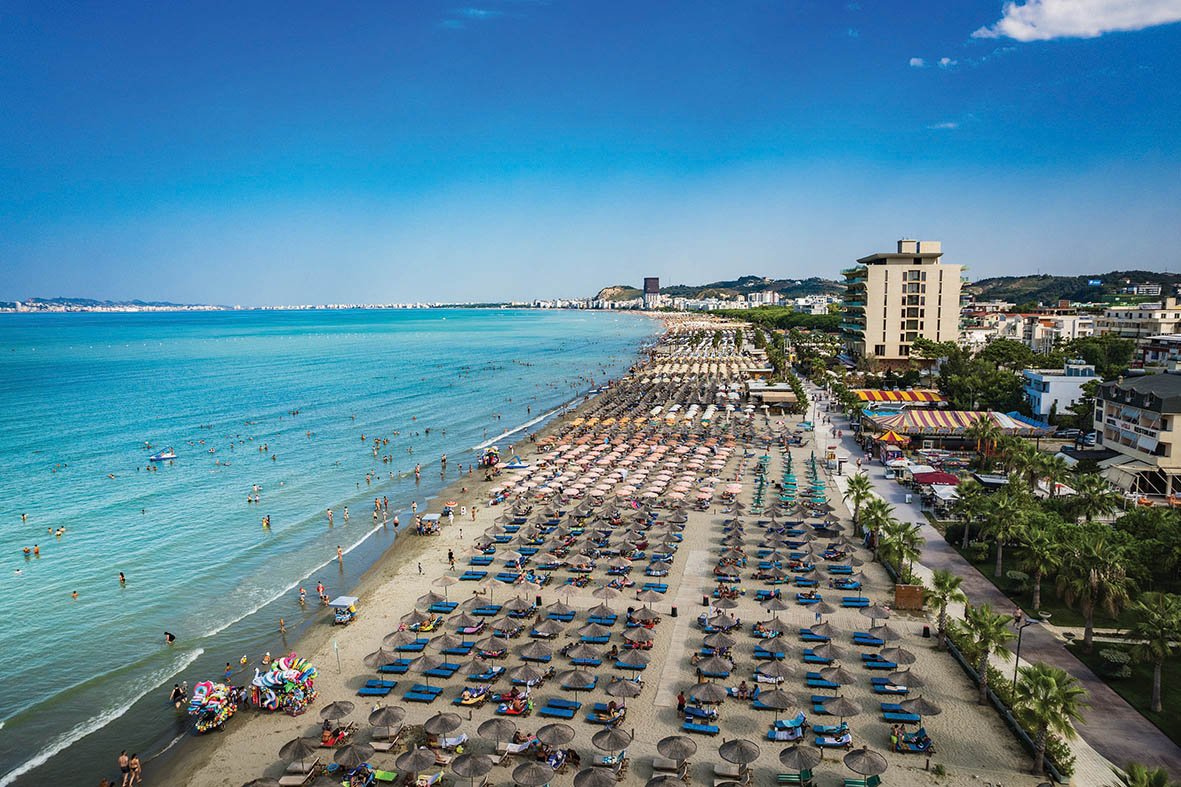
For Mr. Kasa, the consequences of weaknesses in service show in the evaluations tourists leave on platforms. And on the coast, where the pressure of flows is greatest, this problem becomes more visible. “In Albania it’s not just flow or management. Services are also a problem, which leave much to be desired.”
Traffic, infrastructure and prices
On the list of the season’s problems, infrastructure and traffic hold an important place. Mr. Kasa ranks them among the two main concerns conveyed by foreign agencies.
“Two are the main negative impressions: the first is infrastructure and the second, overly heavy traffic on our roads,” he says.
In certain cases, traffic has brought considerable delays even over relatively short distances. “This summer we have had to, from Tirana airport to Golem, make transfers that lasted four or even four and a half hours,” says Mr. Kasa.
These transfers, according to him, are linked to organized tourists arriving on charter flights.
Mr. Kotherja considers the problem more concentrated in certain segments. He singles out the Tirana–Elbasan axis, which according to him penalizes the Southeast, as well as the Milot–Lezhë segment, which weighs on movement toward the North.
“In the rest it hasn’t been very bad. Obviously, in season, flows grow and there can be traffic, but infrastructure in itself I cannot say is the problem. Traffic in some segments, yes.”
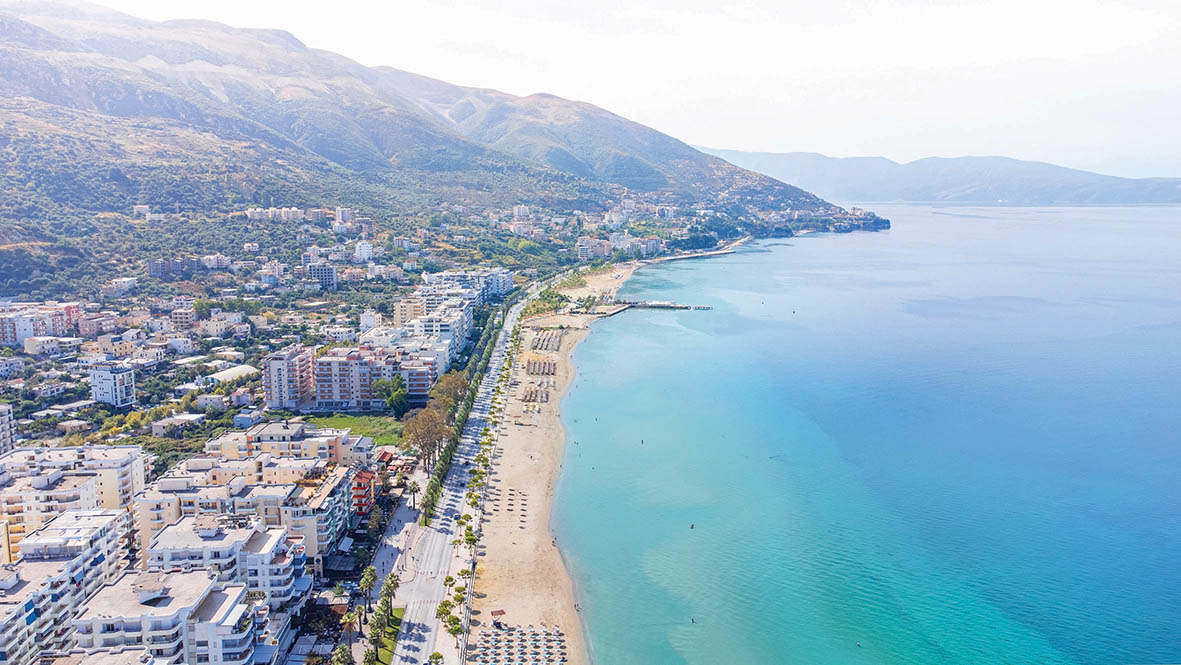
In the South, access problems combine with pressure from constructions and prices. Mr. Kasa notes that, compared to Durrës, the southern coast continues to get weaker evaluations. “Durrës is better, while the South is worse. Infrastructure in the South is also more burdened, something that penalizes it.”
Another problem is construction sites in tourist areas. “In the South, but also on the coast in general, construction sites and cranes over bathers’ heads remain a problem, something that doesn’t give us a positive point,” says Mr. Kasa.
Meanwhile, Mr. Kotherja sees rising prices as one of the issues that could most affect competitiveness. He links it to the devaluation of the euro and the rise of business costs. “When the euro devalues, the whole industry starts raising prices and forgets that a very large part of clients in the country are those who pay in euros, including clients from Kosovo.”
According to him, this is making tourists more careful and increasing the chance they choose alternative destinations. “Clients want it cheaper and Albania is no longer that cheap.”
Mr. Kasa, on the other hand, considers the average price increase moderate and cost-linked. “Prices have had a slight increase and it was an acceptable increase under conditions of higher costs,” he says, making clear he is not referring to individual cases where there may be abuse.
But in particular areas of the South, Mr. Kotherja sees a stronger problem. Referring to Dhërmi, he says high prices have limited the presence of foreign clients. “I was myself in Dhërmi and there are not as many foreign clients as expected, because prices are very expensive.
“A foreigner doesn’t pay in the long run prices of 400 euros/night.”
A season with growth but also with questions
Beyond the season’s problems, expectations for the continuity of the tourism sector remain relatively positive. Kasa says organized tourism contracts for next year have closed with about 10% growth in both volume and price.
Poles continue to lead, followed by Czechs, while he notes growth also from the French market.
Autumn bookings also look good. “Autumn tourism I think will be good, since already bookings are at satisfactory levels,” says Mr. Kasa.
Mr. Kotherja confirms the growth for autumn, although he stresses that cost pressure continues. He also sees a shift in tourists’ interest toward experiences and destinations outside the traditional sea-and-sand model.
“Foreigners tend to spend on experiences. Less on food and more on experiences,” he says.
In this direction, Berat, Gjirokastra and the North are getting good evaluations, while Mr. Kasa says the North, when we talk about the coast, has also marked a growth in the number of tourists, even though the season there remains shorter.
Albania, according to him, continues to benefit also from some elements that tourists evaluate positively: “cuisine, hospitality and nature”.

Komentet
Bëhu i pari që komenton!
Lini një Koment të Ri
Për t'u përgjigjur një komenti specifik, kliko butonin 💬 Përgjigju poshtë atij komenti.