
Switzerland’s glaciers are melting at high rates, nearly 20% less ice in 5 years
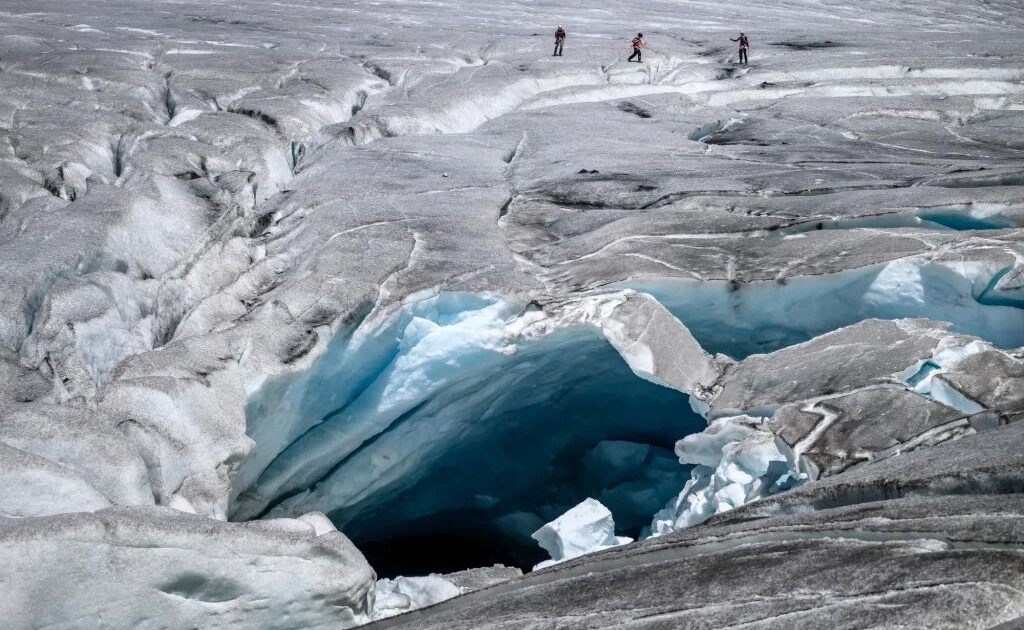
Switzerland’s glaciers have experienced another year of extreme melting, losing more than 5% of their ice volume in 2026 alone, according to Bloomberg.
Over the last five years, the loss has reached nearly 20% of the country’s ice volume, according to data from the Swiss Glacier Monitoring Network (GLAMOS) and the Swiss Commission for Cryosphere Observation.
According to the report, the average thickness of some glaciers fell by 2.5 to 4 meters, while in some parts of the glaciers, the summer loss reached up to 10 meters.
The heavy melting was mainly linked to a winter with very little snow and high temperatures during the summer months. The winter of 2025–2026 was among the ten least snowy winters since measurements began. From May to September, every month was accompanied by dry spells and at least one heatwave. During this period, the freezing level, the altitude above which temperatures are below zero degrees, stood above 4,000 meters for 76 days. According to researchers, this is more than double the average and constitutes a record.
Snow serves as a protective layer for glaciers, but in June it began disappearing in some areas because of the heatwaves. By September, there was no snow left even at 3,500 meters. Scientists warn that, under such conditions, Alpine glaciers have no chance of surviving in the long term.
The consequences are already visible in the smaller glaciers. Several of them, including Bella Tola and Griessfirn/Plattalvafirn, have disappeared. Meanwhile, the Allalin, Clariden, Aletsch and Rhône glaciers recorded in 2026 their greatest melting since measurements began.
The melting ice has also released huge amounts of water. From July to September alone, Swiss glaciers lost about 2,200 billion liters of water, more than four times the annual drinking-water consumption of all Swiss households. For now, this meltwater helps alleviate summer water shortages. But scientists stress that this benefit is shrinking as the glaciers become ever smaller.
2022 was the year of the greatest glacier melting in Switzerland. In 2026, the ice loss was smaller than in 2022, but still very large and among the highest recorded. However, experts note that the frequency of years with extreme melting has become worrying.


Komentet
Bëhu i pari që komenton!
Lini një Koment të Ri
Për t'u përgjigjur një komenti specifik, kliko butonin 💬 Përgjigju poshtë atij komenti.