
The Great Michelangelo Is Dead!: Vienna Academy opens its 300th-anniversary exhibition
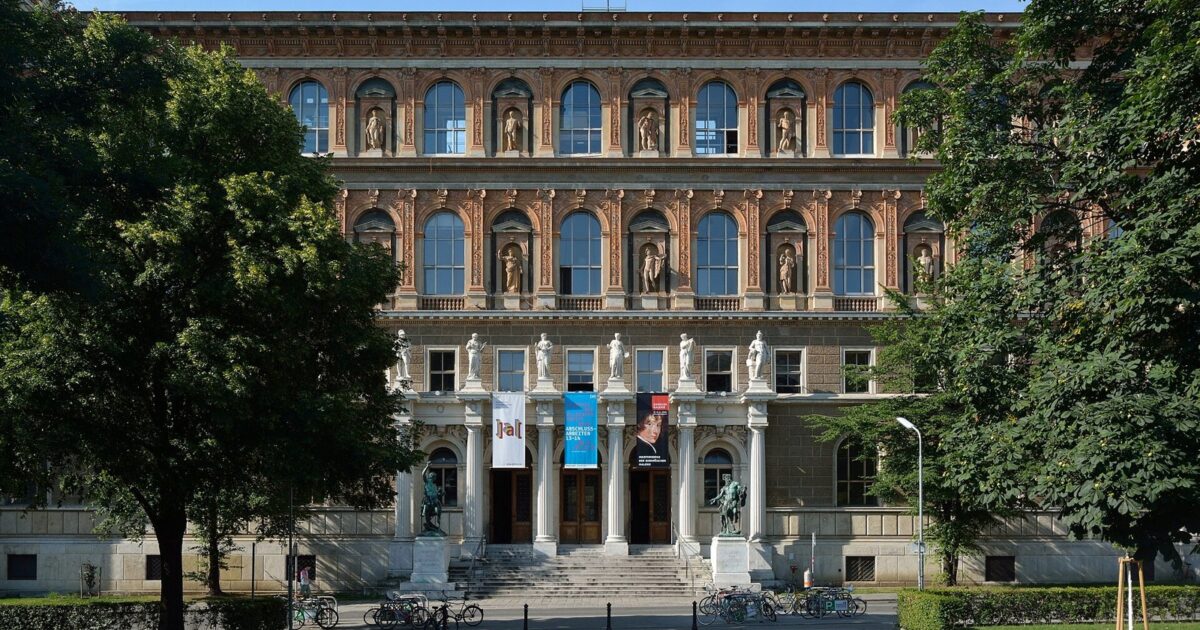
VIENNA. – The Academy of Fine Arts Vienna opened its major jubilee exhibition “The Great Michelangelo Is Dead! Avant-Garde and Academicism” on Thursday, 2 October, at the Paintings Gallery in Schillerplatz. The exhibition, whose official opening took place on 1 October, will remain open until 22 August 2027, as Artdaily reports.
The occasion is the 300th anniversary of the Viennese academy: in 1726 Jacob van Schuppen drafted its statutes, modelled on the French academy. But the exhibition does not offer a detailed history of the institution; it is a journey in fifteen chapters through the history of the academy — and of its anti-academic opponents — that also touches on today’s debates over identity politics, diversity and the geopolitical changes shaping the discourses of education and society.
The conceptual starting point is a fundamental split within the conception of art, reflected in the long influence of Giorgio Vasari: his writings praise the ideal of the autonomous, authentic and original artist, while he himself was a diligent cultural official in the service of consolidating absolutist power in the Grand Duchy of Tuscany. This contradiction seals the founding of the first art academy, the Accademia del Disegno, by Cosimo I in Florence in 1563 — whose true symbolic founding event comes a year later, with the pompous funeral of Michelangelo Buonarroti, whom Vasari considered the epitome of the “divine” artist.
The exhibition presents a selection of masterpieces of European painting from the 16th century onwards, supplemented by important loans, in dialogue with outstanding positions in contemporary art. Among the historical works are Botticelli, Rembrandt, Rubens, Titian, Nicolas Poussin, Charles Le Brun, William Hogarth, Francis Picabia, Artemisia Gentileschi (attributed), Johann Baptist Lampi, Franz Anton Maulbertsch, Ferdinand Georg Waldmüller, Giorgio Vasari, George Stubbs and others, as well as plaster casts after Michelangelo and Canova and Écorché anatomical figures by Johann Martin Fischer. Exhibited alongside them are the contemporaries Martin Kippenberger, Roy Lichtenstein, Jörg Immendorff, Markus Lüpertz, Louise Lawler, Alice Creischer, Michaela Eichwald, Vaginal Davis, Katharina Sieverding, Heimo Zobernig and others — some with works created especially for the exhibition. The works of the Flemish, Dutch and old German schools of the collection are presented as a “gallery painting”. The exhibition is curated by Helmut Draxler, with curatorial contributions from Claudia Koch and Hans-Jürgen Hafner.


Komentet
Bëhu i pari që komenton!
Lini një Koment të Ri
Për t'u përgjigjur një komenti specifik, kliko butonin 💬 Përgjigju poshtë atij komenti.