
The inability of an ‘anti-communist’ MP to understand the crimes of communism
By Desada Metaj
What happened yesterday to Ms. Florika Nguca in Lushnja is proof of how little we are able to understand the trauma of communism, especially when it does not come in the form that suits us politically.
She may not have found the clearest, most direct or most acceptable way to describe the terror she experienced as a child under communism. The poem she recited, taken out of context, may have sounded wrong. It may have seemed inappropriate. It may not have been the way someone else would have chosen to speak about the dictatorship.
Would I recite that poem? Absolutely not.
But this is precisely where the line runs between human judgment and political lynching. Because no one has the right to weigh in the balance who suffered more, who has the right to tell their pain, and who must stay silent because their way of speaking does not fit the platform of the day.
I have experienced it too, in a much smaller form, but clear enough to remember for the rest of my life, what “biography” meant under communism. In eighth grade, the school was forced to “relieve” me of my right to call the class to order at the start of the lesson, because of my grandfather’s biography. A child, who had done nothing, had to understand that the fault was in her origins. That there was a shadow over her. That the state had entered even her school desk.
That is why I know very well that the terror of communism was not only prison. It was also the small humiliation, the silent exclusion, the inherited fear, the caution over every word, the stigma on the family, on the child, on the name.
But even knowing this, I would never allow myself to judge another woman who experienced the dictatorship differently, who tells it differently, who perhaps gets tangled up in symbolism, in metaphor, in words, but who at heart was speaking about her family’s suffering.
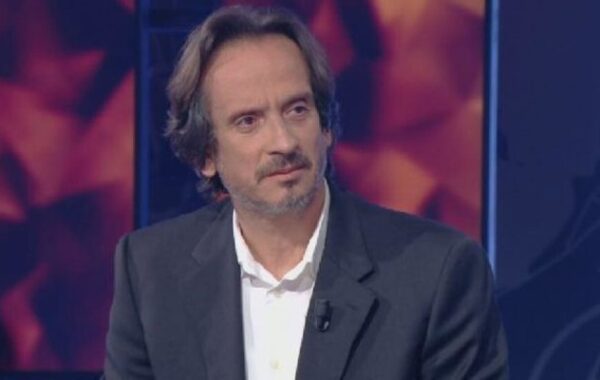
Her lynching, initiated by a ridiculous opposition MP, is an ugly act. Not only because he took a video out of context, but because he turned someone’s pain into propaganda material. He took a woman, threw her onto the internet and left the crowd to tear her apart, without caring for the truth, or the context, or her dignity.
The minimum that should have happened was an apology. One simple sentence: I took it out of context, I was wrong.
But no. He continues to defend the indefensible. He continues to insist on the malice that defined him not only as a politician, but as a human character. A politician with no other visible value except the servility of the day: once toward Basha, then toward Berisha.
And here the problem grows bigger than one MP. Because the Democratic Party, the party that should have been most sensitive to the victims of communism, carries on its back its own great sins for the way it treated the persecuted. But that is another, long and bitter topic.
Today it suffices to say this much: the MPs of this party must apologize to a lady who was publicly massacred, not by the truth, but by a political montage. And they must remember something very simple: in their zeal to humiliate a woman who spoke badly, strangely or painfully about communism, they have not shown the same severity toward Enver Hoxha himself.
Not to mention Gramoz Ruçi and others, toward whom the anti-communist memory of some Democrats suddenly becomes very polite, very careful and very silent.


Komentet
Bëhu i pari që komenton!
Lini një Koment të Ri
Për t'u përgjigjur një komenti specifik, kliko butonin 💬 Përgjigju poshtë atij komenti.