
The Porto Palermo Plan: From Cold War Museum to Former Barracks Turned Visitor Hotel
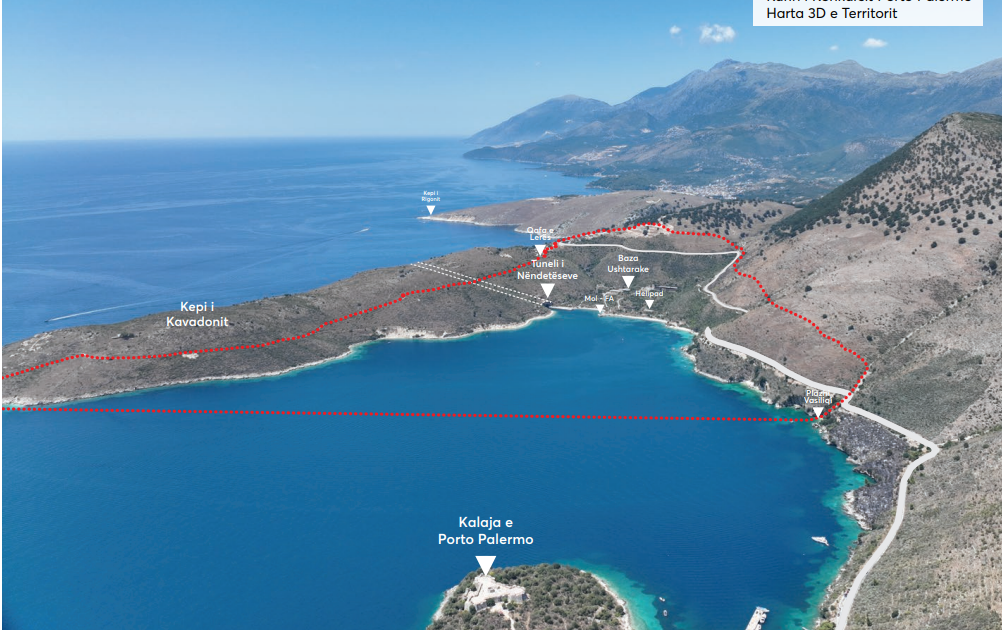
Albania’s National Territorial Planning Agency (AKPT) has opened an international competition to transform the former military base and submarine tunnel at Porto Palermo into a new public complex dedicated to Cold War memory, culture and visitors.
The project envisages the submarine tunnel becoming the Cold War Museum, while the former military barracks would be repurposed for accommodation, gastronomy, cultural and educational activities.
“Once built to remain hidden. Tomorrow, an opportunity to enter, understand and remember,” reads the call published by AKPT, which invites architects and multidisciplinary teams from Albania and abroad to submit their concept ideas.
The competition is organized by AKPT in cooperation with the Ministry of Tourism, Culture and Sports, the Ministry of Defense and the Institute of Geography and Military Infrastructure. According to the competition documents, AKPT has been designated as the central purchasing body for developing the procedure.
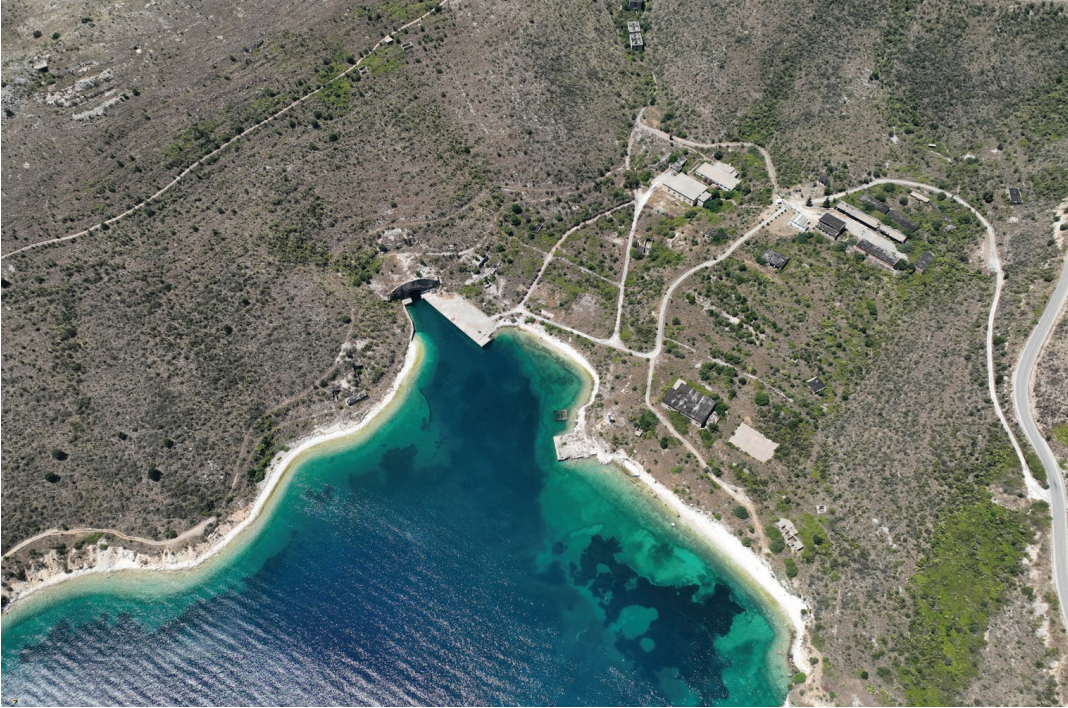
At the heart of the intervention is the Submarine Tunnel. The document describes it not merely as the space that will house the museum, but as its main object. “The tunnel is not simply a space in which a museum should be placed. The tunnel itself is the museum’s main artifact,” the terms of reference state.
The tunnel has a reported length of about 655 meters, a height of around 11 meters and a minimum width of about 11 meters. The water section ranges from about 7 to 14 meters in width, while the depth is mostly 6-8 meters and reaches about 11 meters in certain areas.
The underground complex began construction in 1969, during the then-cooperation between Albania and China, and the works continued for nearly two decades. It was initially designed for naval vessels and later adapted for use by the Albanian submarine fleet, including Project 613 submarines, known to NATO as the “Whiskey” class.
The tunnel was designed to the standards of its time for anti-nuclear protection. Its two armored, airtight gates were built to withstand air attacks and explosions of up to 10 kilotons. The southern entrance is open today, while the northern gate remains closed.
Former barracks: from military base to visitor accommodation
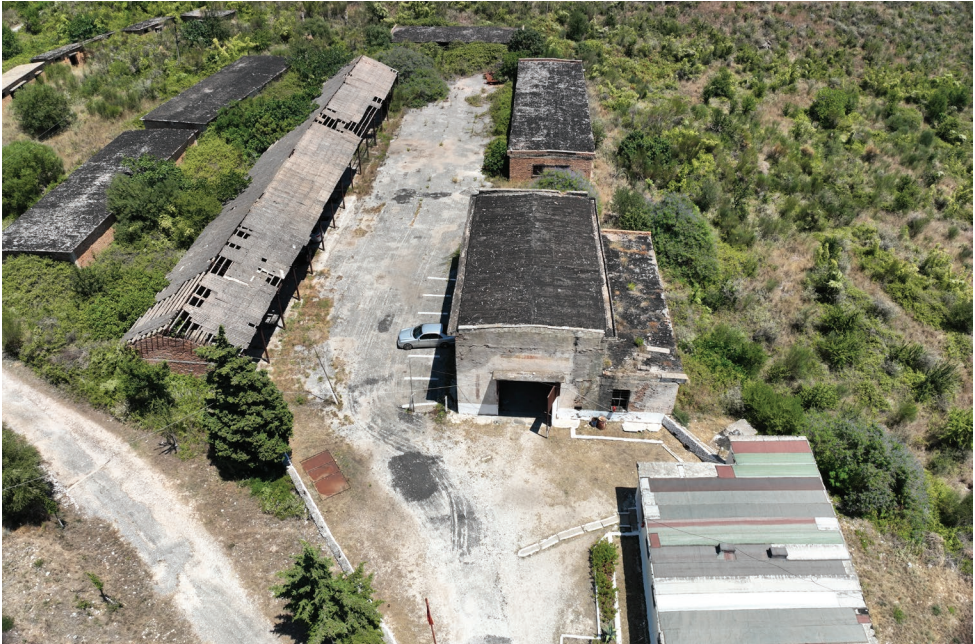
The competition goes beyond the museum inside the tunnel. The former barracks, most of which are currently degraded, will take on new functions. The document envisages accommodation directly linked to the identity of the former base, the museum and the landscape.
The former barracks could also host reception, gastronomy, education, culture and other services needed for the complex.
The terms of reference stipulate that visitors may stay at Porto Palermo for one night or for longer periods, tied to cultural, educational or research programs. But the document draws a clear line against traditional tourism development.
“The goal is not the creation of a conventional coastal tourist destination,” but a form of hospitality tied to the history, culture, landscape and character of Porto Palermo.
Likewise, the project should not aim to maximize beds. The terms require that accommodation capacity be determined by the potential of the existing buildings, the quality of the stay and the real capacity of the territory.
The aim is for the museum, cultural activities and the stay at the former base to create reasons to visit Porto Palermo even outside the summer season. The document also calls for links to the local economy through employment, small businesses, local gastronomy, crafts, guides and other services.
Part of Porto Palermo remains a military base
The transformation will not cover the entire former complex. Part of Porto Palermo continues to be used by the Albanian Naval Forces for operational and training functions.
The small pier and the building near it will remain in military use, while the helipad will continue to retain the operational function of the Naval Forces. Outside periods when it is needed for operations or training, the helipad may also be used by the new complex, according to security conditions.
The competition also takes place within a protected territory. The Porto Palermo Bay Nature Park covers an area of about 1,695 hectares, nearly 88% of which is marine. The strict-protection zone overlapping the competition territory is designated as a zone with no physical intervention.
The Porto Palermo Castle also remains outside the intervention. According to the competition conditions, it is not an object of design and should be treated as part of the visitor’s overall experience and the relationship between the museum, the bay and the landscape.



Komentet
Bëhu i pari që komenton!
Lini një Koment të Ri
Për t'u përgjigjur një komenti specifik, kliko butonin 💬 Përgjigju poshtë atij komenti.