
“The Shortage of Qualified Staff Worsened Service This Summer Season”
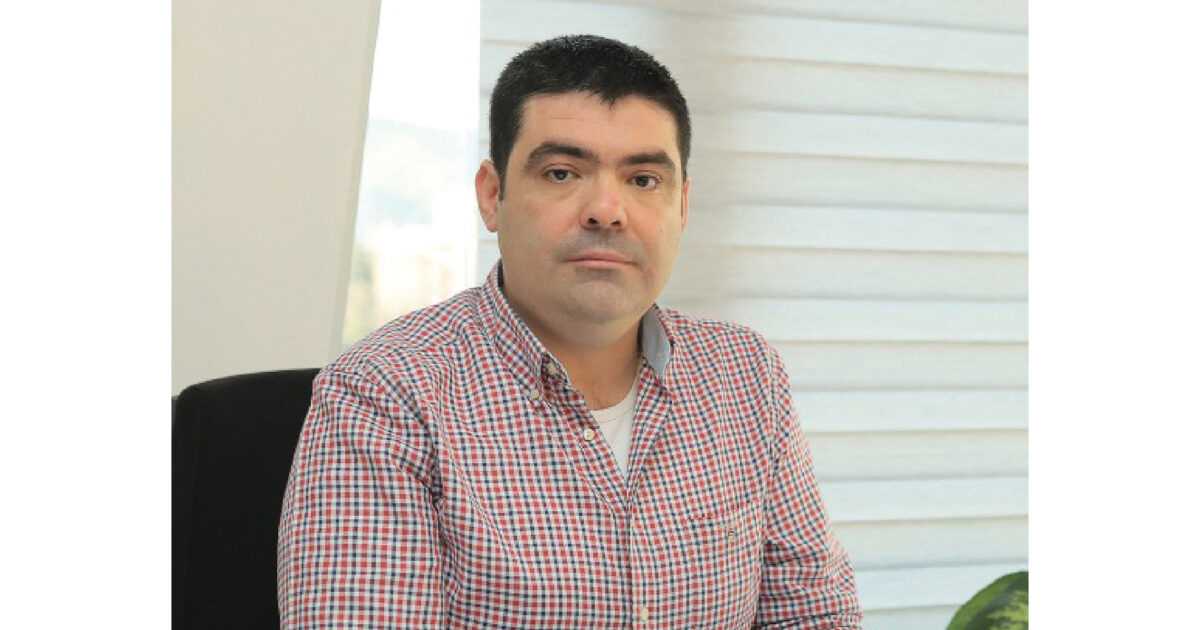
Elvis Kotherja, Founder of “Elite Travel Group & Elite Hospitality”
Service quality is the main concern that Elvis Kotherja, founder of “Elite Travel Group & Elite Hospitality”, singles out from this year’s season.
He links its weakening to the shortage of qualified staff, rising costs and a not-always-fair ratio between pay and productivity.
According to Mr. Kotherja, pressure on businesses leaves them very little room for survival, impacting either staff or product quality, a solution he considers unsustainable.
According to him, foreign workers, professionalization and digitalization of tourist structures are expected to take an ever-greater role in how the sector will face this problem in the long term.
How has the summer season gone this year, in your view, and what strikes you about the visitors who are coming?
The performance in figures I think has been good this season. Three client behaviors are different from previous years.
The first behavior is that they book at the last minute and this is very clearly seen in all Western markets. Czechia, Germany and other markets have this tendency, while France is somewhat more organized and books earlier.
The second trend is that they hesitate to consume. They used to be much better in spending. This is linked to two factors. The first is the fall of the euro, which has caused an overvaluation of the lek and made many products and offers coming from restaurants expensive. Foreigners refuse to pay these prices.
The second is that the service offered in general and the workforce are not where they should be and, practically, the offer is not that attractive.
The third and most important tendency is that, in general, there is a kind of approach to raise prices. When the euro devalues, the whole industry starts raising prices and forgets that a very large part of clients in the country are those who pay in euros, including clients from Kosovo.
This has automatically made us uncompetitive. We are losing competitiveness unconsciously, at a time when it is very important to keep the upward trend.
We need these clients and we must be careful with costs.
But we must not forget that the pressure for price increases is frightening. All those who buy goods are under pressure because of costs: the cost of workers, energy, transport, lodging and food.
As the devaluation of the euro continues, tourism will have the fate of the garment industry. This will cause a “tsunami” in the sector.
There is a general assessment that service this year has been lower in quality than last year. Have you encountered this?
From my experience, this year I think service limped. They are all those elements of cost we talked about, so where, to survive, you have to limp either in product quality or in staff. But that is not a solution.
The reason is that the industry still continues not to be mature. Albanian entrepreneurs in the hospitality industry don’t see this industry in the long term. They don’t even see for tomorrow, but only for today.
Tourism is pumped as if it were a gold mine, while it is a very risky industry if you don’t administer it properly.
There is hope and a light at the end of the tunnel, linked to workforce, after several agreements with Asian countries that can bring qualified workforce. I think this will lower the pressure on the market.
Likewise, I think it will be an important phase where productivity at work and pay will meet. The shortage we have had has caused wage increases even for unqualified employees, so the latter are overvalued, putting the sector into a vicious circle without a solution.
In Albanian society a psychosis has been created as if whoever works will get the pay the same, whether they work or not. This is wrong. The damage is not done only to the employer; it is done to the image of the country and to the revenues coming from this industry, if the service is evaluated as “not good”.
The moment will come when there will be a solution and foreigners in hotels will dominate as workforce. This is unavoidable. There are currently structures that don’t want to work with Albanians, because of discipline, rules and responsibility. Over time everyone will adapt.
What is the biggest bottleneck you see today in the industry, besides the lack of employees?
This industry must automatically digitize. What I notice is that in the age group over 45 there is a kind of insecurity and an opposing approach to technology, which doesn’t serve this field at all.
They don’t like technology, don’t adapt to it and still don’t understand that this pushes them out of the market. They see technology as a burden and not as an opportunity to ease their work. There are cases when a high-level manager doesn’t know how to write an email, but meanwhile is paid 2,000 euros.
As for infrastructure, how do you see the situation this year? What about traffic problems, which repeat every year?
As for infrastructure, I note as problematic the Tirana–Elbasan segment, which penalizes the Southeast, and that from Milot to Lezhë, which penalizes the North.
In the rest it hasn’t been very bad. Obviously, in season, flows grow and there can be traffic, but infrastructure in itself I cannot say is the problem. Traffic in some segments, yes.
You had an agreement to bring organized tourists from Nordic countries through Vlora Airport, which not only didn’t open this summer, but there is now nothing certain about when it will start operating. What do foreign agencies say about possible agreements to bring tourists?
Vlora Airport has greatly damaged the image of tourism as a whole. Foreign agencies, especially from the Nordic and English markets, were ready to bring charter flights this year, but now everything is on hold.
They told us that, at the moment of the airport’s opening, to notify them and restart negotiations. We try to maintain relations and give objective reasons, explaining practically and clearly what the problems are, but the image is damaged.
So, there is a kind of erosion of trust.
We must understand that the biggest pressure is on investors, because in the South billions of euros are being invested and all these investments have a “grace period”, a relief period for return of investment. For this reason, investors are under pressure.
I was myself in Dhërmi and there are not as many foreign clients as expected, because prices are very expensive. A foreigner doesn’t pay in the long run prices of 400 euros/night. Even food prices in the South are very high. You go to the supermarket and find almost nothing cheap.
What has been the behavior of foreign tourists this year regarding overnight stays?
This year foreigners come and stay less. The growth of private accommodation has continued — apartments and houses on platforms like Booking or Airbnb, as well as “self-catering”, food bought in the supermarket and cooked at home.
This has come as an effect of prices, which in some cases make no sense in relation to quality. If the price-quality ratio improves, this situation can be managed and we can have tourism with standards, where everyone pays for what they get.
And autumn, how does it look from advance bookings?
The autumn part has growth, but it also risks destabilization, because there is a cost increase. Clients want it cheaper and Albania is no longer that cheap.
Our country has this growth in visitor flow from the many “low cost” lines, but our base remains the European client and we must consider that Europe is not in its best conditions either and clients have become very price-sensitive.
When his cost rises, he has no problem choosing another country.
What trends do you notice among foreigners? It seems they have more interest in the rest of Albania and not only in sea and sand tourism. On platforms, for example, there are very good evaluations for Berat, Gjirokastra and the North.
Foreigners tend to spend on experiences. Less on food and more on experiences. This includes daily activities and this is what is growing and will continue to grow. Budgets are oriented in this direction.
The food and beverage sector, on the other hand, is in decline. They no longer have the same interest in this part. These trends will continue to remain going forward.
On the other hand, I think we are in a phase where the market shake-up has begun, which in the next five years will become more visible. Structures that are consolidated will continue to have satisfactory revenues, while the market will regulate the rest, pushing them out.
Companies and experiences will consolidate. Overall there will be consolidation in all sectors, including agrotourism, which is a very important segment and which, again, I believe will go through the same process as tourism as a whole.
Whoever has worked well and brought a good experience for tourists will resist.

Komentet
Bëhu i pari që komenton!
Lini një Koment të Ri
Për t'u përgjigjur një komenti specifik, kliko butonin 💬 Përgjigju poshtë atij komenti.