Who are the Russian oligarchs expected to be removed from the EU sanctions list — and why do they matter?
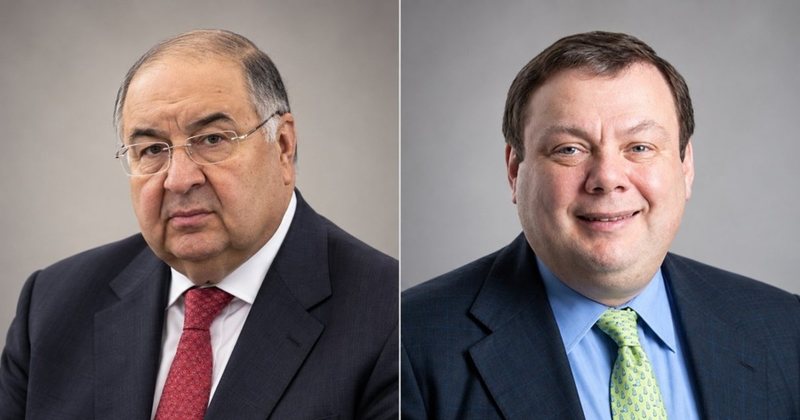
Alisher Usmanov and Mikhail Fridman, two of Russia’s richest and best-known businessmen, are expected to be removed from the European Union’s sanctions list after intensive negotiations among member states. The decision has sparked fierce debate in Europe, with France accused of helping push the delisting process forward.
According to The Kyiv Independent, developments around the two oligarchs even threatened the continuation of the EU’s entire sanctions package against Russia, imposed after the full-scale invasion of Ukraine in 2022.
Slovakia pushed forward the request to remove the two businessmen from the list, while France played a significant role in the recent negotiations. The Financial Times reported that Paris sought the lifting of sanctions on Usmanov as part of a deal linked to the release of two French nationals imprisoned in Azerbaijan.
But who are the two businessmen, and why are they so important?
Alisher Usmanov — from metals to technology and media
Alisher Usmanov, born in Uzbekistan in 1953, is one of Russia’s richest oligarchs.
In 1980 he was sentenced to eight years in prison on bribery charges. Two decades later, Uzbekistan’s Supreme Court declared the case fabricated and concluded that no criminal offense had been committed.
Usmanov’s wealth grew significantly after the collapse of the Soviet Union. He controls Metalloinvest, one of Russia’s largest mining and steel conglomerates.
According to figures cited by Forbes, in 2026 his fortune is estimated at around $14.5 billion, ranking him among Russia’s richest people.
Usmanov has also had interests in telecommunications, technology and media.
He owned shares in MegaFon, one of Russia’s largest mobile operators, while until 2021 he controlled the VK group, which owns the VKontakte and Odnoklassniki social networks.
In 2006 he bought the well-known Russian newspaper Kommersant. According to his critics, after the company’s acquisition its editorial line moved closer to the Kremlin’s.
Usmanov has also had significant business ties with the state-owned Gazprom. From 2000 to 2014 he headed Gazprominvestholding.
On the international stage, he has invested in major American technology companies, including Facebook and Apple, while until 2018 he was co-owner of the English football club Arsenal.
Ties with Putin
The European Union sanctioned Usmanov in 2022, describing him as a pro-Kremlin businessman with particularly close ties to Russian President Vladimir Putin.
The EU accused him of playing a role in managing financial flows and resolving business issues in the interest of Putin’s circle.
Another significant element is his connection to the Russian metals industry. According to Ukrainian authorities, companies linked to Metalloinvest supplied iron products to Russian industrial companies tied to tank production for the Russian Defense Ministry.
Usmanov has denied the accusations and challenged the sanctions against him.
Mikhail Fridman — the oligarch born in Ukraine
Mikhail Fridman is another of Russia’s most powerful businessmen.
He was born in 1964 in Lviv, in what was then Soviet Ukraine, and later moved to Moscow.
Fridman is a co-founder of Alfa Group, a conglomerate with major interests in the financial, energy, telecommunications and trade sectors.
In the 1990s, he became part of the group of Russian oligarchs known as the semibankirshchina, businessmen who played an important role in financing Boris Yeltsin’s 1996 presidential re-election campaign.
Fridman’s fortune has been estimated by Forbes at around $16.5 billion in 2026, ranking him among the richest Russians.
He controlled Alfa Bank, one of Russia’s largest banks, until 2024.
Alfa Group has also had interests in the international telecommunications company VEON, while it controlled the Russian retailer X5 Retail Group. The group was also co-owner of the energy company TNK-BP, in partnership with British giant BP, until 2013.
The EU, the United Kingdom and the United States imposed sanctions on Fridman in 2022–2023, arguing that he had built strong ties with Vladimir Putin’s administration.
The EU claimed that Fridman had benefited from relations with Russian authorities and that these ties had helped Alfa Group’s business interests.
In 2023, Ukraine’s Security Service accused Fridman of financing Russia’s war against Ukraine. According to the SBU, assets linked to Alfa Group had transferred around 2 billion rubles to the Russian defense industry and provided goods and services to Russian forces.
Fridman has disputed these accusations.
One significant development came from the Court of Justice of the European Union, which ruled that the sanctions imposed on him in 2022 were not justified. However, the ruling did not automatically annul other measures imposed on him in subsequent years.
The Usmanov and Fridman case has become a sensitive diplomatic point within the EU.
According to international media reports, negotiations to extend sanctions against Russia were accompanied by pressure from several member states to remove the two oligarchs from the list.
The Usmanov case is particularly tied to French diplomacy. According to the Financial Times, France linked the matter to negotiations for the release of two French nationals detained in Azerbaijan.
This has caused concern in Kyiv and among several European countries, which see the removal of sanctions on businessmen linked to the Russian elite as a weakening of economic pressure on Moscow.
At the same time, the case has highlighted the difficulty of maintaining European unity on sanctions against Russia, as each new package requires agreement among member states.
Two billionaires at the center of a bigger battle
Usmanov and Fridman are not just two wealthy businessmen. Because of their ties to strategic sectors of the Russian economy, their relations with the political elite and their large fortunes outside Russia, they have become an important part of the debate over how Europe should treat Russian oligarchs.
Their removal from the sanctions list, if finally confirmed, would mark a significant change for two of the best-known figures in Russian business.
But their case also shows that the sanctions war against Russia is not fought on the economic front alone. It is closely tied to European diplomacy, international relations and efforts to maintain a common stance toward Moscow.
Komentet
Bëhu i pari që komenton!
Lini një Koment të Ri
Për t'u përgjigjur një komenti specifik, kliko butonin 💬 Përgjigju poshtë atij komenti.