
Why the EU is unlikely to cut its diplomatic delegations
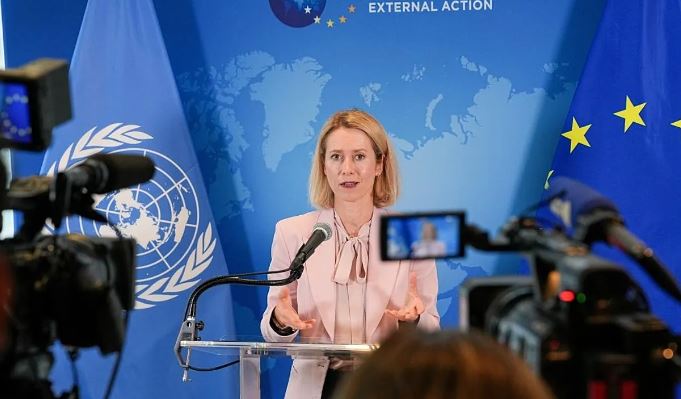
The EU is unlikely to cut its diplomatic delegations despite budget pressure. The network, which is already being restructured, is vital for smaller member states and European companies.
Delicate budget talks are seeing the EU’s administrative machinery and global funding as the most likely targets for deep cuts. But the delegation network is already being reorganised, and small European countries, as well as companies, rely heavily on it.
European governments are engaged in tense negotiations over the bloc’s next long-term budget, with the administrative costs of EU institutions abroad and the global programme as the most likely victims. But small countries have much to lose if the EU’s global diplomatic network shrinks.
A coalition of so-called “frugal” countries, including Germany, the Netherlands and Sweden, is pushing to reduce the proposed size of the next Multiannual Financial Framework, the EU budget for 2028–2034, by several hundred billion euros.
According to ongoing discussions, there is broad consensus among member states on reducing spending dedicated to EU institutions, while Europe’s Global Fund also faces significant cuts from the levels proposed by the European Commission.
These cuts are raising the prospect of shrinking the EU’s network of delegations worldwide, which would be highly problematic for small EU countries, according to four EU officials who spoke to Euronews on condition of anonymity.
“Small member states with few embassies rely heavily on the EU delegation network,” said an EU diplomat from one of the smaller member states in question, speaking anonymously to discuss sensitive matters freely.
The global diplomatic network
According to the 2025 report of the European External Action Service (EEAS), the EU’s diplomatic arm, the bloc runs 145 delegations and offices, employing almost 6,000 people on a budget of around 1 billion euros per year.
The delegations are staffed not only by the EEAS: they also work with the Commission’s departments for international partnerships and for civil protection and humanitarian aid, while hosting diplomats seconded from national ministries and employing local agents.
Supporters of the network stress that its cost is relatively modest given the global reach it offers smaller EU member states that have no diplomatic presence of their own in many countries.
“Most of the costs for delegations do not come from staff, but from security and premises, which is the same reason some member states cannot afford a diplomatic presence there,” a second EU official told Euronews.
According to this official, the idea that the future budget could cut delegations, politically impossible, stems from an ongoing power game by the Commission to take fuller control of the EU’s diplomatic service.
All the more so as the delegations are already undergoing a “modernisation” process.
Ongoing modernisation
Since September 1, the delegations have gone through a modernisation reform that has already brought considerable cuts to administrative staff, sparking opposition from some EU civil-service unions.
The plan centralises administrative tasks, financial management and contracts at headquarters and at regional centres overseeing groups of countries. The centre in South Africa, for example, also covers Botswana, Mauritius, Madagascar and the Comoros.
Meanwhile, local delegations have been left with smaller, sometimes minimal, diplomatic representation to maintain political dialogue with local authorities, companies and stakeholders.
“The result has been a centralisation of power, weakening delegations that in the past, especially when led by a diplomat from a large member state, could act in a much more independent way from Brussels,” said a third EU official.
At the same time, officials stress that EU countries with their own diplomatic presence often duplicate the work of delegations and are not always aligned with how Brussels is now engaging with third countries.
From development to partnerships
During Ursula von der Leyen’s first term, the Commission renamed the directorate-general for international cooperation and development (DG DEVCO) as the directorate-general for international partnerships (DG INTPA).
The change was much more than a rebranding: it marked a complete shift in the bloc’s engagement with third countries, away from development aid and towards supporting European companies in large infrastructure projects in strategic fields such as critical raw materials, connectivity and energy.
For example, the Australian mining company Viridis signed a letter of intent with the Belgian chemical company Solvay to supply Brazilian rare metals for processing at Solvay’s plant in France.
In other words, in line with von der Leyen’s “geopolitical” approach, the Commission has almost abandoned development projects in favour of initiatives that help European companies compete abroad with their Chinese and American rivals.
According to EU officials, when these projects are successful, they manage to help Europe’s private sector win contracts far larger than the EU’s own contribution, to the point that some European companies have started cooperating much more closely with the Commission.
In the new budget, the aim is also to make the global distribution of funds more flexible, dividing it by macro-region, such as Latin America and Africa, rather than by individual country, so that the EU can better exploit opportunities such as trade contracts or trade agreements.
“Delegations are key to managing projects with local partners; there are certain tasks that simply cannot be moved to headquarters,” said a fourth EU official.

Komentet
Bëhu i pari që komenton!
Lini një Koment të Ri
Për t'u përgjigjur një komenti specifik, kliko butonin 💬 Përgjigju poshtë atij komenti.