
Cairo covered over the 66-metre mural of Tutankhamun and Nefertiti after the controversy over dark skin
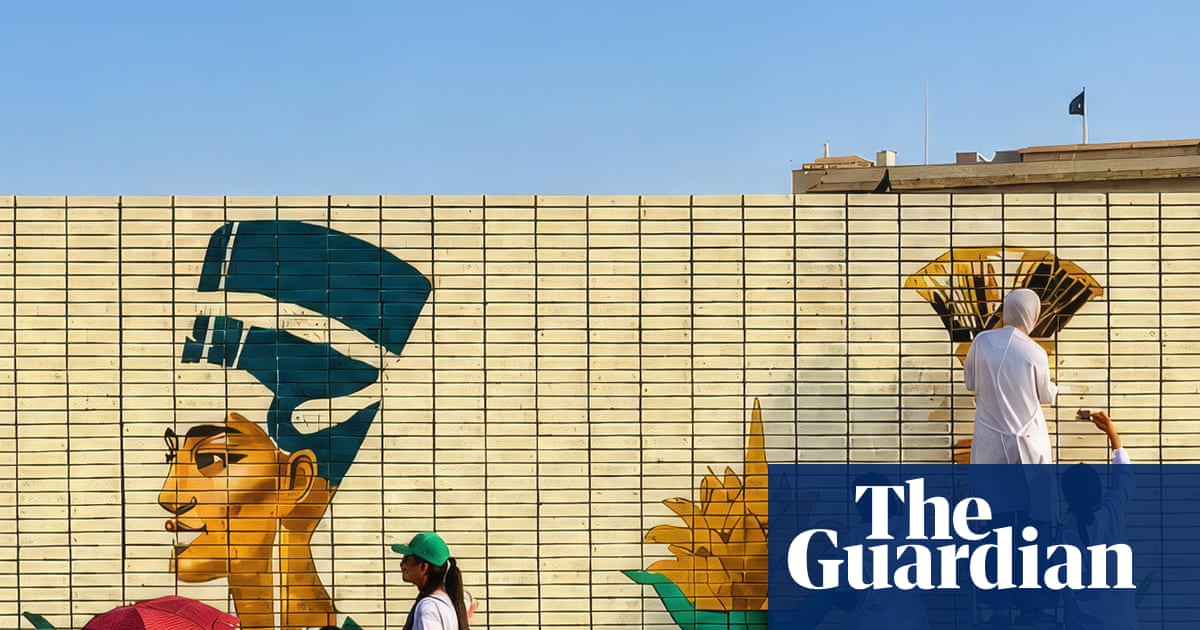
A 66-metre mural in Cairo’s Tahrir Square, depicting Pharaoh Tutankhamun and Queen Nefertiti, was covered with paint just hours before the arrival of Chinese President Xi Jinping, as The Guardian reports.
The mural was one of 40 works commissioned to decorate the city for the Chinese president’s state visit last month. It was created in just five days, at the end of August, by the Rasmet Basma youth volunteer group: the designs were generated with the artificial intelligence programme ChatGPT and then painted by hand on the wall, according to The Guardian.
The controversy erupted over the skin colour of the two historical figures: a golden-bronze tone, which at night cast shadows over the faces, making them look dark-skinned. On social media the work was accused of reviving Afrocentrist claims — the theory that ancient Egyptian civilisation was of exclusively African origin — and anger escalated within days.
Ahmed Moussa, the 22-year-old founder of Rasmet Basma, acknowledged that the Cairo governorate had asked them to cover over their work. He said the deputy governor of Cairo and the district head had visited the site during the work and had been amazed by the murals — until the controversy began to grow on social media. “We used a golden-bronze tone that cast a shadow over the faces at night, so they looked dark-skinned,” Moussa said, acknowledging “our mistake in not consulting archaeology and art specialists,” The Guardian writes.
The episode is the latest episode in the long debate over how the ancient Egyptians looked. Former antiquities minister Zahi Hawass said the case shows the risks of allowing inexperienced volunteers to manage historical representations in such prominent places, while Egyptologist Monica Hanna noted that ancient Egypt’s diversity has always existed on a spectrum, which modern ideological debates flatten. Artificial intelligence scholar Walid Mahmoud warned that these systems are fed with global data — often dominated by Western perspectives — and reproduce them without regard for the local historical context.


Komentet
Bëhu i pari që komenton!
Lini një Koment të Ri
Për t'u përgjigjur një komenti specifik, kliko butonin 💬 Përgjigju poshtë atij komenti.