
Clark: Milosevic had a genocidal mind, Thaci was a patriot who returned to defend his country
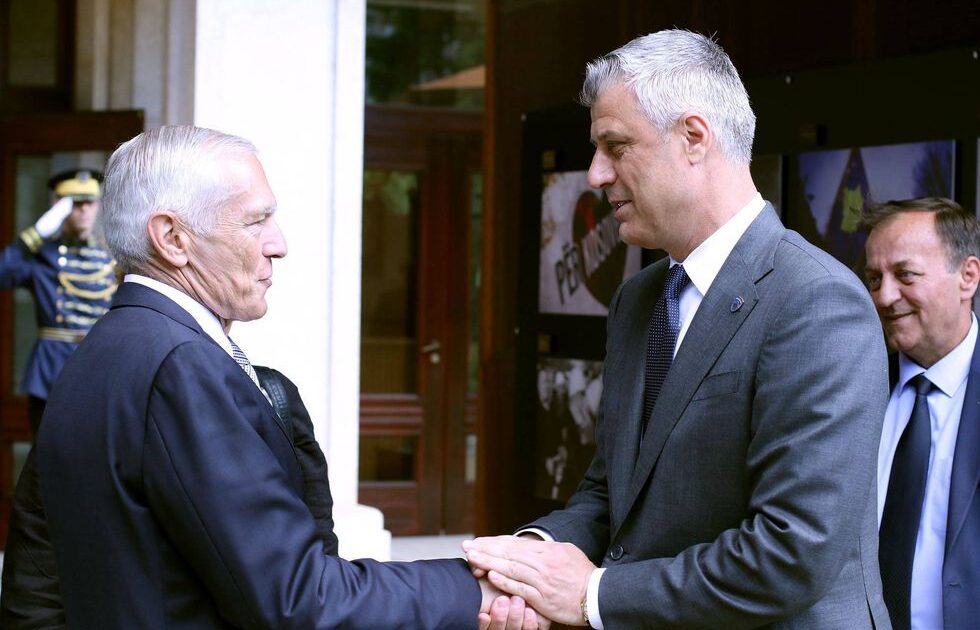
NATO’s former Supreme Allied Commander for Europe, General Wesley Clark, has spoken about the war in Kosovo, the role of Slobodan Milosevic and NATO’s intervention during an interview for TV Klan.
Clark described Milosevic as a leader with, as he put it, a “genocidal mind”, while drawing a sharp distinction between the former Serbian leader and the former president of Kosovo, Hashim Thaci.
Speaking about developments during the war, Clark said NATO had asked Milosevic to withdraw his forces from Kosovo, while claiming the Serbian leader had told him that Albanians were “murderers” and “rapists” and that Serbia would kill them all.
“During the war, we asked Milosevic to withdraw the troops and we gave him a document that proved this. He told me that Albanians are murderers, they are rapists. He told me that we have dealt with Albanians before and that we have the solution and we ‘will kill them all’,” Clark said.
According to him, Milosevic had signed the document, but had later brought forces back into Kosovo.
“Milosevic signed the document, but in January he again sent forces into Kosovo and restarted the ethnic cleansing. Milosevic can never be compared with Hashim Thaci. Thaci was a patriot, who returned to his own country in a time of crisis,” he said.
Clark said Milosevic was convinced he would eliminate the Kosovo Liberation Army and put an end to the resistance of Kosovo Albanians.
“Milosevic was stubborn, he was sure he would put an end to the KLA and to the people of Kosovo. Serbia had arrested and killed intellectuals and people were told to give us your property and your young women, or else we will kill you. Milosevic knew what was happening on the ground. When we saw the situation become grave, we intervened and bombed Serbia,” Clark said.
Clark linked NATO’s intervention to earlier developments in Rwanda and Bosnia, saying the United States did not want similar massacres to be repeated in Kosovo.
“At that time, in Rwanda there was ethnic cleansing. Some 800,000 people were massacred in that African country. We saw genocide there and said the massacre could not be repeated,” Clark said.
He also mentioned NATO’s intervention in Bosnia and Herzegovina and the agreement that ended the war there.
“In 1995 we saw Serbian ethnic cleansing in Bosnia and NATO decided to intervene in Bosnia and Herzegovina as well. There we negotiated the end of Milosevic and he sat at the table, because he knew he was facing NATO,” Clark said.
Speaking about Kosovo, Clark also mentioned the massacre of the Jashari family in Prekaz in March 1998, describing it as one of the moments that showed the escalation of the situation.
“In 1998 the Jashari family was eliminated and a great massacre took place,” he said.
Clark added that Milosevic was determined, in his view, to restrict the rights of Kosovo Albanians, while saying he could not know exactly what his long-term plans were.
“Milosevic was determined to eliminate all the rights of Albanians, perhaps he wanted to settle Serbs in Kosovo — his plans, we do not know exactly what he had in mind,” Clark said.
In the end, NATO’s former supreme commander called for building better relations between the communities and countries of the region.
“This hatred between Albanians and Serbs still continues to a certain extent. We did what we could. Let us start building a better relationship in the region,” Clark concluded.
Komentet
Bëhu i pari që komenton!
Lini një Koment të Ri
Për t'u përgjigjur një komenti specifik, kliko butonin 💬 Përgjigju poshtë atij komenti.