
FOCUS – The sea is redrawing Europe’s map: Here are 10 cities facing an uncertain future
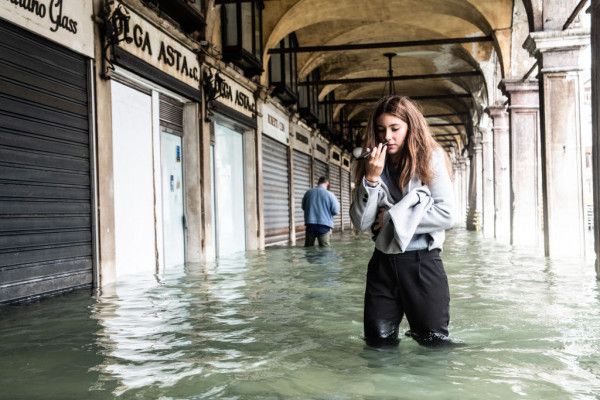
ROME, Sept. 18 /ATSH/ – Coastal Europe is facing a significant geographical shift, as rising sea levels and gradual land subsidence are changing conditions across many urban areas.
According to analyses presented in an article published by Studenti.it, this is no longer a distant threat, but a process that is already testing infrastructure, historical heritage and the safety of millions of residents.
From the metropolises stretching along the North Sea to the historic cities of the Mediterranean and the Adriatic, the ability to adapt to climate change will be particularly important in the coming decades.
The article lists 10 European cities exposed to the risk of flooding and water-level rise through 2050.
1 – Venice, Italy
Venice is one of the best-known examples of the risk from sea-level rise.
The city faces both the rising level of the Adriatic and the gradual subsidence of the land, a process known as subsidence.
The mobile MOSE barrier system was built to protect the city from the “acqua alta” phenomenon. However, the rise in average sea level may mean the barriers are used more and more often, creating challenges for the lagoon’s ecological balance as well.
2 – Amsterdam, Netherlands
A significant part of Amsterdam and the Randstad region lies below sea level.
The city is protected by a complex system of dikes, polders, barriers and hydraulic pumps. The Netherlands is considered one of the most experienced countries in the world in water management.
However, rising North Sea levels and stronger storms could increase pressure on the protective infrastructure.
3 – Rotterdam, Netherlands
Rotterdam is one of the cities most exposed to flood risk, as a very large part of its territory lies below sea level.
The city, home to one of the largest ports in the world, sits where the influences of the North Sea meet the Rhine and Maas river systems.
Rotterdam has invested in new water-management projects, including urban spaces that can temporarily collect rainwater and infrastructure designed to adapt to flooding.
4 – Hamburg, Germany
Stretching along the Elbe estuary, Hamburg is exposed to strong North Sea storms.
Storm surges can penetrate through the Elbe estuary and raise water levels in the city.
The historic area and parts of modern urban developments, including HafenCity, require continuous flood protection measures.
5 – Bordeaux, France
Bordeaux lies on the banks of the Garonne River, which connects to the Atlantic Ocean through the Gironde estuary.
Sea-level rise, combined with tides and extreme weather phenomena, could increase flood risk in low-lying urban areas and surrounding territories.
6 – Bruges, Belgium
Known as the “Venice of the North,” Bruges is a historic city crisscrossed by canals and part of UNESCO’s world heritage.
The city sits on a coastal plain at very low altitude, making it sensitive to North Sea level rise.
Beyond flooding, rising water levels could also encourage saltwater intrusion into coastal areas.
7 – Saint Petersburg, Russia
Built in the Neva River delta on the Gulf of Finland, Saint Petersburg has a long history of flooding.
A large system of dikes and barriers, completed in 2011, was built to protect the city.
However, rising sea levels and changes in storm intensity in the Baltic Sea could increase future flood risk.
8 – Gdańsk, Poland
Gdansk, located on the Baltic Sea coast and near the Vistula estuary, has urban and industrial areas at low altitude above sea level.
Coastal flooding, erosion and changes in the natural transport of sediments make the Gulf of Gdansk one of the areas requiring special attention in Eastern Europe.
9 – Seville, Spain
Although it lies in the interior of the Iberian Peninsula, Seville is connected to the Atlantic’s influence via the Guadalquivir River.
Rising sea levels, combined with intense rainfall, flash floods and large river inflows, could increase risk for the city’s low-lying areas.
10 – Ravenna, Italy
Beyond Venice, the upper Adriatic coast is among the areas sensitive to rising water levels.
Ravenna and its coastal areas face a combination of factors, including land subsidence, coastal erosion and sea-level rise.
In some areas, subsidence has also been linked to the historic exploitation of groundwater and gas. Low-lying areas, including the lagoons, marshes and salt flats around the city, are considered particularly exposed.
A challenge that requires adaptation
The case of these cities shows that risk depends not only on distance from the sea, but also on the territory’s altitude, land subsidence, the presence of rivers, defense systems and the intensity of extreme weather phenomena.
Climate experts emphasize that urban adaptation, infrastructure protection and long-term planning will be decisive for Europe’s coastal cities as sea levels continue to rise. /os/.



Komentet
Bëhu i pari që komenton!
Lini një Koment të Ri
Për t'u përgjigjur një komenti specifik, kliko butonin 💬 Përgjigju poshtë atij komenti.