
Kosovo facing itself
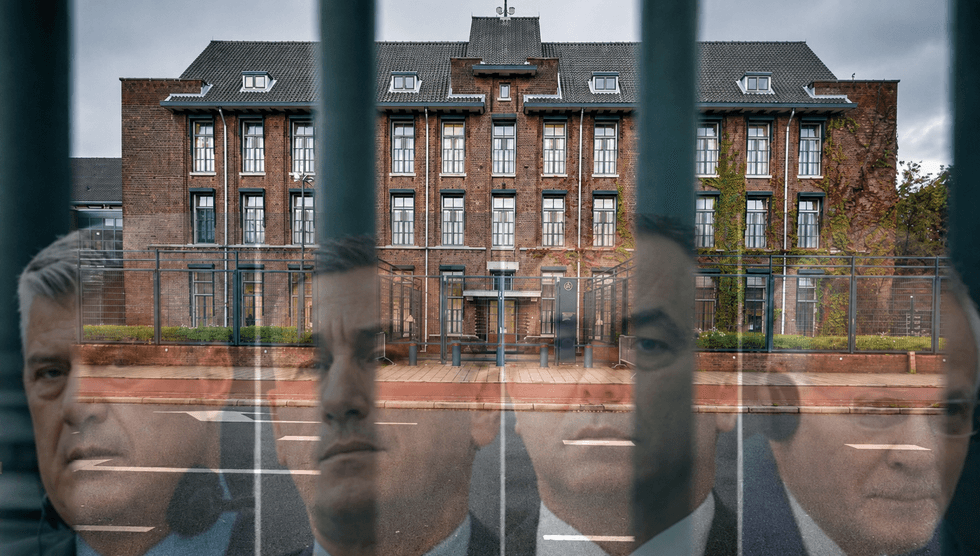
Kosovo is facing one of the most sensitive debates in its post-war history. The Hague Special Court’s verdict against Hashim Thaçi, Kadri Veseli, Jakup Krasniqi, and Rexhep Selimi has brought back to the center of attention not only the past of the war, but also the way Kosovar society understands freedom, justice, and peace.
The four former leaders of the Kosovo Liberation Army were sentenced in the first instance to imprisonment for war crimes. The decision has opened a debate that goes beyond the individual responsibility of the convicted: can the history of the liberation war be separated from responsibility for actions committed during it? And, above all, can the unity of a society be preserved when its historical memory is confronted with a judicial decision?
For a large part of Kosovar society, the KLA represents the war for liberation from the Serbian regime, for freedom and independence. It is tied to the sacrifice of thousands of people, to the losses of families, and to a historic journey that ended with Kosovo’s liberation in 1999.
In this collective memory, the names of Hashim Thaçi, Kadri Veseli, Jakup Krasniqi, and Rexhep Selimi are linked to a decisive period in the country’s history. Their supporters see the sentence as a blow against figures who represent the liberation war and the sacrifice for independence.
But it is precisely here that the division begins.
For some citizens, any criticism of the KLA leaders is seen as an attack on the war itself and on the ideal of freedom. For others, respect for the liberation war should not exclude the demand for justice for every victim, regardless of their affiliation.
These two positions, which can coexist in a democratic society, are increasingly turning into two camps that view each other with mistrust.
In public debate, war and peace are being used as two concepts often placed against each other.
On one side is the narrative of those who believe the KLA’s war was a historic necessity for Kosovo’s liberation and that the sentencing of its former leaders risks tarnishing this historic truth.
On the other side is the position that lasting peace cannot be built without justice and without recognizing the suffering of all war victims.
The problem arises when these two perspectives are treated as irreconcilable.
However, in a polarized society, these differences are often lost. The debate over the Hague decision turns into a clash of identities, where one’s stance toward the court, the war, and the former KLA leaders is used to determine who is considered a patriot and who is not.
Kosovo has built its state on a heavy history, with war, human losses, and long efforts for independence. This history is part of its collective identity and cannot be erased or reduced to a judicial decision.
But neither can the past be turned into an argument that excludes any debate on individual responsibility.
The greatest risk for society is not only disagreement over the interpretation of the war or the Hague decision. The risk is that this disagreement turns into internal hostility, where citizens are divided between those considered defenders of the war and those considered supporters of the court.
Such a division serves neither historical memory, nor justice, nor peace.
27 years after the war, generations that did not experience liberation
Twenty-seven years have passed since the end of the war in Kosovo. An entire generation has grown up and is being formed in a reality completely different from the one their parents and grandparents experienced.
A young person born in 2000 did not experience the war. They did not directly experience the fear, insecurity, deportations, losses, and sacrifices that accompanied the people of Kosovo on the road to freedom. For them, freedom is the reality in which they grew up, while the war is a chapter of history they know through family stories, books, documentaries, and public discussions.
This does not mean that the new generation does not value freedom or understand the importance of the war. But the direct experience of war and knowing it through historical memory are two different things.
It is precisely here that the responsibility of the generations that experienced the war lies: to pass on history with facts, testimonies, and honest accounts, so that young generations understand that the freedom they enjoy today was not self-evident nor won without sacrifice.
Young people must know the history of the KLA, learn about the martyrs, their families, the killed civilians, the survivors, and all those who contributed to Kosovo’s liberation. They must understand that behind every effort for freedom stand people, families, and lives changed forever.
Respecting the sacrifice of KLA fighters and the nation’s martyrs should not be a matter of one political party or a particular belief. It should be part of society’s collective memory and of the historical education of young generations.
At the same time, young generations must learn that knowing history does not imply closing every debate. History can be discussed, studied, and analyzed without denying the sacrifice of those who fought for freedom.
Because a society that fails to pass on its history to young generations risks losing its connection to its roots. And a society that turns history into an instrument of division risks that future generations inherit conflict instead of memory.
Social networks and the deepening of division
In this sensitive climate, social networks have turned into a space where clashes over the war, peace, and the Special Court take on even greater proportions.
Citizens express their positions, but the debate often moves away from arguments and turns into accusations, labels, and personal attacks. People divide into camps, each trying to present itself as the defender of truth, while the other as its opponent.
This language of division is especially concerning when it involves young people, who are forming their perception of Kosovo’s history in an environment where information, comments, and reactions are often mixed with one another.
A comment on social networks cannot replace a fact-based historical debate. A political label cannot determine who loves or does not love Kosovo. And a disagreement over the Special Court should not be a reason to insult, exclude, or denigrate fellow citizens.
If every discussion about the war turns into a clash among Albanians, then division does not remain only in the virtual space. It can penetrate families, schools, institutions, and relations between generations.
Therefore, the responsibility not to deepen this division falls on everyone: on politicians, the media, teachers, families, and the citizens themselves.
Kosovo needs an approach that protects historical memory, respects the sacrifice for freedom, and at the same time encourages a responsible debate on justice.
First, more must be invested in the historical education of young generations. Schools and educational institutions must offer young people fact-based knowledge about the Kosovo war, the KLA, the martyrs, the civilian victims, and the road to independence.
Second, the memory of the war must be preserved and documented. The testimonies of veterans, martyrs’ families, survivors, and citizens who experienced the war must be preserved and passed on to future generations. This is a historic responsibility that cannot be left solely in the hands of political debate.
Third, the normalization of hate speech and insults on social networks must be stopped. Young people must learn that they can hold different positions on sensitive issues without denying the other’s sacrifice and without questioning their national belonging.
Fourth, politics and the media must avoid using the history of the war as a tool to deepen social divisions. The debate on the Special Court must be conducted with arguments and with respect for all sides, without turning it into a battle for national identity.
And above all, a culture must be created where respect for the liberation war, for the martyrs, and for the sacrifice of citizens is not used to exclude or silence those who think differently.
Young people must understand that the freedom they enjoy today is the result of a historic sacrifice. But they must also have the opportunity to discuss the past, ask questions, and build a future where disagreement does not turn into hostility.
Because the freedom enjoyed today is not only a heritage of the past. It is also a responsibility for the future. And this responsibility requires that generations do not inherit hatred, but memory, respect, and the will to build a Kosovo where the sacrifice for freedom unites rather than divides — as Telegrafi writes in its commentary.
Komentet
Bëhu i pari që komenton!
Lini një Koment të Ri
Për t'u përgjigjur një komenti specifik, kliko butonin 💬 Përgjigju poshtë atij komenti.