
Putin’s “new elite” is taking power! Who are the veterans climbing to the top in Russia
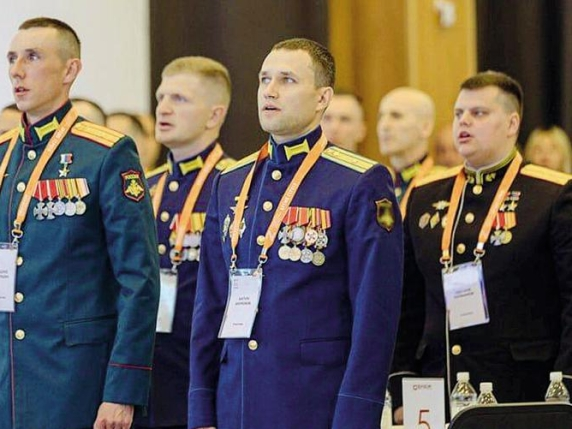
Russia’s new ruling class is taking shape on the shores of Lake Senezh, about 40 kilometres northwest of Moscow. There lies an 85-hectare campus, with hotels, gyms and residences surrounded by forests. At the campus entrance stands a simple sign lit in red: “Management Workshop”.
This is where what Vladimir Putin calls Russia’s “new elite” is being prepared. All the participants are veterans of the war in Ukraine. The programme is called “Time of Heroes” and was created to form new leadership cadres, selecting only veterans and participants in what Moscow called the “special military operation”.
The programme began on March 1, 2024. Two days earlier, during his address to the Federal Assembly, Putin had declared that servicemen returning from duty should take leadership posts in various sectors of the country. “They are the cream of the country, not those who enriched themselves during the ’90s,” Putin had said.
The school of the new elite. Lessons are given by Kremlin and government officials, representatives of ministries, regional leaders and heads of large companies. The programme consists of four modules, each 30 days, and lasts a total of 2 years. It is organised by the Higher School of Public Administration, part of the Presidential Academy of National Economy and Public Administration in Moscow. The institution is under the direct control of the Kremlin.
Interest was extraordinary from the start. In the first three hours of registration alone, more than 6,000 applications were submitted. In total, during March and April 2024, the number of applications exceeded 44,000. But places were limited. On May 16, 83 participants were selected: 79 career officers, from lieutenants to generals, three soldiers and four women. Twenty of them had received the title “Hero of Russia”.
The first course began on May 27. Just three days later, the participants boarded the icebreaker “50th Anniversary of Victory” and set off for the North Pole, where they underwent tests of “physical and moral endurance”. After their return, they were received by Putin. The President told them that, after completing the training, which also included internships in the Duma, they would have the opportunity to choose between continuing their careers in the Armed Forces or moving into the civil administration.
For an old nomenklatura consolidated around Putin’s power, “Time of Heroes” is not simply a career opportunity. It is a direct path to important posts. By the end of January 2025, 18 of the 83 participants of the first group had already taken posts in the administration. Among them was Artyom Zhoga, former commander of the “Sparta” battalion in the Donetsk Republic and Putin’s representative during the 2024 presidential elections. He was appointed the president’s plenipotentiary representative in the Urals region.
Others also benefited with important posts. Artur Orlov, a major and commander of a tank battalion, became chairman of the board of the Russian youth organisation “Movement of the First”. While Vladislav Golovin, a platoon commander in the 810th Marine Brigade of the Black Sea Fleet, was appointed chief of staff of Yunarmiya, the paramilitary youth organisation that promotes patriotic education.
The newly chosen. The recent elections for the Duma and regional councils showed that this trend is expanding. Forty-nine former servicemen were elected deputies, and more than half of them had passed through the programme at Lake Senezh. In total, more than 120 participants of “Time of Heroes” have taken new posts. Putin praised them, saying their experience would be valuable for drafting future decisions. “The experience of our heroes is in great demand and the election results have clearly confirmed this,” he declared.
Political scientist Andrei Kolesnikov sees this “new elite” as part of the consolidation of a “state of force” in Russia. While his colleague Nikolay Petrov argues that the authorities are trying to show that “the new hegemon is represented by the participants in the special military operation”.
War crimes accusations. The creation of “Time of Heroes” was initially interpreted as a blow against Russia’s liberal elite, which Putin had criticised for a lack of patriotism during the war. But now, the militarisation of Russia’s political elite appears to be turning into a broader system. And this may give an idea of the direction the Kremlin intends to follow in the coming years.
At least 13 participants in the programme are accused by the Ukrainian authorities of war crimes. Among them is Artyom Zhoga, who is suspected of having tortured and executed several prisoners in Donbas. Also on the list are two people decorated with the title “Hero of Russia”: Lieutenant Nursultan Mussagaleev and Major Boris Dudko. The Ukrainian authorities link them to the Bucha massacre. In Putin’s Russia, however, these accusations have not prevented them from rising to important posts.

Komentet
Bëhu i pari që komenton!
Lini një Koment të Ri
Për t'u përgjigjur një komenti specifik, kliko butonin 💬 Përgjigju poshtë atij komenti.