State Department report on Albania: corruption, emigration and illicit wealth remain challenges
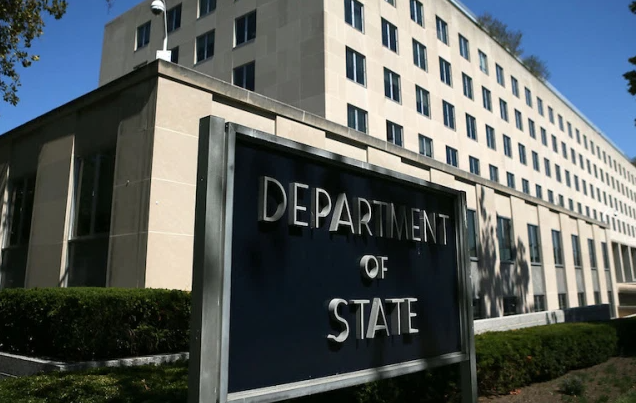
The U.S. State Department has published its 2026 report on Albania’s investment climate, assessing economic developments, foreign investment, the financial system, the rule of law and the political and security climate in the country.
The report describes Albania as an upper-middle-income country with an economy that continues to grow, but which still faces structural and institutional problems.
According to the report, the Albanian economy grew by 3.7% during 2025, supported mainly by tourism and the real estate sector. The country’s GDP is estimated at around $30 billion, while inflation fell to 2.2%, within the Bank of Albania’s target.
Another positive indicator highlighted is the fall in public debt. The report says the debt-to-GDP ratio dropped from 75% in 2021 to 52.6% in 2025, as a result of fiscal consolidation, monetary policy, the strengthening of the currency and higher tax revenues.
However, GDP per capita remains around a quarter of the EU average, while the Albanian economy continues to be exposed to a series of problems, including corruption, organised crime, money laundering, distorted competition, labour shortages caused by emigration, low productivity and the informal economy.
Foreign investment reaches a record
One of the most important developments highlighted by the report is the rise in foreign direct investment.
According to preliminary Bank of Albania data, foreign direct investment reached a record $1.84 billion in 2025, while the total FDI stock reached around $17 billion, or 57% more than in 2021.
The main sectors that attracted investment were:
- Real estate – 34%;
- Financial services – 18%;
- Extractive industries – 10%;
- Wholesale and retail trade – 10%.
The main sources of foreign investment during 2025 were the Netherlands, Italy, Turkey, Kosovo and Austria.
The report also notes that most of the projects approved as strategic investments have been concentrated in tourism and have been financed mainly by domestic companies.
Real estate and property problems
An important part of the report is devoted to the property issue, which continues to be considered one of the main problems for investors in Albania.
According to the U.S. State Department, investors face difficulties in protecting and enforcing property rights. The problems relate to property registration, ownership titles, corruption, transparency and administrative procedures.
The report cites data from the EU’s 2025 progress report, according to which 91% of land is registered, but the digitalisation process lags behind: only 43% of ownership titles, 69% of supporting documents and 10% of cadastral maps have been digitalised.
Around 80% of previously recorded data still require verification to guarantee their accuracy.
The report also stresses that the legalisation process for unauthorised buildings continues. Of around 400,000 applications, the authorities have so far legalised around 64%, while the target is to complete the process by the end of 2028.
Corruption and organised crime
The U.S. State Department identifies corruption and organised crime as among the main challenges for Albania’s business and investment climate.
The report notes that justice reforms have led to the creation of specialised structures against corruption and organised crime, including SPAK and the BKH, which have investigated and prosecuted high-level officials and organised-crime figures.
A particular element mentioned in the report is the vetting process. According to the document, more than half of the judges and prosecutors who underwent vetting have been dismissed for unjustified wealth, links to organised crime, or have left office to avoid the vetting process.
The report assesses that further strengthening anti-corruption structures and creating a sustainable record of convictions for high-level corruption would help attract domestic and foreign investment.
The Albanian banking system is presented in the report with several positive indicators.
Lending to the economy reached around $10.7 billion at the end of 2025, up 13.4% compared with a year earlier.
Meanwhile, non-performing loans fell to 3.8%, from 4.17% in 2024.
The report notes that Albania’s financial market remains relatively shallow and that the absence of a functioning stock market means the banking sector remains the main channel of business financing. The Tirana Stock Exchange remains non-functional, while portfolio investment remains limited mainly to company shares, bonds and real estate.
Emigration and labour shortages
Another problem highlighted is the labour shortage, particularly in tourism.
According to the report, Albanian companies have begun recruiting workers from Southeast Asian countries to fill vacancies.
At the end of 2024, there were 11,908 foreign citizens with work permits in Albania, around 10% more than a year earlier.
The report also links the labour shortage to emigration, listing it among the factors affecting the Albanian economy.
Albania, towards the EU
The report also highlights Albania’s progress in the European integration process.
Albania has been a NATO member since 2009 and a member of the World Trade Organization since 2000. EU accession negotiations began in 2022, while the screening process was completed in 2023.
According to the report, by November 2025 Albania had opened all negotiation chapter clusters, and the Albanian government aims to complete the accession process by 2030.
In political and security terms, the report describes the situation as generally stable.
The May 2025 parliamentary elections were held peacefully, while Albania, according to the document, has continued to support stability in the region and maintain friendly relations with neighbouring countries.
What does the report highlight?
Overall, the American document presents an Albania with economic growth, rising foreign investment, improved fiscal indicators and progress in justice reform, while at the same time highlighting problems that continue to affect the business climate.
At the centre of the challenges remain corruption, organised crime, legal uncertainty over property, emigration and labour shortages, low productivity, the informal economy and distorted competition.
The report underlines that Albania has taken steps forward in strengthening its institutions and legal framework, but improving law enforcement, transparency, the property system and the fight against corruption remains important to attract more investment and increase the economy’s competitiveness.
Komentet
Bëhu i pari që komenton!
Lini një Koment të Ri
Për t'u përgjigjur një komenti specifik, kliko butonin 💬 Përgjigju poshtë atij komenti.