“Politico”: EU “opens the gates”? European market moves closer for candidates, but benefits tied to reforms
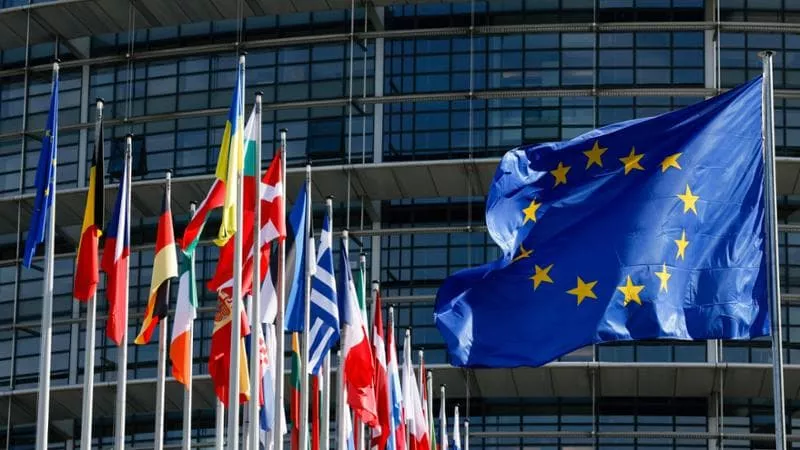
The European Union is considering a new way of approaching candidate countries: instead of the biggest economic benefits coming only after membership, part of them could be opened gradually during the negotiation process itself.
According to a European Commission draft obtained by Politico, candidates could receive wider access to the single market, research programmes and industrial cooperation, if they meet the set conditions.
This is more than a technical change in the enlargement process. For the EU, the single market is increasingly seen also as an economic and strategic instrument. Earlier integration of candidate countries could create stronger links between European companies and the economies of the Balkans and other countries in the accession process, expanding supply chains and reducing Europe’s dependence on external partners.
For the small economies of the Western Balkans, the importance is particularly great. Wider access to the European market could mean fewer barriers for exports, more opportunities for local companies and greater inclusion in European production chains. But this does not mean candidate countries will automatically receive all the rights of member states. Integration will be gradual and tied to alignment with European rules.
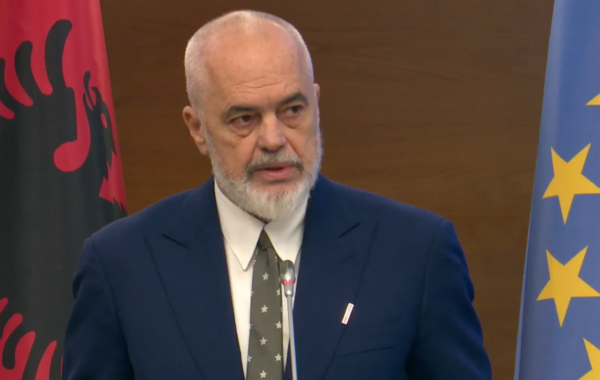
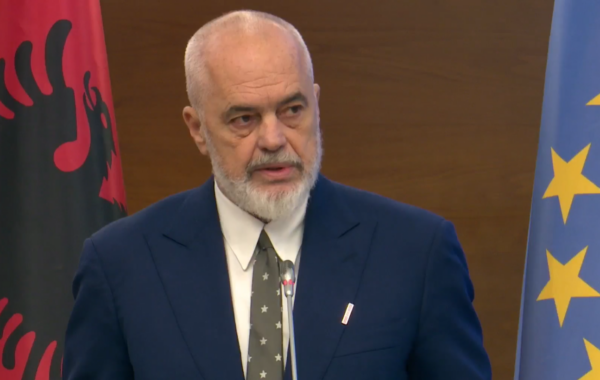
Albania is among the countries mentioned concretely in the new package. Together with Montenegro, Ukraine and Moldova, it is expected to be included in “roadmaps” that aim to provide a clearer path toward membership. According to reporting on the proposal, these plans will set out reforms, priorities and more concrete objectives for advancing the negotiations.
This also changes the way progress toward the EU is measured. Until now, one of the main problems of the process has been the distance between the reforms demanded and the benefits citizens see in everyday life. More gradual integration into the European market would make this process more tangible for businesses and consumers, before the country becomes a full member.
But the new model also comes with strong conditions. The Commission requires that countries benefiting from economic integration be coordinated with the EU on strategic issues, especially on sensitive technologies, investment controls, exports and sanctions. Sectors such as microchips, quantum technology, biotechnology, artificial intelligence and space are considered particularly important.
So the European market will not simply be an economic benefit, but also a mechanism to bind candidate countries more closely to the EU’s strategic structures. If a country does not meet its obligations, participation can be limited or suspended. The draft defines integration as reversible, giving Brussels the possibility to withdraw benefits in case of violations.
This also shows a broader EU concern: enlargement is no longer seen only as an economic project, but also as a matter of security and geopolitical influence. In a Europe where competition for markets, technology and investment has grown, Brussels wants candidate countries bound more strongly to the European economy before they complete the membership process.
At the same time, the EU itself must prepare for a future enlargement. European documents on single-market reform have long stressed that gradual integration can help candidate countries adapt to European standards, but it also requires financial support and institutional capacities so the process does not create economic shocks.
For Albania, this could be particularly important for businesses aiming at the European market. The more sectors are integrated with EU standards and networks, the less the approximation process will remain only a political objective and the more it will become a concrete economic process.
In essence, Brussels is considering a model where candidate countries do not have to wait for membership to start benefiting from Europe, but neither will they receive the benefits unconditionally. The European market can become a reward for reforms, but also an instrument to steer candidate economies toward the EU.
If this approach is approved, European enlargement could enter a new phase: no longer only “membership or waiting”, but step-by-step integration, with benefits that grow depending on reforms and strategic alignment.
Komentet
Bëhu i pari që komenton!
Lini një Koment të Ri
Për t'u përgjigjur një komenti specifik, kliko butonin 💬 Përgjigju poshtë atij komenti.