
Austrian Diplomat Wolfgang Petritsch on Hashim Thaçi: “I Had the Impression He Was Frozen With Fear”
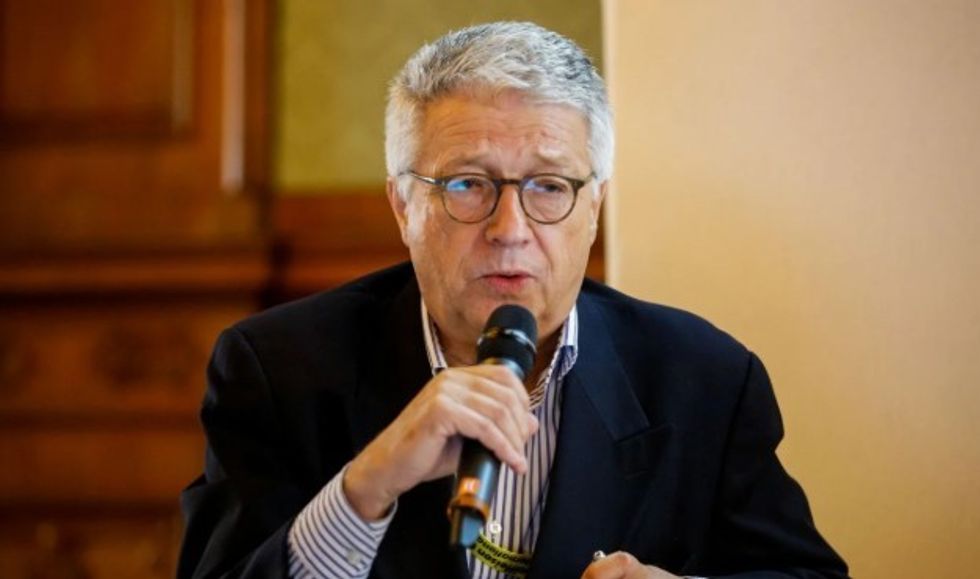
As the EU’s special envoy during the Kosovo war, Wolfgang Petritsch experienced Hashim Thaçi up close.
In a conversation with the German newspaper Frankfurter Allgemeine Zeitung, he recalls that time.
FAZ: Petritsch, as the EU’s special envoy for Kosovo, you were among the few people who in 1998 and 1999 knew the Kosovar guerrilla leader, Hashim Thaçi, personally. Did the verdict surprise you?
Petritsch: The key question throughout the whole process was: Did there exist in the Kosovo Liberation Army, the KLA, a functional chain of command or not? The prosecution claimed that it existed, and that for this reason Thaçi, as the KLA’s political leader, bore ultimate responsibility for the crimes attributed to it. The defense argued that the KLA had been a haphazardly gathered peasant force, whose power relations varied from valley to valley and region to region. According to it, Thaçi was indeed the international face of the KLA, but in the individual combat zones he had no decisive word. The defense’s presentation apparently did not convince the judges. We will see whether this will hold up in the appeal process.
FAZ: Before and during NATO’s war against Serbia, you often negotiated with Thaçi. What impression did you have of him?
Petritsch: He was very young, not even 30. Compared to the Yugoslav president Slobodan Milošević, a seasoned politician with deep experience, this was naturally a big change. But to us Western mediators it quickly became clear why exactly he was leading the Kosovar negotiating delegation.
FAZ: Why?
Petritsch: Despite his young age, Thaçi had the political intelligence needed for the situation at that time. For me, moreover, the fact that it was precisely Thaçi who was the key man on the Kosovar side had another advantage. He practically did not speak English at all, but he spoke a quite acceptable German, as he had studied for a short time in Switzerland. This gave me, as the EU’s chief negotiator, direct access to him, which my American and Russian colleagues did not have.
FAZ: The Kosovo Specialist Court’s indictment charges Thaçi with war crimes. He is said to bear responsibility for the fact that in prisoner camps Serbs, but also Kosovo Albanians, were tortured and in some cases killed. Were there any indications of such crimes in 1999?
Petritsch: At that time I had heard nothing about this. The context of that time should not be forgotten: Serbian security forces were committing terrible crimes against the civilian population in Kosovo. The KLA had been born as a reaction to this. It undertook attacks against Serbian policemen, soldiers and other representatives of Belgrade. The U.S. and the EU were even very close to declaring the KLA a terrorist organization. This would have made negotiations of any kind extraordinarily difficult. Therefore it was very important that Thaçi and the KLA be included in political talks as soon as possible, so that they would not sink into an unsolvable spiral of violence like that of the Middle East.
FAZ: How did you try to achieve this?
Petritsch: I explained to European foreign ministers that declaring the KLA a terrorist organization could not be in the EU’s interest, if we wanted to hold talks to put an end to the bloodshed. This argument convinced them. The Americans reached similar conclusions. During the negotiations in Rambouillet, France, through which war was to be avoided at the last minute, German Foreign Minister Joschka Fischer and I sat in my room and pleaded insistently with Thaçi to definitely sign the Western proposals, because only then could we help him. In essence it was about the Serbian state, that is the Yugoslav army and special police units, withdrawing all personnel from Kosovo, if the KLA would accept its dissolution and disarmament.
FAZ: What was Thaçi’s stance on this?
Petritsch: I had the impression he was frozen with fear. As always, he was extremely focused and responded only in short, concise sentences. But he feared that a wrong decision could cost him his life in Kosovo. They would eliminate him. He had to constantly consult with people in Kosovo to see how far he could go in the talks. He himself knew that after the dissolution of the KLA he would be able to enter politics. But what was the stance of the various local fighters, who did not see such an opportunity?
FAZ: In Thaçi’s trial the question arose whether there was a functional chain of command in the KLA – that is whether Thaçi at the top also controlled the regional commanders. What was your impression at the time?
Petritsch: The KLA made great efforts to present itself before us as a well-organized military or paramilitary force with a strict hierarchy. But the impression it wanted to create did not necessarily coincide with reality. Even the Serbian side did not believe this.
FAZ: Nevertheless, you once negotiated a prisoner exchange, where Thaçi had the final word.
Petritsch: This happened in the winter of 1998/1999. The KLA had taken several dozen Serbian soldiers prisoner. The Serbian side demanded a prisoner exchange, but insisted that it must not in any way look like an exchange. Belgrade’s condition was: First the Serbian soldiers had to be released. Only about two weeks later, in a development seemingly unrelated to this, the same number of KLA fighters would be released. And so it happened.
FAZ: What role did Thaçi play in this?
Petritsch: We had negotiated the sequence of steps with the KLA’s local commanders, but then they said that Thaçi also had to approve it, otherwise the agreement would not be valid. They managed to reach him by phone and he agreed.
FAZ: So nothing was done without Thaçi?
Petritsch: This cannot be said like that. The mentioned talks took place in the Drenica valley, Thaçi’s bastion. Just a few villages further, he most likely would have played no role in similar talks. The KLA was a heterogeneous organization. For example, the KLA’s regional leader, Ramush Haradinaj, who after the war became prime minister of Kosovo, I did not know at all. At that time I had never heard of him.
FAZ: The case will likely go to appeal. What do you expect from it?
Petritsch: From other war crimes proceedings related to the former Yugoslavia we know that first-instance verdicts can be completely overturned in the appeal procedure – see the case of Croatian general Ante Gotovina. He was sentenced by the UN Tribunal for War Crimes in the former Yugoslavia to 24 years in prison at first instance. In the appeal procedure, he was then acquitted on all counts of the indictment. This does not mean that such an overturning must necessarily be repeated in the Thaçi case. But today’s verdict was not necessarily the final word.

Komentet
Bëhu i pari që komenton!
Lini një Koment të Ri
Për t'u përgjigjur një komenti specifik, kliko butonin 💬 Përgjigju poshtë atij komenti.