Files Authority hosts international conference on Albania–Kosovo border crossings during communism
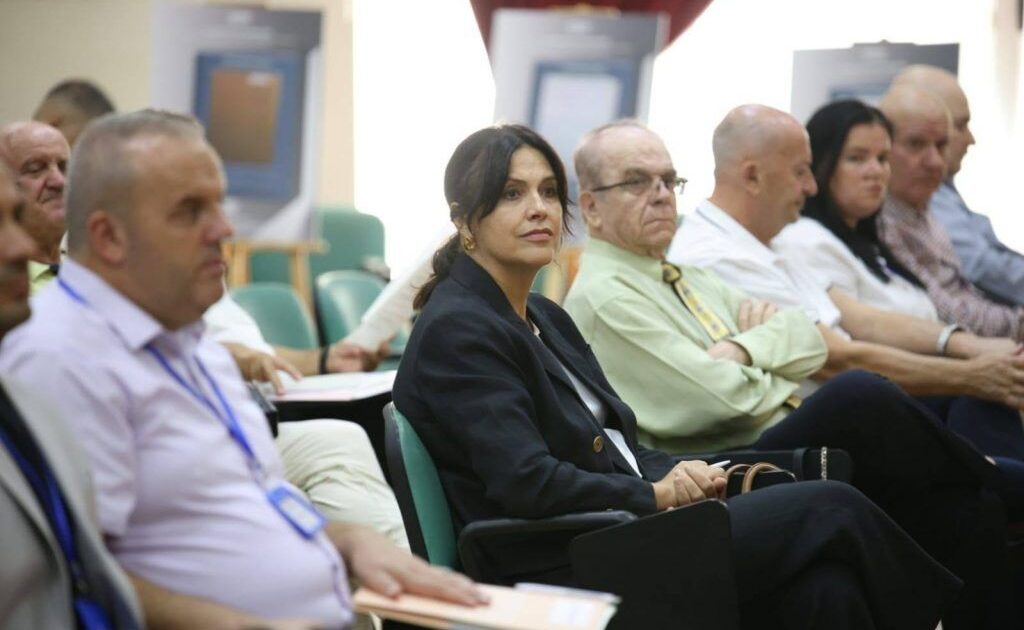
The international scientific conference “Crossing the Albania–Kosovo (Yugoslavia) Border in 1944–1991: Bilateral Analysis of the Political and Human Dimension” continues in the capital.
Researchers from Albania and Kosovo are taking part, comparing archival documents, diplomatic sources and personal testimonies on the political and human consequences of a border that did not divide two peoples, but Albanians on both sides of it.
Gentiana Sula, chair of the Authority for Information on Former State Security Documents, opened the conference by placing at its center the person and the family separated by the border. Sharing the story of her grandmother Refika and her sister who married in Peja, who — although geographically close — met only once in several decades, Sula brought the experience of many Albanian families for whom the border turned the family reunion into a privilege and travel into an object of suspicion.
Naim Berisha, executive director of the Scientific Council of the Albanological Institute of Prishtina, focused in particular on the importance of studying the Albania–Kosovo border, not only as a political and territorial line, but as a space that directly influenced the lives and relations of Albanians on both sides.
Altin Hoxha, a member of the Authority, brought an analysis of the structure and scale of the former State Security archive. The analysis presented by Hoxha highlights data of significance for the study of this archive: the documentation of the former State Security identified and recorded to date reaches about 7.3 million archival pages, 69.2% of which have as their source the SHISH; 30.53%, the Ministry of Interior; and 0.26%, the General Directorate of Archives.
An important source in this research process is also the “Kosova Fund,” opened by AIDSSH to researchers in 2025, with 11,630 files. The fund also preserves documents on the arrests, violence and torture against Albanians, forced displacements and other forms of state repression.
In the background of the discussions remains a question still open: Who were the persons killed, wounded, arrested, convicted or disappeared while crossing the Albania–Kosovo border segment? Where were they buried and what documents are kept for them in Tirana, Prishtina and Belgrade.
The comparison of archives, documents and family testimonies aims precisely at this: to give back the name to the document and the human story to the name.
Komentet
Bëhu i pari që komenton!
Lini një Koment të Ri
Për t'u përgjigjur një komenti specifik, kliko butonin 💬 Përgjigju poshtë atij komenti.