Francesco Antonio Santori, a Key Figure of 19th-Century Arbëresh Literature
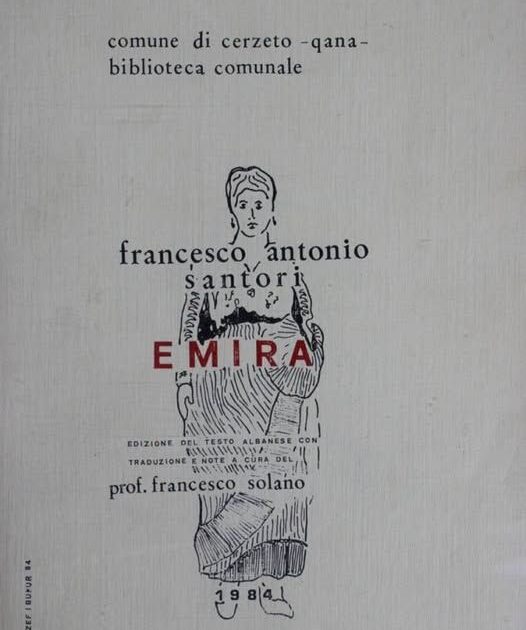
On September 16, 1819, Francesco Antonio Santori was born — writer, poet, playwright, folklore scholar and Arbëresh cleric from Santa Caterina Albanese, a village in Calabria, Italy.
Santori is one of the most prominent figures of Arbëresh literature, who through his work wove the Arbëresh tradition together with the spirit of the National Renaissance, preserving the Albanian identity in exile and enriching it with modern elements. He also gave the Albanian language new artistic forms and placed it at the center of the European culture of the time. Santori contributed directly to the drafting of a grammar and dictionary: he wrote a grammar of the Albanian language (in verse) to make it easier for his compatriots to learn their mother tongue. He also wrote the hymn “Valle e haresë së madhe” (Dance of Great Joy, 1848), dedicated to freedom in the Albanian language, which was published in the magazine “L’Albanese d’Italia” run by the other great patriot, Jeronim de Rada. This hymn was sung to celebrate the victory of the liberal constitution in the Kingdom of the Two Sicilies.
Francesco Antonio Santori wrote the first original Albanian drama “I burgosuri politik” (The Political Prisoner, 1848): a bilingual political poem (Albanian and Italian) dealing with the persecution of families fighting for freedom during the revolutions of 1848, condemning political oppression. His drama “Emira” is considered the first original drama in the Albanian language, opening a new chapter in the history of our literature.
In addition, he wrote lyric poetry such as “Canzoniere Albanese,” religious texts, satires and translations, bringing into Albanian even Aesop’s fables.
In his works, Santori dealt with themes of love, faith, history and freedom, becoming a powerful voice of Arbëresh culture at the time of Italian unification.
Santori traveled through the Arbëresh villages collecting folk songs. He managed to hand over more than 20 important source songs to Jeronim de Rada, who included them in his major folklore collections, thus documenting the spiritual heritage of the Albanians of Italy.
He served as a priest in San Giacomo di Cerzeto until the end of his life, always remaining tied to his community and to the mission of preserving the Albanian language and tradition.

Komentet
Bëhu i pari që komenton!
Lini një Koment të Ri
Për t'u përgjigjur një komenti specifik, kliko butonin 💬 Përgjigju poshtë atij komenti.