
Government opinion on the PDK initiative to amend the law on the Specialist Chambers
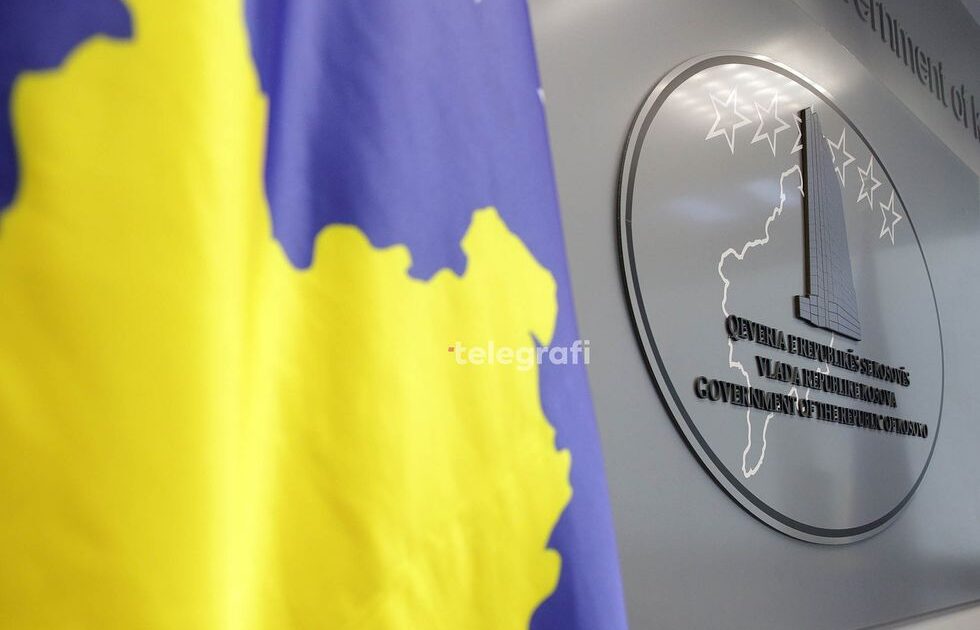
Shortly before midnight between 2 and 3 October, Prime Minister Albin Kurti convened the government cabinet online to respond to the PDK initiative to amend the Law on the Specialist Chambers, otherwise known as the Specialist Court.
In principle, the Government assessed that there are no legal obstacles to this initiative, although the opinion given by the Ministry of Justice draws attention to its complexity.
The ministry assessed that “the matter is complex, as it intertwines a series of legal regulations of different natures”.
“The proposed amendments relate simultaneously to constitutional issues, to the functioning of the Chambers and the Specialist Prosecutor’s Office, to the international obligations of the Republic of Kosovo, to the relevant international agreements, as well as to ongoing judicial procedures,” states the Ministry of Justice opinion, which was conveyed to the Government secretariat and obtained by Kallxo.com.
The Legal Department of the ministry led by Donika Gërvalla-Schwarz, after reviewing the draft law initiated by the PDK, concluded that the proposed issues concerning changes to the subject-matter, temporal and territorial jurisdiction of the Chambers and the Specialist Prosecutor’s Office, the transfer of cases to local courts and prosecution offices, the change of the maximum permitted sentence, the issue of pardoning convicted persons, and the change of the competences of the Specialist Chamber of the Constitutional Court do not, in themselves, present a direct collision with other legislation regulating Kosovo’s justice system.
“However, the assessment of the compatibility of these amendments with the Constitution of the Republic of Kosovo, in particular with Amendment No. 24, and with the international instruments and obligations of the Republic of Kosovo, including those stemming from the International Agreement between the Republic of Kosovo and the European Union on the European Union Rule of Law Mission in Kosovo, ratified through Law No. 01/L-274, requires separate and specialised review within the legislative procedure in the Assembly of the Republic of Kosovo and by the competent parliamentary committees, with emphasis on the Committee on Legislation, Mandates, Immunities and Rules of Procedure of the Assembly, in accordance with their scope of work,” the Ministry of Justice recommends in its opinion.
Consequently, taking into account the particular constitutional and international nature of the matter to be regulated, the ministry assessed that “the Draft Law requires further specialised assessment within the Assembly of the Republic of Kosovo, where the legislative initiative in question has been undertaken”.
This opinion, together with that on compatibility with the EU ‘acquis’ and the assessment of the draft law’s budgetary impact, is part of the decision approved by the Government, which was conveyed to the Assembly in response to the submitted request.
The Committee on Legislation has been charged with handling this matter as the responsible reporting committee, which is obliged to present the report with recommendations to the Assembly.
The Ministry of Justice says it remains ready to provide its professional contribution during the discussions and the further review procedure of this Draft Law in the Assembly of Kosovo.
What does the draft law contain?
The draft law on amending and supplementing the Law on the Specialist Chambers does not propose abolishing the Specialist Court, but provides for limiting its jurisdiction and transferring to Kosovo’s justice institutions the cases that do not fall within its jurisdiction.
The PDK has proposed that, through this amendment to the law, the maximum sentence be limited to 15 years, sentences be executed in Kosovo, the president have the competence to grant pardons, the work of the Chambers be subject to monitoring by international organisations, and constitutional review of the law be carried out by the Constitutional Court of Kosovo in Pristina.
Compared with the current legal framework for the Specialist Chambers and the Specialist Prosecutor’s Office, the PDK, through this draft law, first seeks to narrow the Chambers’ legal mandate only to “the specific criminal offences defined in the Report of the Parliamentary Assembly of the Council of Europe” of 07.01.2011.
Under the proposed amendments, the Specialist Court could only deal with cases directly related to “the illegal extraction, removal and trafficking of human organs, tissues or cells”, as well as murder, torture or cruel treatment in the detention sites mentioned in the report, if these acts have a direct connection to the claims of organ harvesting.
The PDK proposes that the Specialist Court have no jurisdiction over “general war crimes, crimes against humanity or political violence” that are not directly related to these offences. In cases that do not meet these criteria, the draft law provides for the procedures to be transferred to Kosovo’s regular courts, on the reasoning that these courts have “primary responsibility” for dealing with other crimes committed on the territory of Kosovo.
The draft law provides for the Specialist Court to have jurisdiction only over offences that occurred from 1 July 1999 to 31 December 2000. In the current legal framework, the Chambers’ temporal jurisdiction covers the period from January 1998 to December 2000. According to the draft law, the maximum sentence that could be imposed by the Specialist Chambers would be 15 years’ imprisonment. The PDK proposes that this provision also apply to cases defined in the transitional provisions, referring to the principle of applying the more favourable law.
The current law allows the Specialist Chambers to impose sentences up to life imprisonment.
Article 44 expressly defines this maximum. Unlike the current law, which provides for the sentence to be served in a state that accepts prisoners convicted by the Specialist Court, the PDK proposes that sentences be executed in the correctional institutions of the Republic of Kosovo.
Another change relates to pardons.
The draft law proposes that persons convicted by a final judgment of the Specialist Chambers may be subject to individual pardon by the President of Kosovo.
The draft law also seeks a change in the manner of constitutional review.
Under the proposal, the Constitutional Court of Kosovo, in its regular composition in Pristina, would review the constitutionality of the Law on the Specialist Chambers and its amendments.
The Specialist Chamber of the Constitutional Court would remain competent for referrals stemming from the decisions, orders or judgments of the Specialist Chambers and the Specialist Prosecutor’s Office.
The draft law also provides, among other things, for the creation of a new mechanism of international monitoring and oversight. The Assembly, under this draft law, could authorise international organisations with experience in the rule of law, international criminal justice, human rights or trial monitoring.
In the current framework, the Specialist Chambers are part of Kosovo’s justice system, but have a special legal framework, organisation, functioning and jurisdiction defined by Article 162 of the Constitution and Law 05/L-053.
Opposing priorities
For the Democratic Party of Kosovo, approving the amendments to the Law on the Specialist Chambers is a priority above all priorities. This position was repeated after the latest meeting between the party’s chairman, Bedri Hamza, and Prime Minister Albin Kurti on 2 October.
Although the deadline for electing a president expires on 6 October — and if this does not happen, the country goes to early elections within 45 days — Hamza has declared that for the PDK, approving the law is a need and a necessity, and that they are open to talks on other topics afterwards.
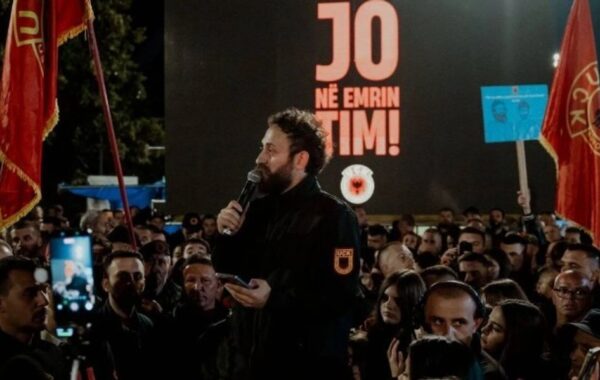
Amending the Law on the Specialist Court is also one of the main demands of the protesters who have been gathering in Pristina’s “Skënderbeu” Square since 16 September, the day when the four former KLA leaders — Hashim Thaçi, Kadri Veseli, Jakup Krasniqi and Rexhep Selimi — were sentenced to a total of 81 years in prison for war crimes. Thaçi and Krasniqi were sentenced to 25 years each, Veseli to 18 years and Selimi to 13 years in prison. The sentence was handed down at first instance, and the parties have the right to appeal.
Unlike on previous occasions, on the 17th night of the protest a group of protesters went to the Ministry of Justice, calling for the draft law to be proceeded to the Assembly as soon as possible.
As the country risks going to elections because of the failure to elect a president, the acting president, Albulena Haxhiu, considers that electing the head of state should be a higher priority at this stage.
“The priority above priorities is for us to have a president, because even Hashim Thaçi, Kadri Veseli, Rexhep Selimi and Jakup Krasniqi themselves — I do not think they would feel they have the state’s support if we, with full awareness, send the country to elections,” she said on 02.10.2026. But this statement prompted a reaction from PDK representatives.
MP Vlora Çitaku, among the first to react, wrote on Facebook that “the KLA is above every topic and every priority!”
“Priorities are set by the people. And the people have been on the streets for 17 days for one reason: the KLA. Listen to their voice. Bring the law to the Assembly and vote on it without delay!” she wrote.
The draft law has now been conveyed to the Assembly. The Rules of Procedure also provide for the possibility of review under an accelerated procedure.
The draft law is expected to be reviewed first by the Committee on Legislation, while an extraordinary session can be called at the request of 40 MPs.
Komentet
Bëhu i pari që komenton!
Lini një Koment të Ri
Për t'u përgjigjur një komenti specifik, kliko butonin 💬 Përgjigju poshtë atij komenti.