
“Inventing Nature”: Leonardo, Arcimboldo and Caravaggio face nature in Palazzo Te’s closing 500th-anniversary exhibition
MANTOVA, September 27, 2026 — The Palazzo Te in Mantua, the masterpiece of architect Giulio Romano, closes its 500th anniversary year with an exhibition uniting three giants of European art: Leonardo da Vinci, Giuseppe Arcimboldo and Caravaggio. “Inventing Nature. Leonardo, Arcimboldo, Caravaggio”, opened on September 26, 2026 and running until January 10, 2027, unfolds Renaissance nature through seven sections — Creating, Destroying, Sensing, Reproducing, Knowing, Astonishing, Animating — showing how people of that era studied, imitated, classified and sought to control the natural world, admiring and sometimes fearing it, as ArtDaily reports.
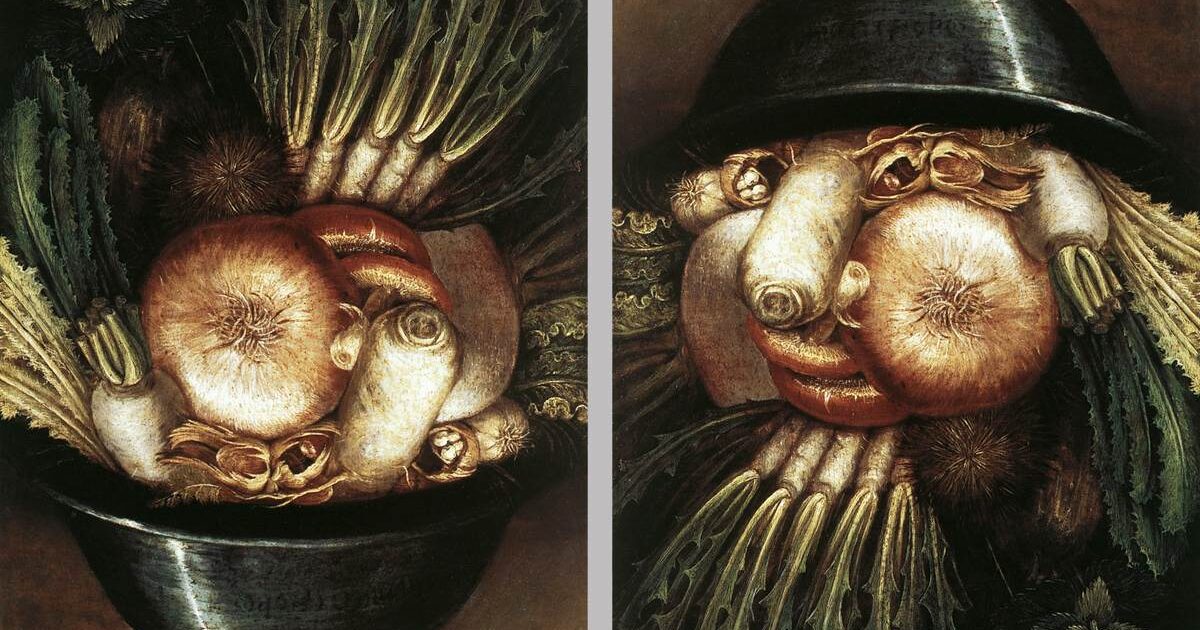
The exhibition’s highlights are two drawings by Leonardo da Vinci, “Storm” and “Landslide”, on loan from the British Royal Collection, in which the Renaissance genius studies the destructive fury of water and earth; Caravaggio’s “Self-Portrait as Bacchus” (Bacchino malato, c. 1595, Galleria Borghese); and Giuseppe Arcimboldo’s famous portraits “The Vegetable Gardener” (c. 1590) and “The Cook”, in which human faces are built from fruit, vegetables and books — a witty game between nature and art that continues to fascinate to this day.
Visitors will also walk through a reconstructed Wunderkammer — the Renaissance cabinet of curiosities — with ostrich eggs, carved coconuts, nautilus shells and narwhal horns, testament to the era’s thirst for collecting and classifying the world. The final section is devoted to automata and the mechanical clocks of European courts, small machines imitating life, alongside contemporary works by German artist Christiane Löhr, who builds delicate sculptures from seeds and blades of grass.
The exhibition, curated by Barbara Furlotti and Guido Rebecchini, features exhibition design by AMDL CIRCLE studio and Michele De Lucchi, a catalogue published by Marsilio, while the program includes educational activities and performances in the city of Mantua. A rare encounter between science, art and curiosity — exactly where the Renaissance invented nature anew.
Komentet
Bëhu i pari që komenton!
Lini një Koment të Ri
Për t'u përgjigjur një komenti specifik, kliko butonin 💬 Përgjigju poshtë atij komenti.