National apolitirio: experts’ committee presents three scenarios for university admission
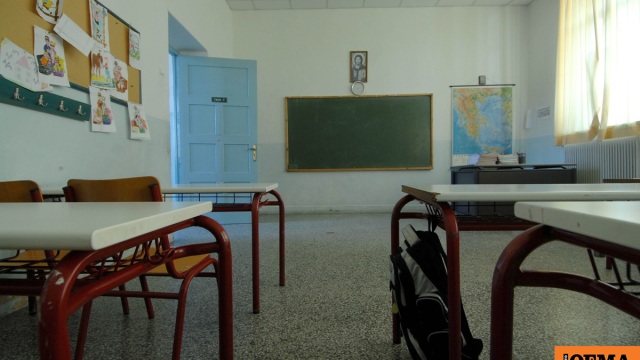
Greece’s National Dialogue on Education has begun, with one of the key questions being how admission to higher education institutions (AEI) will change under the national apolitirio proposal. As ProtoThema reports, the “Committee of Experts” (Επιτροπή Σοφών), comprising 106 members and chaired by the rector of the University of Piraeus, Prof. Michalis Sfakianakis, has published its interim findings report, which puts the new university entrance mechanism at its center.
According to the report, three institutional scenarios are on the table. In the first scenario, the school issues the apolitirio, while admission to AEI takes place through separate, centrally organized national exams — two distinct processes. The concern raised here is that, if school performance is not linked to access to AEI, the apolitirio risks remaining merely a diploma title, weakening the incentive to treat it as a genuine educational certification.
The second scenario foresees national exams for the apolitirio, followed by separate orientation/specialization exams for admission to AEI. The obvious risk, as ProtoThema notes, is that instead of fewer exams we would have more exams — two different national examination procedures.
The third scenario proposes a single national process with two functions: a single exam that simultaneously certifies completion of the lyceum and ranks candidates for AEI, with different passing thresholds and calculation methods for each function. The main advantage of this option, according to the report, is that it limits the number of exams, putting an end to the double-exam model. However, crucial technical questions remain open: whether and with what weight the apolitirio grade will count in the AEI ranking; which lyceum grades will count (classes A’, B’ or only C’ — the Minister of Education is examining this); the role of national exams; the comparability of grades between different schools; and the Minimum Entry Base (ΕΒΕ), which is not being abolished for now.
The report also presents a new idea: a “Clearing” mechanism, modeled on international practice, to fill remaining places after the main admission, without a new exam procedure. Also in the design phase are central exams with a second exam period for grade improvement, two exam gates in the final year of the lyceum (C’ Lyceum) with a split syllabus, as well as more digitized assessment models, such as modular tests per unit and adaptive digital assessment. The Minister of Education has stated that the existing panhellenic exams continue until an agreement is reached on a new system that is reliable, transparent and fair.

Komentet
Bëhu i pari që komenton!
Lini një Koment të Ri
Për t'u përgjigjur një komenti specifik, kliko butonin 💬 Përgjigju poshtë atij komenti.